Universities across the United Kingdom are moving to close public galleries and museums as they grapple with a deteriorating financial outlook, drawing warnings that the cuts will strip students of practical learning experiences and weaken ties to local communities.
Closures accelerate as budgets tighten
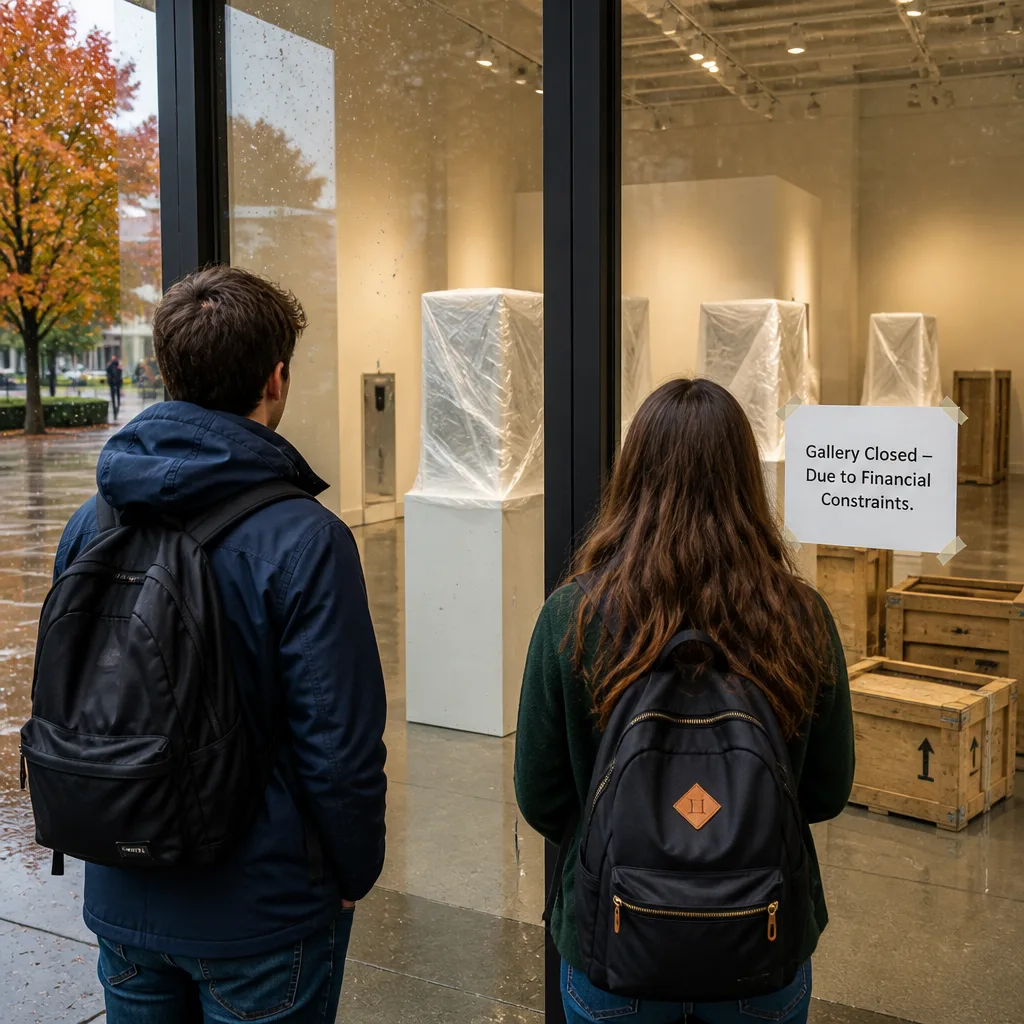
The University of Dundee has said it is considering shutting the Cooper Gallery in July next year as part of a plan to save a further £20 million. In London, King’s College London will close the Science Gallery London on 31 July. Other institutions have already acted: the University of Sunderland has closed its National Glass Centre; in 2024, Middlesex University shut the Museum of Domestic Design and Architecture (MODA); and the University of Brighton ended operations at the Brighton Centre for Contemporary Art (CCA) the previous year. Each university has cited the difficult financial climate for higher education as the driver.
King’s described its move as a repurposing decision prompted by a changed environment for universities and shifting national priorities, highlighting the gallery’s legacy as a bridge between science and art. Advocates for Dundee’s Cooper Gallery, long seen as a hub for curatorial research and contemporary art dialogue, have condemned the potential closure.
“The decision to close Cooper Gallery is an act of self-harm, not just to the staff and students at the University of Dundee, but to the arts and heritage sector in Scotland,” said Sion Parkinson, a lecturer in contemporary art and curation at the University of Glasgow.
What this means for students
University galleries commonly provide curricular and co-curricular learning that is difficult to replicate in classrooms alone. Students gain exposure to exhibition design, collections care, community programming and research dissemination—skills that often support employability in the cultural, creative and heritage sectors. When these spaces close, students lose:
- Work-integrated experiences, including exhibition planning and front-of-house roles.
- Access to collections and public-facing research opportunities.
- Industry connections through talks, residencies and partnerships hosted by galleries.
Parkinson underscored the educational functions of these venues, noting that they serve both as platforms for displaying permanent collections and as a conduit for sharing ongoing academic research with broader audiences.
Universities balance books—and expectations
Institutions under pressure to demonstrate public value face a dilemma: reduce visible, community-facing assets or squeeze elsewhere. In statements, universities have tied closures to sustainability concerns in a sector contending with higher costs and limited revenue growth. King’s, for example, framed its decision as a strategic response to the evolving higher education landscape while emphasizing the gallery’s contribution to campus life and outreach.
A King’s spokesperson said the choice to repurpose the space was “a response to the changed landscape of higher education, and national priorities for universities,” adding that it will leave a “proud legacy.”
At a glance: shuttered or slated university venues
| Institution | Venue | Status/Timing |
|---|---|---|
| University of Dundee | Cooper Gallery | Considering closure in July next year |
| King’s College London | Science Gallery London | Closure on 31 July |
| University of Sunderland | National Glass Centre | Closed |
| Middlesex University | Museum of Domestic Design and Architecture (MODA) | Closed in 2024 |
| University of Brighton | Brighton Centre for Contemporary Art (CCA) | Closed the year prior to MODA |
Potential ripple effects for programmes and communities
While administrators point to cost containment, stakeholders in the arts and heritage sectors warn of long-term academic and civic costs. Student opportunities in curation, conservation and arts management may shrink. Programmes reliant on galleries to display student work or host external collaborators could face fewer platforms to engage audiences. Local communities also stand to lose accessible cultural programming tied to universities, including free exhibitions, school visits and public lectures.
In Dundee—where the city has promoted itself as a cultural destination—the Cooper Gallery’s supporters argue the venue plays an outsized role in supporting contemporary art dialogues and research-led practice. More broadly, the run of closures arrives as universities are asked to reaffirm their public benefit, a task complicated when visible cultural assets are reduced or withdrawn.
What to watch next
Universities that maintain permanent collections or public galleries will be weighing operating models, partnerships and academic priorities as they set budgets. Students and staff can ask faculties how practice-based learning in the arts will be safeguarded if venues are shuttered, and whether alternative placements, digital showcases or partnerships with external museums will be expanded. For now, critics say the cuts reflect a lack of imagination in finding ways to keep galleries active as teaching and research engines.