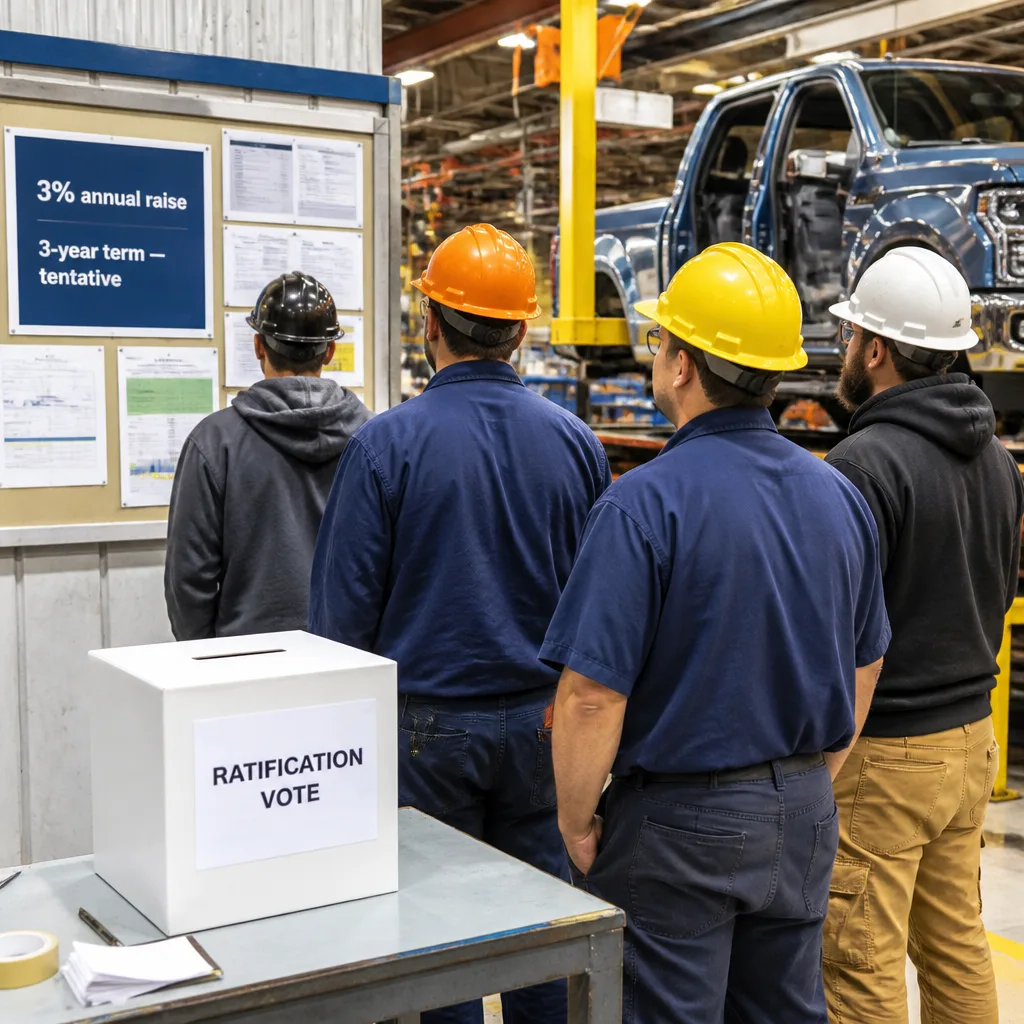
On assembly lines that have long anchored paycheques and neighbourhoods, Ford workers in Canada are weighing a fresh proposal from their union that would lift wages by 3 per cent a year over a three-year term. Unifor released details of a tentative agreement covering Canadian autoworkers at Ford, setting the stage for a ratification vote that will decide whether the deal stands.
What’s on the table
The union says the proposal would deliver annual pay increases of three per cent, compounded each year for the life of a three-year agreement. The offer is tentative and becomes binding only if members accept it. No other terms were disclosed in the information released publicly.
| Item | Proposed term |
|---|---|
| Agreement length | 3 years |
| Annual base wage increase | 3% per year |
How ratification works
Tentative agreements are a midpoint, not an endpoint. Unifor will brief members, share highlights, and open voting. If a majority supports the proposal, it takes effect. If members vote it down, the union and the company typically return to the table to seek revisions, and unions may consider escalating pressure through other measures if talks stall. The union’s release of wage and term details signals an effort to give members a clear, headline view of the trade-offs before they cast ballots.
Why this matters beyond the plant gates
For workers, the math is straightforward: a 3% yearly bump sets a predictable path for pay over three years. That predictability can help households plan for bills that don’t stop at shift change. For employers, a three-year horizon offers operating certainty — useful for scheduling production and staffing. And for communities tied to the auto sector, stable agreements can ripple through local suppliers and retail, steadying orders and hours.
At a national level, the auto industry is a bellwether for union–management relations and a touchstone for wage expectations in other sectors that look to major pattern deals when heading into their own talks. Even a single headline figure — such as the annual raise — can set informal benchmarks and shape conversations in boardrooms and lunchrooms well beyond one company.
What members will scrutinize
While the public release highlights the wage path and term, members commonly look at the full package before voting. In any major auto contract, they often weigh how the headline increases interact with day-to-day realities on the shop floor.
- The pace and certainty of base-wage growth over the full term.
- How the contract length lines up with industry cycles and future talks.
- Operational stability — predictability can matter as much as the percentage.
The stakes in simple terms
A three-year deal with 3% annual raises is, at its core, a trade for certainty: workers know where their base pay is headed, and the company knows the cost of labour over the medium term. If ratified, it would give both sides a clear runway. If not, the parties will be back at the table, and the sector will watch closely for next steps.
For now, the decision sits with the people who feel the impacts most directly — the workers who clock in, hit their production targets and carry the sector’s momentum shift by shift. Their votes will determine whether this tentative blueprint becomes the contract that guides the next three years on Canada’s Ford lines.