New AI model enters a fast-growing surveillance market
Eluviant, the video intelligence firm previously known as IntelexVision, has rebranded and introduced Aurora Flow, an artificial intelligence model designed to interpret complex activity in live surveillance camera feeds at enterprise scale. Announced from London, the launch reflects rising demand for computer vision tools positioned to extract operational value from existing camera networks, in a market the company cites as approaching $30 billion by the end of the 2020s.
The company says the new model is already running in production settings. According to Eluviant, Aurora Flow is built to function in near real-time, coordinate across multiple cameras, and operate air‑gapped where needed, a configuration intended to keep systems isolated from the public internet. The firm frames the system as a way to sharpen what requires immediate attention by incorporating AI into alert triage and decision pathways.
“Our new identity is our statement of intent: that we intend to continue leading this movement,” said Callum Wilson, Founder and Co‑CEO, adding that the rebrand builds on years of deployments and customer work.
What it could mean for Aurora institutions
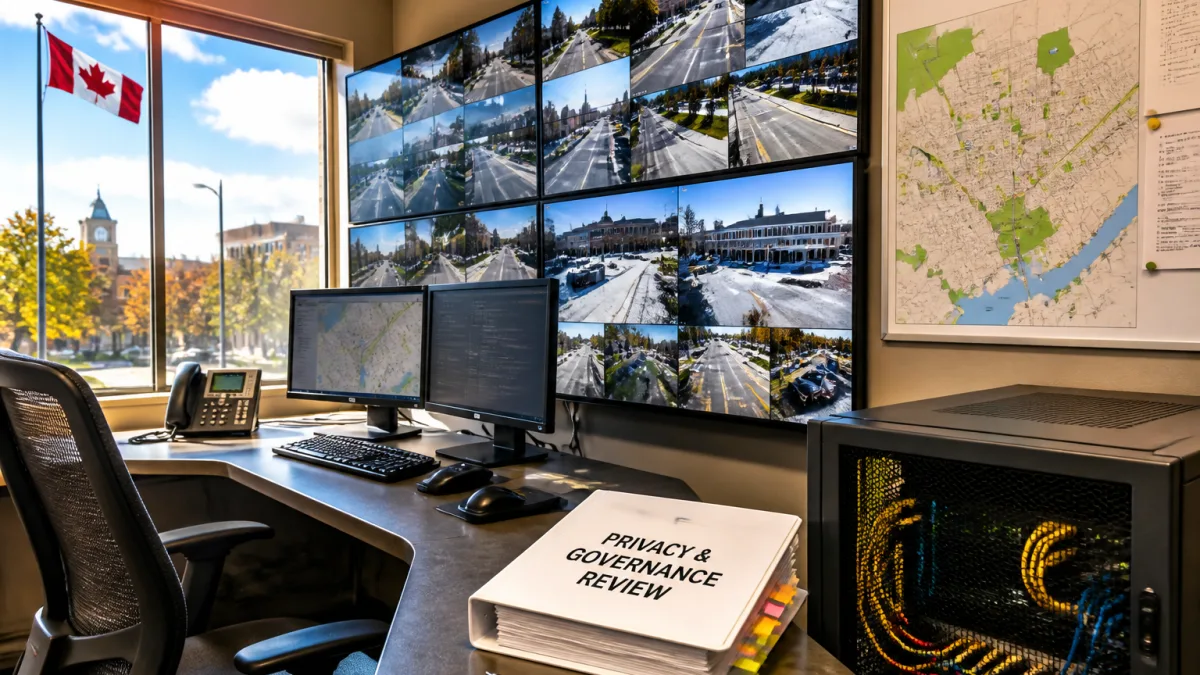
While Eluviant did not announce specific Canadian customers, the capabilities being promoted echo conversations taking place in municipalities and large facilities across Ontario. For Aurora’s public bodies and private operators—such as transit hubs, health campuses, commercial plazas and large workplaces—AI that can surface unusual activity or prioritise critical events may prompt renewed assessments of existing camera networks and incident response procedures. Any local consideration of such tools would need to account for privacy, data governance, and procurement requirements applicable in Ontario and under federal law, including how footage is stored, processed and retained, and how automated alerts are reviewed by trained personnel.
Eluviant positions Aurora Flow as an extension of its established platform. The company says its existing components include an unsupervised, self‑learning engine oriented to flag unanticipated events. By layering a video understanding model on top of long‑running deployments, the vendor argues it can scale to large estates without ripping out installed equipment—an argument that may appeal to operators in Aurora who have invested in cameras but lack advanced analytics.
How the technology is described to work
Eluviant’s description emphasises enterprise requirements—scale, reliability and on‑premises options—over consumer features. The firm says Aurora Flow is intended to help control rooms and operations teams cut through routine motion and focus on higher‑risk activity patterns. It does not replace on‑site staff or public safety partners; rather, it is marketed as a layer that triages visual information.
| Claimed capability | Eluviant’s stated focus |
|---|---|
| Near real‑time analysis | Prioritising alerts as scenes evolve |
| Multi‑camera coordination | Understanding activity across viewpoints |
| Air‑gapped operation | On‑premises deployments without internet exposure |
| Unsupervised self‑learning | Flagging unforeseen or unusual events |
Local context: benefits, risks and next steps
For Aurora, the arrival of another enterprise AI surveillance model underscores a broader shift: camera networks are increasingly treated not just as recording tools but as operational sensors. Potential benefits often cited by vendors include quicker detection of hazards, improved crowd management and streamlined dispatch. On the other side, community expectations around transparency, safeguards against bias, and effective human oversight continue to shape adoption timelines.
- Operational promise: Faster triage of incidents and resource deployment in busy environments.
- Governance needs: Clear policies on data handling, audits, and accountability for automated alerts.
- Human‑in‑the‑loop: Ensuring trained staff verify AI‑generated signals before action.
Eluviant’s rebrand signals its intention to compete in this space as organisations evaluate upgrades to legacy systems. Whether Aurora’s public agencies or private operators pursue similar tools will hinge on case‑by‑case risk assessments, budget cycles and compliance reviews. The company did not disclose regional pricing, timelines or local partnerships in its announcement.
Company’s positioning and market outlook
Founded in 2017, Eluviant frames its decade of work as groundwork for large‑scale deployments. In the company’s view, enterprise video intelligence is transitioning from narrow security applications to operational decision support. If market projections prove accurate, the segment could draw more vendors and pilot projects, including in mid‑sized Canadian communities. For now, Aurora Flow adds another option to the toolkit that Aurora‑area institutions may evaluate as they balance safety, privacy and cost.