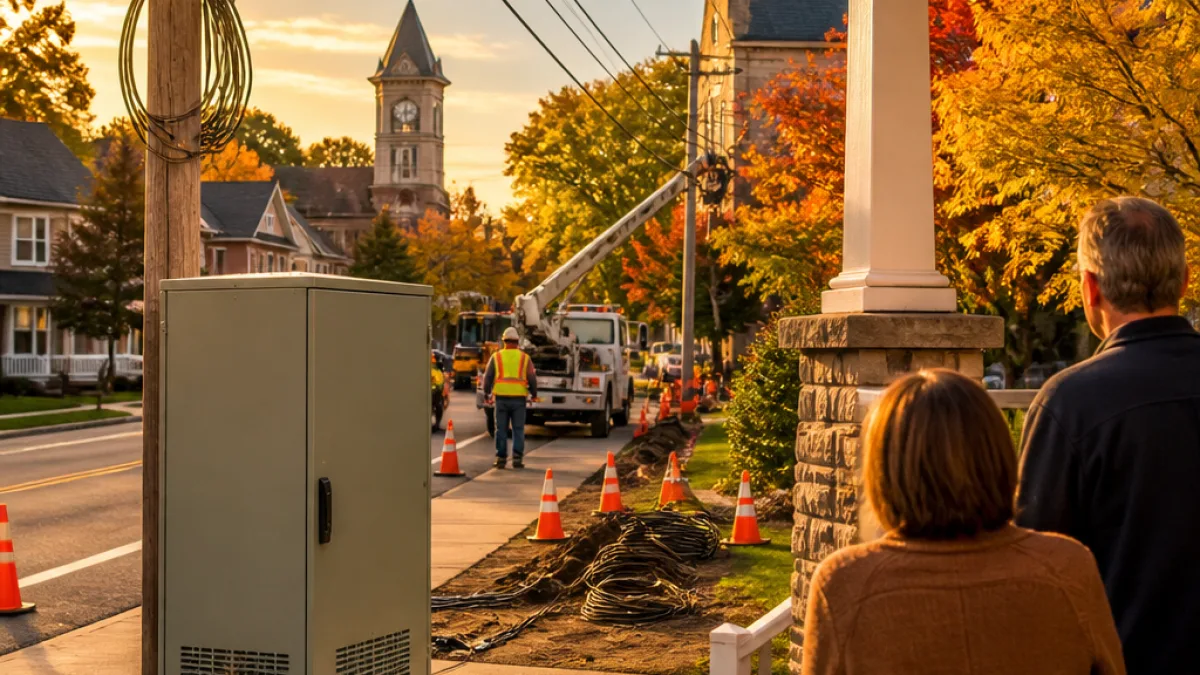
Telecommunications vendor Aurora Networks, part of Vistance Networks, has reported a deployment that brings a number of cable-network functions closer to customers by using Remote MACPHY (RMD) technology in optical nodes. While the announcement concerns a rollout in Puerto Rico, the technical approach and the benefits touted are directly relevant to Aurora residents and municipal decision-makers evaluating future broadband performance and resilience.
What the technology does
Remote MACPHY moves key access functions from central headends toward fiber-fed optical nodes in neighbourhoods. According to the vendor release, placing these functions nearer homes and businesses lowers latency and supports stronger, more consistent throughput during busy periods. The upgrade is presented as a stepping stone to multi‑gigabit services and a path toward DOCSIS 4.0, the next-generation cable access standard that enables higher upstream and downstream capacity.
Local implications
For Aurora, the announcement is a reminder of how incumbent cable operators can improve customer experience without replacing the entire coaxial last mile. Key potential benefits for customers and communities include:
- Lower latency that improves online gaming and interactive applications.
- Higher and more consistent speeds during peak usage, supporting streaming and remote work.
- Smaller operational footprint and reduced energy use at central sites if functions are distributed.
“By bringing key network functions closer to homes and businesses, Liberty delivers lower latency, enhanced gaming performance, seamless high-quality streaming, and greater consistency during peak usage periods.”
That summary, used in the vendor announcement, outlines the practical outcomes residents are likely to notice if a local provider pursues similar upgrades. The release also highlighted operational gains such as reduced infrastructure footprint and lower energy consumption, which operators frame as contributing to a more sustainable network.
What to watch for locally
Municipal officials, community groups and consumers should watch for carrier statements about migration plans to DOCSIS 4.0 or Remote MACPHY deployments, and for opportunities to ask about timelines, service impacts and costs. Important questions for local stakeholders include:
- Will an upgrade require neighbourhood-level construction or prolonged service windows?
- Will new service tiers or higher-priced plans accompany the technical capability for multi‑gigabit speeds?
- How will operators quantify energy and footprint reductions in local terms?
| Aspect | Expected local effect |
|---|---|
| Latency | Lower — benefits gaming and real‑time apps |
| Peak‑time consistency | Improved — fewer slowdowns during high use |
| Energy/footprint | Reduction at central sites claimed; local equipment footprint may change |
While the announcement details a specific operator’s deployment elsewhere, the technical direction is notable for Aurora residents because it reflects where cable broadband is heading: distributed architectures that enable higher speeds and better performance without necessarily replacing existing coaxial runs to homes. Local policymaking and consumer advocacy can shape how and when such upgrades arrive, and what protections or information accompany them.
Residents seeking more immediate clarity should contact their current internet provider for upgrade plans and timelines and consult municipal broadband or economic development staff about any ongoing local initiatives to improve connectivity.