Eluviant debuts ‘Aurora Flow’ amid rebrand from IntelexVision
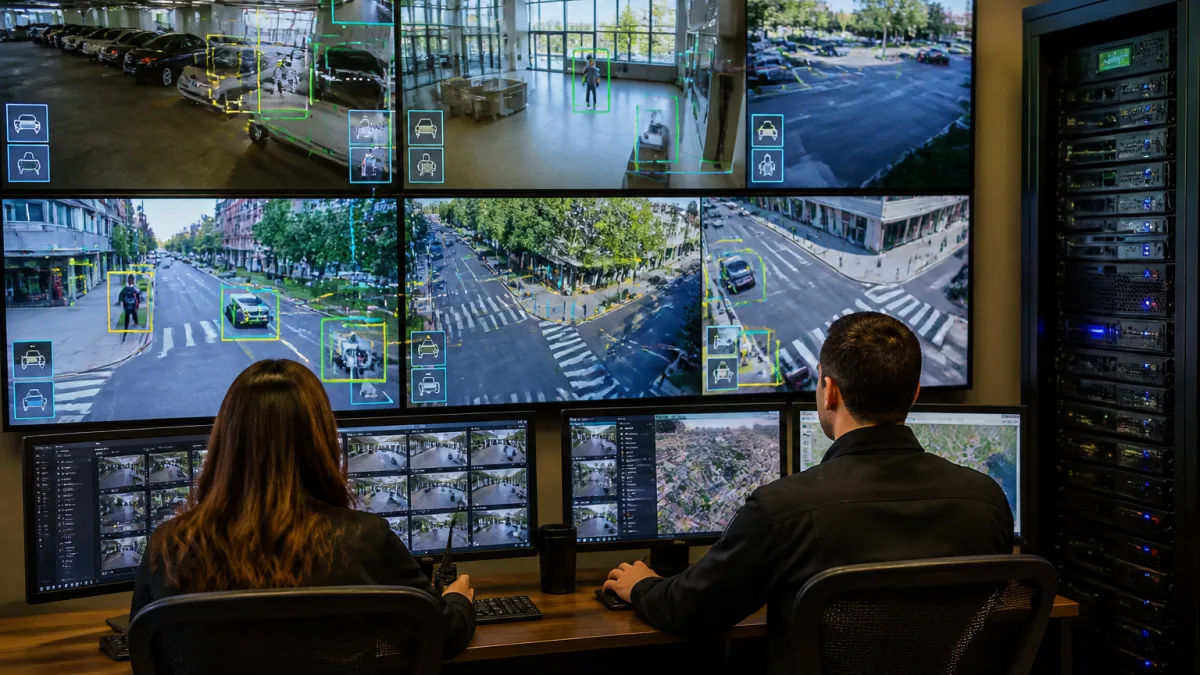
A video intelligence firm has reintroduced itself with a new name and a flagship product aimed at making closed-circuit cameras more useful in day-to-day operations. Eluviant — previously known as IntelexVision — announced a corporate rebrand alongside the release of Aurora Flow, an artificial intelligence model designed to interpret human actions and activity patterns across multiple security cameras in near real time.
The company, founded in 2017, says it has spent years building and deploying video analytics for large enterprises. In this latest move, Eluviant positions Aurora Flow as a system that can run air‑gapped and at scale, with the goal of elevating only the most relevant events for security teams. According to the announcement, the model has already been used in live settings and is intended to work across numerous feeds simultaneously, bringing a consolidated operational picture to on‑site operators.
“Our new identity is our statement of intent: that we intend to continue leading this movement, having already helped shape it for the better part of a decade,” said Callum Wilson, co‑CEO and a founder of Eluviant.
Eluviant frames the launch in the context of a growing market for enterprise video intelligence, which the company’s materials project could reach $30 billion globally by the end of the decade. While those projections come from the firm’s own release, the broader pitch is clear: organisations that already maintain networks of cameras may be able to draw more operational value from them through AI, beyond traditional recording or basic motion alerts.
What the company says the platform does
- Understands complex activity: The model is described as recognising actions and behaviours, not just simple motion.
- Works across many cameras: Built for fleet‑scale CCTV, aggregating what matters for operators.
- Near real‑time triage: Designed to surface events quickly and put AI “into the alert decision.”
- Offline‑capable: Can run fully air‑gapped, a consideration for sensitive facilities.
- Self‑learning layer: Extends an existing unsupervised engine the company says flags unforeseen events.
For public agencies and private operators in Aurora who manage facilities equipped with CCTV — from campuses to industrial sites — the features highlighted by Eluviant touch on familiar operational challenges: making sense of multiple feeds at once, reducing noise from false alarms, and ensuring systems can function in restricted networks where internet access is limited or prohibited. The company also points to a “visual language model” called Aurora that has been part of its platform, which it says contributes to the understanding of scenes and activities.
Rebrand, product lineage and live deployments
The rebrand from IntelexVision to Eluviant is presented as a milestone after years of development and deployments. Company leadership argues that experience in real‑world installations informed Aurora Flow’s design priorities, particularly around security, scale and the need to operate in production environments with minimal disruption. The firm states that the new model builds on its existing production platform, combining the self‑learning anomaly detection engine with the new “video understanding” capabilities.
| Item | Detail |
|---|---|
| Company | Eluviant (formerly IntelexVision) |
| Founded | 2017 |
| New model | Aurora Flow |
| Key claims | Near real‑time, multi‑camera, air‑gapped capable |
The announcement does not disclose customer names or specific deployment sites. It emphasises, however, that Aurora Flow is already running in live environments and that the system is meant for enterprise‑scale surveillance rather than consumer or small‑site use. For decision‑makers evaluating AI in security operations, such details — particularly the offline capability and claims of reduced alert fatigue — may factor into risk assessments and procurement planning.
Local implications and what to watch next
While this is a global technology release, it speaks to choices that Aurora institutions and businesses may face as AI‑enabled surveillance matures. Key considerations — such as how alerts are generated, how models handle unforeseen events, and whether critical infrastructure can operate without cloud connectivity — are central to how any advanced CCTV platform would be assessed.
Residents and operators in Aurora will likely watch for independent validation of performance claims, including accuracy in varied lighting and weather, explainability of alerts, and how systems manage data retention and access. As more companies market “video understanding,” practical outcomes — from ease of deployment to measurable reductions in response times — will determine whether these tools move from pilots to standard practice.