Researchers at the University of Cambridge report laboratory evidence that human nerve cells lose their ability to regrow as a result of a built-in genetic programme during development — and that this shutdown can be reversed in lab-grown neurons. The work, using miniature connected brain and spinal cord circuits, points to a biological switch that may help explain why damage to the central nervous system is often permanent and suggests avenues for future therapies for spinal cord injury and neurodegenerative disease.
What the researchers did
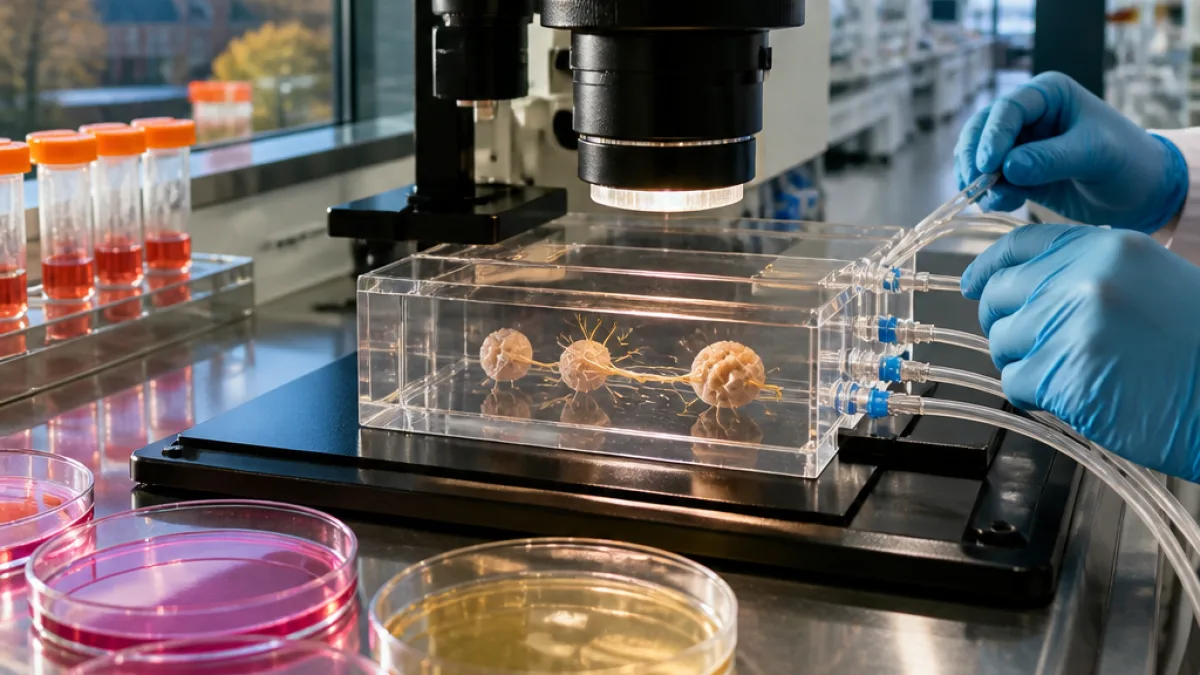
The team grew interconnected organoids representing brain and spinal regions and monitored axon growth — the long projections that connect neurons and carry motor and sensory signals. During early human development axons grow rapidly to establish the nervous system’s wiring, but that capacity diminishes with maturity. The Cambridge group tracked that change and identified a genetic programme that progressively shuts down the regenerative ability of neurons.
Key findings and why they matter
- Discovery of a developmental shutdown: The study indicates a gradual genetic programme reduces axon regrowth potential as neurons mature.
- Reversal in laboratory models: Researchers restored regrowth capacity in lab-grown human neurons, showing the shutdown is not necessarily permanent.
- Implications for disease and injury: The mechanism could help explain why spinal cord trauma and conditions such as motor neurone disease and multiple sclerosis often produce lasting disability.
"the loss of the human nervous system’s ability to repair itself may not be permanent after all."
Potential clinical pathway and limitations
The findings are preclinical. Restoring regrowth in organoids is an important proof of principle, but translating that to safe, effective therapies for people will require further study. Key steps include validating the mechanism in additional human tissue models, understanding the timing and control of the genetic programme, and developing methods to target it safely in patients. The researchers say the discovery could eventually lead to treatments for spinal cord injuries and neurological diseases that now leave patients with lifelong disabilities.
| Aspect | Laboratory result |
|---|---|
| Model used | Connected brain and spinal cord organoids |
| Biological process | Developmental genetic programme that shuts down axon regrowth |
| Intervention | Reversal of shutdown in lab-grown neurons |
| Clinical implication | Possible route to future therapies for spinal cord and neurological damage |
For Cambridge residents, the study is an example of how basic research can identify mechanisms with long-term therapeutic potential. Local clinicians and patients interested in spinal cord repair should note the distinction between laboratory breakthroughs and approved treatments: the path from organoid findings to clinical application involves rigorous testing, safety evaluation and regulatory review. Nevertheless, the research renews scientific optimism about addressing one of medicine’s most stubborn problems.
The study adds to a growing body of work using human-derived organoid systems to model development and disease, and underscores the importance of continued funding and collaboration between laboratory scientists and clinical researchers if new therapies are to move from the bench to the bedside.