U.S. protest movement spotlights a familiar local dilemma
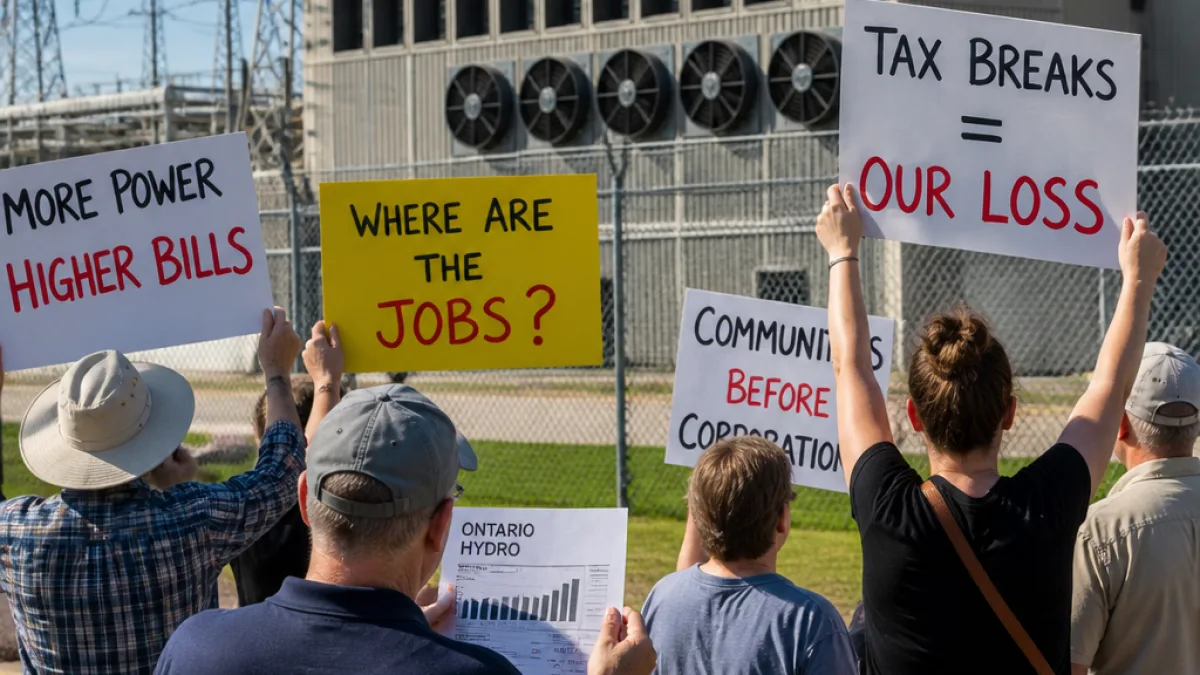
Residents in Cambridge, Ohio, joined a nationwide day of action calling for tighter oversight of artificial intelligence data centres, underscoring a set of questions that many communities — including mid-sized Canadian cities like Cambridge — are weighing as the sector grows. The demonstration, one of at least 100 across the United States organized by the group HumansFirst, focused on transparency, environmental safeguards and clearer accounting of benefits and costs associated with large-scale computing facilities.
Organizers in Ohio pointed to a potential project in Guernsey County as a flashpoint. The debate there centres on how much electricity these sites would draw, the pressure they could place on utility systems and bills, the number and permanence of jobs created, and whether tax incentives deliver broad community value. Those themes will be familiar to local readers tracking industrial development and infrastructure capacity in Waterloo Region.
Power demand and household costs at the forefront
Demonstrators highlighted power consumption as a primary concern. One participant, Sam Ferguson, questioned the fairness of new, energy-intensive facilities being prioritized at a time when households are frequently urged to conserve.
“They tell us to conserve energy when it’s hot... But you’re going to build something like that and give them free range or as much power as they need. And you’re asking me to conserve?”
Ferguson also voiced skepticism about tax breaks often attached to major data centre proposals, asking whether those concessions translate into clear, shared benefits for residents. His comments reflect a broader tension: communities seek investment and jobs, but want assurances that local costs — from upgraded grid infrastructure to land use changes — are not shifted onto ratepayers.
Jobs: short-term construction vs. long-term roles
Backers of data centre projects often cite construction work and new employment as reasons to proceed. Protest organizer Kris Talvot said residents need firmer information about the number and type of permanent positions that would follow initial buildouts.
“There is a concern about those entry-level jobs, but a lot of people think that the temporary construction jobs are going to be permanent jobs.”
The distinction matters in cities balancing industrial tax base growth with a workforce aiming for durable, skilled roles. Communities watching the U.S. debate are also paying attention to where facilities land — whether on greenfield sites or repurposed industrial lands — given the implications for traffic, services and long-term planning.
Land use and siting choices
Talvot and others raised questions about building large, power-hungry facilities on undeveloped land rather than reusing former industrial properties. The choice shapes local impacts: greenfield builds can accelerate development at the urban edge; infill or brownfield reuse can concentrate activity near existing services, though often with higher remediation costs. These trade-offs are central to municipal planning conversations about where growth belongs and who pays for supporting infrastructure.
Community input, timelines and what comes next
Organizers in Ohio are collecting signatures in an effort to place the issue before state voters in 2027, signalling a long runway for public debate. While jurisdictions differ, the core asks — more transparent disclosures, environmental protections, and guaranteed avenues for community participation — mirror what residents regularly seek in large industrial proposals.
For readers in Cambridge, Ontario, the Ohio demonstrations offer a concise checklist of questions that often surface when advanced computing facilities are proposed:
- How much electricity will be required, and what are the implications for grid capacity and utility rates?
- What share of jobs are temporary construction roles versus permanent positions, and what skills are needed?
- What is the mix of public incentives or tax abatements, and how are community benefits defined and measured?
- Where will facilities be sited — greenfield or brownfield — and how will that affect land use, traffic and services?
Positions at a glance
| Stakeholder | Main points highlighted |
|---|---|
| Protesters/Residents | Electricity demand; potential pressure on household bills; clarity on permanent jobs; concern over tax breaks; preference for reuse of industrial sites; stronger community input. |
| Supporters | Construction activity; job creation; new investment associated with data centres. |
As AI adoption accelerates, communities are being asked to weigh near-term economic activity against long-term operating impacts. The Ohio protests cast that balancing act in sharp relief, with organizers pressing for detailed, verifiable information before major decisions proceed. For cities following similar developments, the message is practical: map the infrastructure needs early, cost out the public share, make employment numbers transparent, and provide meaningful avenues for residents to shape the outcome.