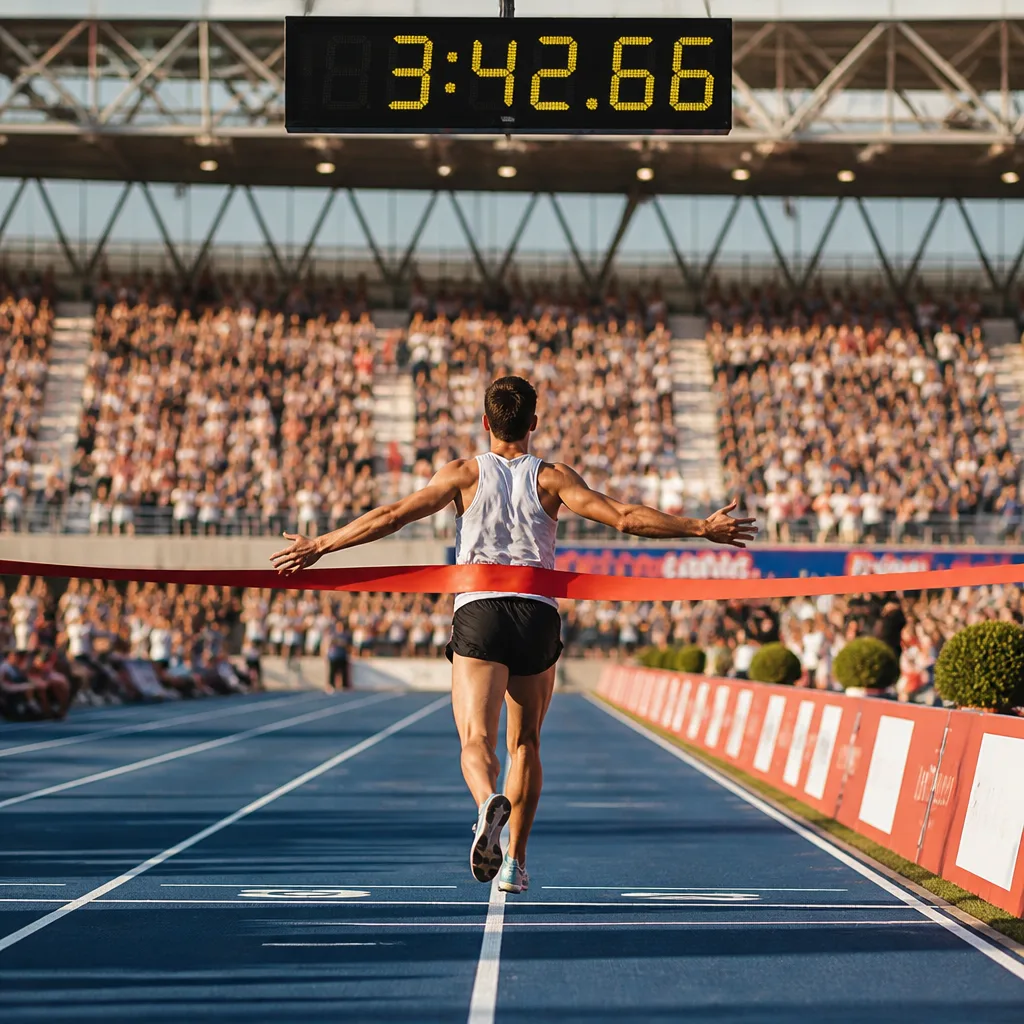
Scottish runner Josh Kerr shattered the men's mile world record at the Diamond League meeting in London on Saturday, crossing the line in 3 minutes 42.66 seconds, a new global mark that bettered the 27‑year‑old standard.
What happened in London
At London Stadium, Kerr — a two‑time Olympic medallist at 1,500 metres — lowered the previous world record of 3:43.13, set by Morocco's Hicham El Guerrouj on July 7, 1999, in Rome. Kerr's performance arrived on a high‑profile Diamond League card that featured other headline results in sprint and middle‑distance events.
- New world record: Josh Kerr — 3:42.66
- Old world record: Hicham El Guerrouj — 3:43.13 (Rome, 1999)
- Event: Diamond League, London Stadium
Why this matters
El Guerrouj's mile record stood for nearly three decades and has been one of the sport's longest‑lasting marks. Breaking it resets expectations in middle‑distance running and will influence how athletes, coaches and meet organisers approach pacing, tactics and record attempts in the months and years ahead.
Kerr's sponsor described the attempt as "Project 222," a reference to the number of seconds in a 3:42 performance. The run adds to Kerr's profile after two Olympic podiums at 1,500 metres, signalling his capacity to perform at the very top of the sport across distances and in high‑pressure settings.
| Runner | Time | Venue / Year |
|---|---|---|
| Josh Kerr | 3:42.66 | Diamond League, London — 2026 |
| Hicham El Guerrouj | 3:43.13 | Rome — 1999 |
Broader context
The Diamond League meeting in London has frequently been a stage for fast times and world leads, and this edition was no exception. The card also included notable sprint performances, underlining the meeting's role as a summer focal point for athletes sharpening form between championship seasons.
For Canadian readers, Kerr's record is a reminder of the changing geometry of elite middle‑distance running: global records and national records influence selection, funding and public interest in the sport. Major performances on the Diamond League circuit often presage tactical evolution at world championships and Olympic competitions, where national programmes watch closely for shifts in pace strategy and athlete development.
While the immediate headlines belong to Kerr's mile, the ripple effects will be measured in how coaches and meet organisers respond — with planned record attempts, specially arranged pacemaking, or revised preparation strategies for athletes eyeing medals and marks at major championships.
In London, one long‑standing record fell. The chase for the next mark has already been reset.