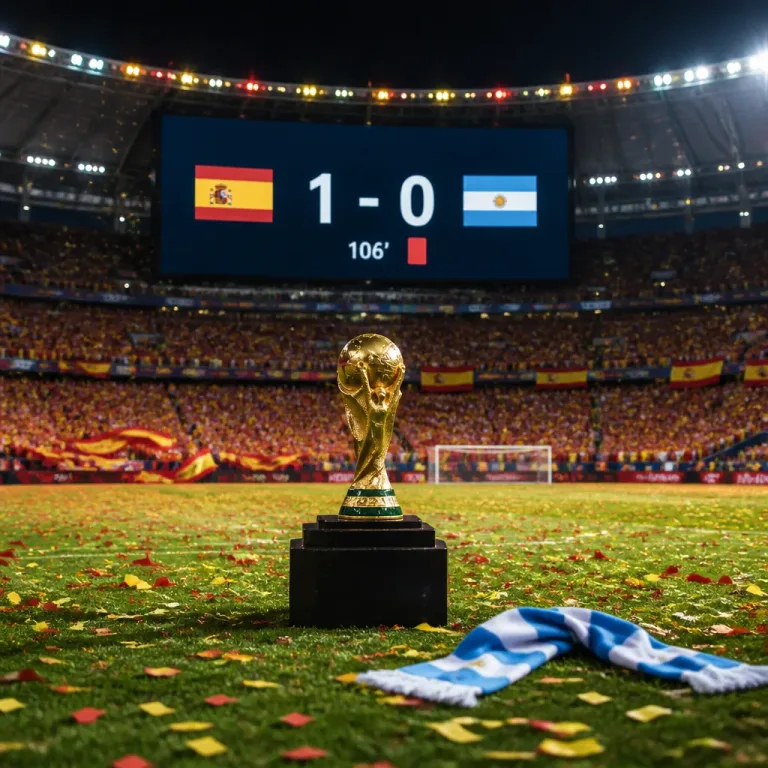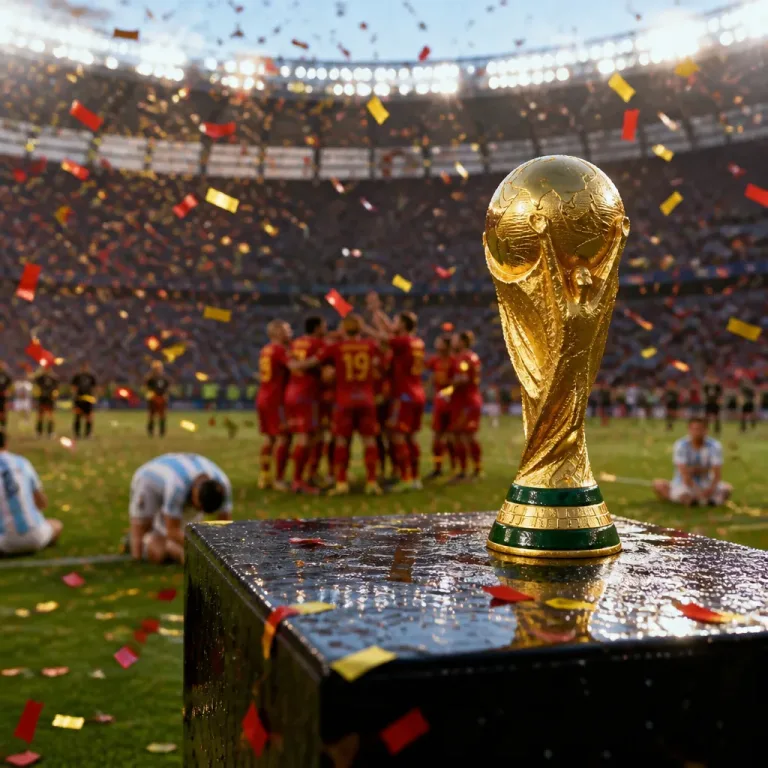
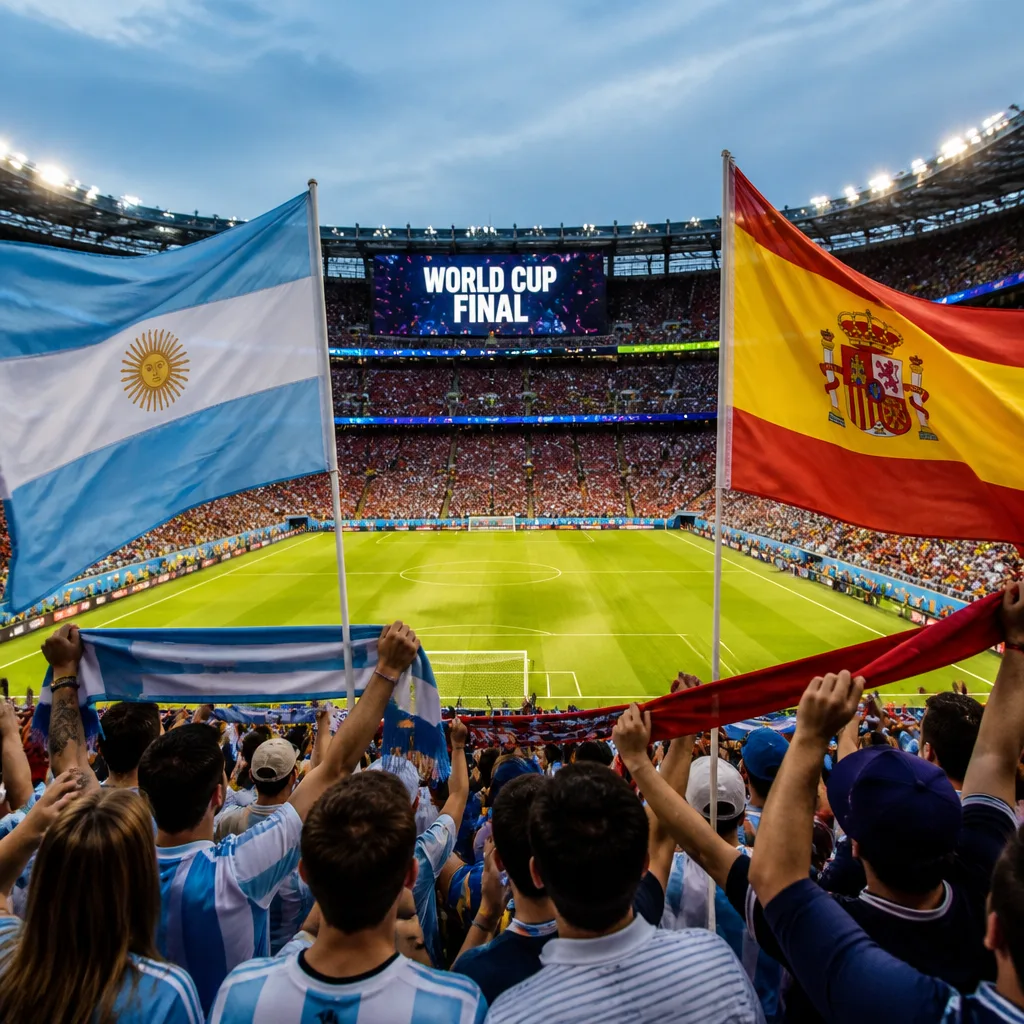
The stage is set for a final that will pit contrasting styles and recent histories: Argentina, led by Lionel Messi, will meet Spain on Sunday in East Rutherford, New Jersey, to decide the 2026 FIFA World Cup champion.
How the finalists reached the last match
Argentina advanced after a dramatic semifinal against England in Atlanta on Wednesday, overcoming a deficit to win 2-1. Their run through the tournament has been defined by striking firepower; they lead the competition with 19 goals.
Spain secured the other final berth by defeating France in Tuesday’s semifinal. Their path has been notable for defensive solidity: across the tournament they have allowed just one goal, the fewest of any team.
Contrasting identities and what’s at stake
The final will therefore be a confrontation between the tournament’s most potent attack and its most impermeable defence. Argentina is bidding to become the first nation to successfully defend the World Cup title since Brazil’s consecutive wins in 1958 and 1962, while Spain is seeking a second world crown after their 2010 victory.
For spectators, the match also carries narrative weight beyond the trophy. Messi, already a defining figure of this tournament, has further burnished his résumé by becoming the competition’s top scorer. Spain’s side, meanwhile, showcases a new generation of defensive organisation under a system that has allowed almost no goals.
Context: a World Cup unlike previous editions
This World Cup is the largest in history, expanded to 48 teams and staged across the United States, Canada and Mexico. The tournament has featured 104 matches, culminating in the final at a stadium just outside New York.
Fans were denied an earlier high-profile meeting between these two champions. Argentina and Spain had been scheduled to meet in the Finalissima in Doha in March — a match that would have served as a preview of this showdown — but organisers cancelled the fixture on security grounds amid regional unrest and airstrikes tied to a broader conflict.
What to expect on Sunday
- Argentina: An attack-led approach centred on Messi’s finishing and creative partners who have contributed to a tournament-high goal tally.
- Spain: A compact, disciplined defensive unit that has conceded almost nothing and relies on control of possession and organised transition play.
- Historical stakes: Argentina seeking consecutive titles; Spain aiming to recapture world supremacy achieved in 2010.
The matchup is both a sporting contest and a study in tactical contrast — a narrative that will attract global attention and significant Canadian viewership given the tournament’s regional hosting and wide North American interest.
| Statistic | Argentina | Spain |
|---|---|---|
| Goals scored (tournament) | 19 | — |
| Goals conceded (tournament) | — | 1 |
| Tournament size | 48 teams, 104 matches | |
The final will resolve contrasting claims: whether attacking brilliance or defensive mastery will prove decisive on the biggest stage. For Canadian viewers, the match also marks the close of a landmark, continent-spanning World Cup that saw stadia in three countries and a broadened field of participants. Whatever the result, Sunday’s match will be remembered as a defining chapter in a tournament that has both honoured established stars and showcased emergent talent.