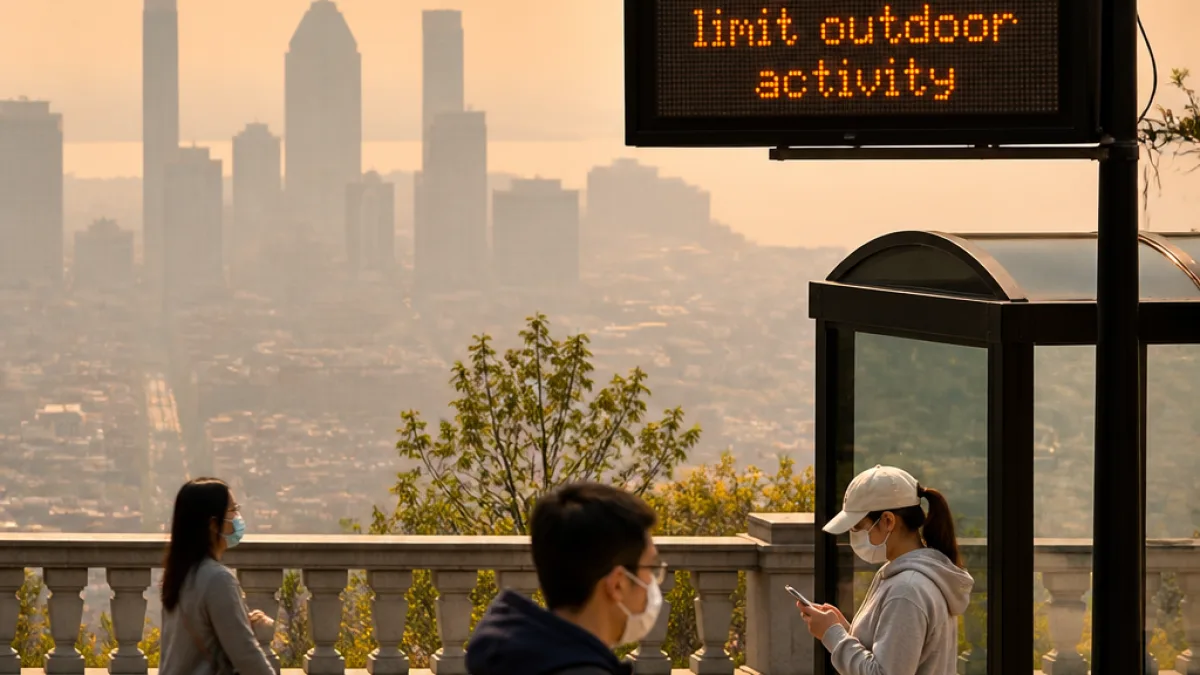
Environment Canada flags poor air and reduced visibility
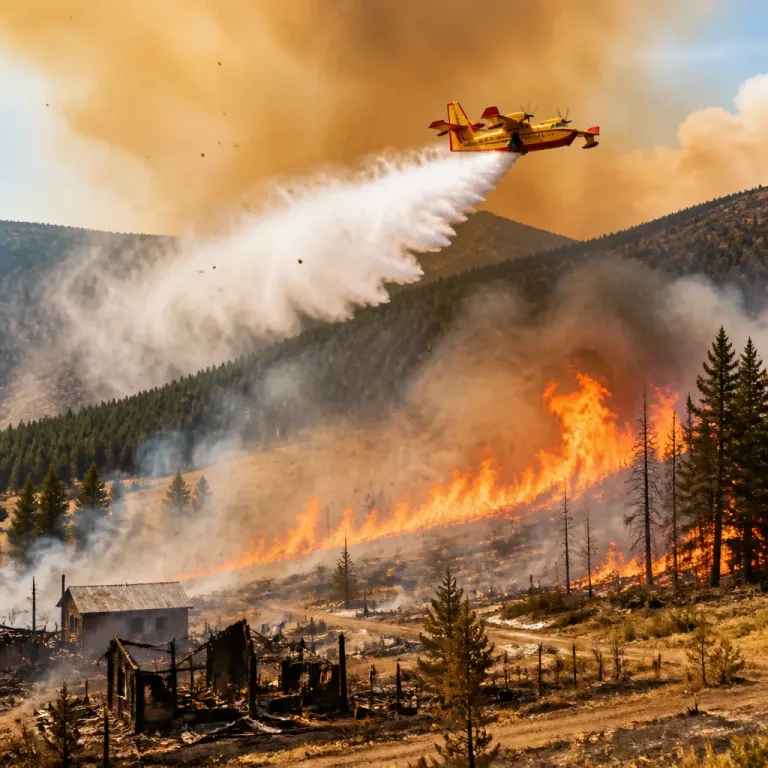
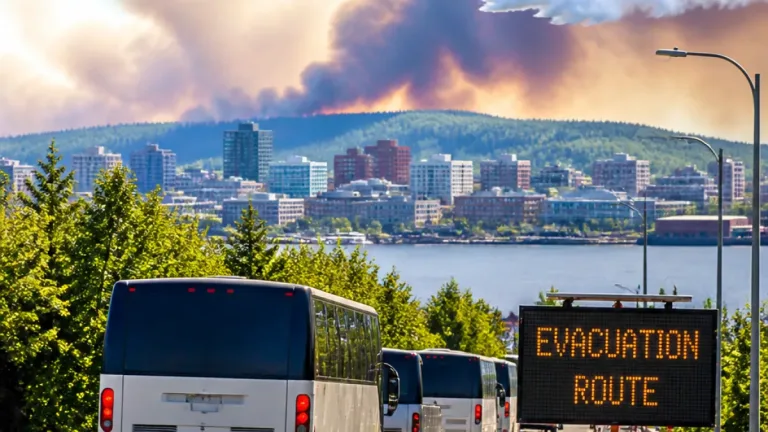
Montrealers were advised Friday evening to scale back outdoor plans after Environment Canada issued a special air quality statement for the city, citing smoke drifting in from regional wildfires. The agency said the haze is driving poor air quality and reduced visibilities, with conditions significant enough that Montreal ranked among the Top 10 most polluted cities worldwide according to the monitoring firm IQAir.
The advisory urges residents to limit time outdoors and to postpone or reduce outdoor activities and events where possible. Indoors, officials recommend keeping windows and doors closed to prevent smoke infiltration and taking steps to improve filtration.
“As smoke levels increase, health risks increase. Protect your indoor air from wildfire smoke. Actions can include using the highest quality air filter that your ventilation system can handle and/or a certified portable air cleaner that can filter fine particles.”
Who is most at risk — and what to watch for
Public health guidance underscores that some Montrealers face higher health risks when smoke concentrations rise. Those groups are encouraged to avoid strenuous exertion and to seek medical attention if serious symptoms emerge.
| Higher-risk groups | Examples of symptoms |
|---|---|
| People over 65 | Mild: nose, eye and throat irritation; headaches |
| Pregnant individuals | Severe: wheezing, chest pain, severe cough |
| Young children | — |
| People with chronic health conditions | — |
| Outdoor workers | — |
Montreal’s public health authority also warned this week that elevated concentrations of fine particles tied to wildfires could affect several Quebec regions, including the city. Officials stress monitoring for symptoms and adjusting activity levels accordingly.
How to reduce exposure at home and at work
- Stay indoors when smoke is thick; keep windows and doors closed.
- Use the best air filter your ventilation system can safely accommodate.
- Consider a certified portable air cleaner capable of filtering fine particles.
- Reschedule or limit outdoor activities, especially strenuous exercise.
These steps are intended to reduce exposure to fine particulate matter from wildfire smoke, which can aggravate heart and lung conditions and cause acute irritation even for otherwise healthy people. The advisory notes that anyone can experience symptoms under degraded air conditions.
Citywide implications and next steps
While the statement does not specify when conditions will markedly improve, the combination of smoke aloft and stagnant surface air can produce rapid shifts in visibility and pollutant levels across neighbourhoods. Residents planning outdoor gatherings, sports or work shifts should remain flexible and check for updates.
Environment Canada recommends following the latest forecasts and advisories for evolving conditions. Montrealers can track changes through official weather and air-quality updates and adjust their plans — particularly for vulnerable individuals — until smoke dissipates and air quality stabilizes.