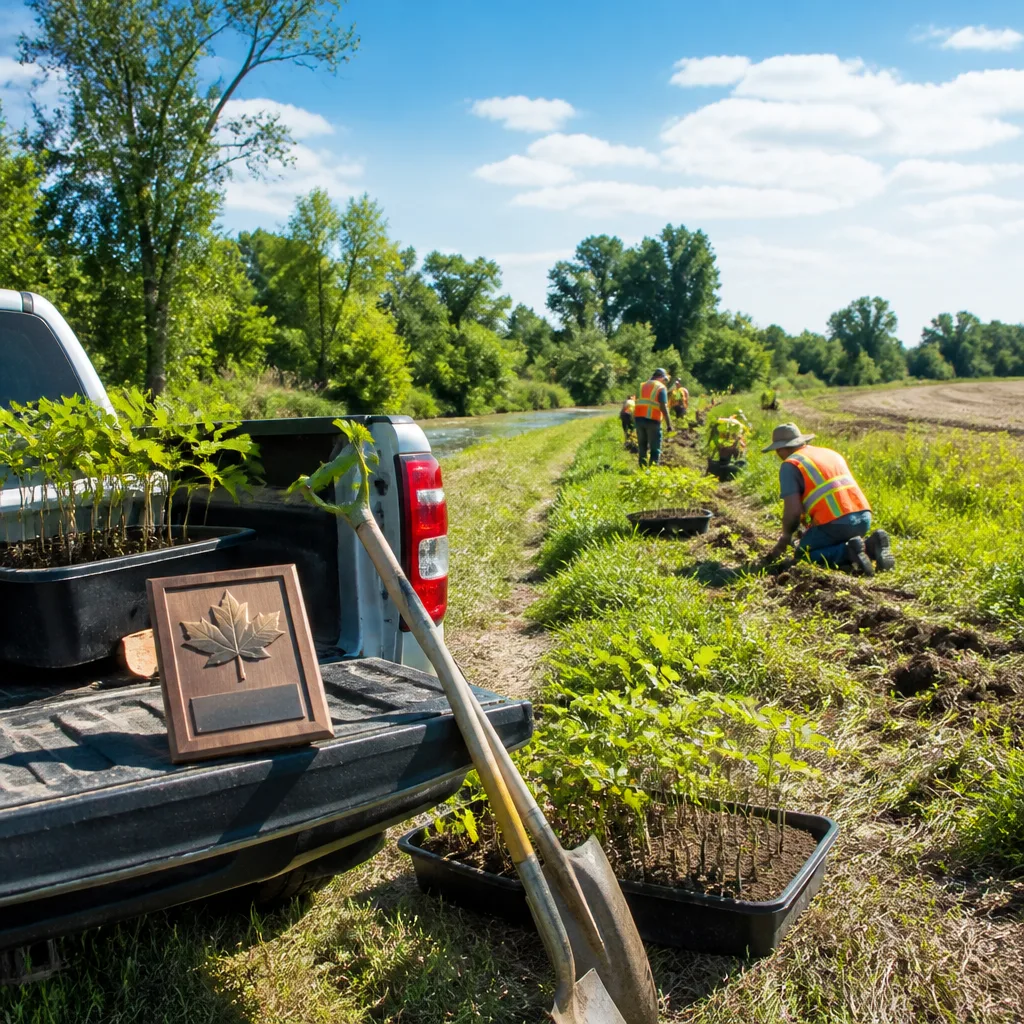
On a summer morning when crews fan out to tuck seedlings into farm field edges and stream banks, the work can feel endless and quiet. For nearly three decades, that’s been the rhythm behind a vast, living footprint: more than 2.5 million trees planted across four counties. This week, that behind-the-scenes effort drew national attention.
At its Annual Planting Partner Meeting at Albion Hills Conservation Area, Forests Canada honoured Saugeen Valley Conservation Authority (SVCA) manager of forestry and lands Donna Lacey with its Most Valuable Planter (MVP) Award. Since 1998, Lacey has been involved in planting throughout Bruce, Grey, Huron and Wellington counties — an undertaking that has reshaped local landscapes while supporting healthier ecosystems and communities.
“I was really surprised and honoured,” says Lacey. “You don’t do this kind of work expecting recognition, so it was pretty overwhelming to hear I’d been selected. I’ve been fortunate to work with a lot of great people over the years, so I really see this award as recognition of the work that we’ve all done together.”
Planting that changes more than the view
The 2.5 million trees now in the ground are doing quiet, essential work. According to SVCA, the plantings are providing wildlife habitat, protecting water quality, storing carbon, reducing erosion and improving overall forest health across the region. For local landowners, municipalities and volunteers, the cumulative benefits arrive season by season — shaded streams that run cooler for fish, windbreaks that protect crops, and woodlots that knit together fragmented natural areas.
- Habitat: New corridors for birds, mammals and pollinators.
- Water: Root systems that stabilize banks and filter runoff.
- Climate: Trees that lock away carbon as they mature.
Lacey’s path to the national spotlight has been built on practical, hands-on work. She began at SVCA as a forest technician and — over nearly three decades — took on a sweep of roles that mirror the scope of community forestry itself. She is an associate professional forester, a Managed Forest Tax Incentive Program plan approver, a certified tree marker, a certified seed collector, a licensed exterminator, a chainsaw operator and even a provincial offences officer. Each credential speaks to the range of tasks required to put the right trees in the right places, and to steward those plantings as they grow.
Local roots, national recognition
SVCA’s forestry and lands department, which Lacey now oversees, manages operations across 21,000 acres, stretching over 15 conservation areas and three campgrounds. That footprint has been a backbone for organizing plantings, nurturing seedlings, and working with partners to add trees across farms, roadsides and public lands.
| Measure | Detail |
|---|---|
| Trees planted since 1998 | 2.5 million+ |
| Counties served | Bruce, Grey, Huron, Wellington |
| SVCA lands managed | 21,000 acres |
| Conservation areas | 15 |
| Campgrounds | 3 |
The MVP Award arrives as community-led forestry continues to carry a larger share of public expectations. Tree planting is increasingly seen as a practical way to improve local water quality, restore biodiversity and build resilience to extreme weather. In that context, the on-the-ground logistics — from sourcing seed to lining up planting crews — matter as much as the ambition. Lacey’s career underscores how these efforts scale when they’re grounded in long-term relationships with landowners and supported by steady operational capacity.
From seed to stand
Beyond counting trees, SVCA’s work touches the full life cycle of a forest project. Certified seed collection supports future planting stock. Tree marking ensures sustainable thinning and healthy growth in managed stands. Chainsaw and pest management certifications point to the day-to-day realities of keeping forests safe and resilient. And the bureaucratic pieces — like approving plans under tax incentive programs — help bring more private land into the fold of sustainable management.
That breadth of activity helps explain why a career spent largely out of the spotlight can produce such visible results across a region. New shelterbelts now rim fields that once stood exposed. Streamside plantings knit together patches of cover where wildlife had few places to travel. In parks and campgrounds, shade and habitat expand year over year, changing how people use and value those public spaces.
Lacey credits the teams and partners who have planted and tended trees alongside her for decades. The award, she says, is a recognition of collective effort as much as personal accomplishment — a nod to conservation staff, municipal partners, landowners, volunteers and contractors who have helped push spades into the ground season after season.
As the meeting at Albion Hills wrapped, the spotlight moved on. But the real measure of the MVP Award is growing quietly in four counties — saplings taking hold, roots setting deeper, and the slow, steady work of turning lines on a planting plan into living, breathing forest.