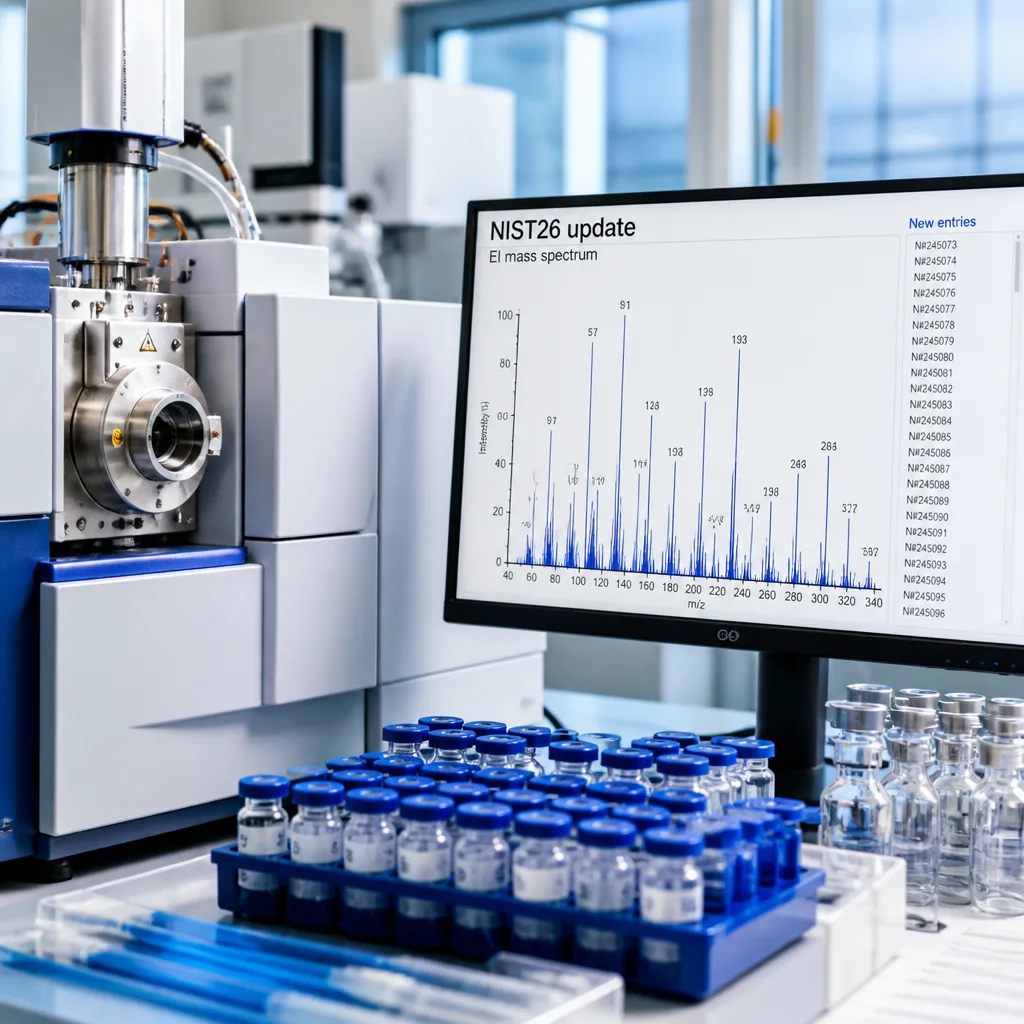
The U.S. National Institute of Standards and Technology has released a major update to its mass spectral library, expanding a cornerstone reference used since 1988 to identify unknown chemicals in food, drugs, cosmetics, the environment and even space rocks. The latest edition of the Standard Reference Database 1A—widely known as NIST26—adds roughly 35,000 new entries to one of the world’s largest collections of chemical “fingerprints.”
What changed in the new release
NIST says the update significantly grows the Electron Ionization (EI) Library, which contains spectral fingerprints for compounds that readily vaporize for analysis. While the institute did not disclose the full new total, the addition of tens of thousands of spectra expands the database measured from hundreds of thousands of compounds. The library ships preinstalled on many commercial mass spectrometers and is also available for purchase through instrument makers and independent distributors.
- Database name: Standard Reference Database 1A (NIST26)
- New content: ~35,000 EI spectra added
- Primary use: Identify unknown substances by spectral matching
- Users: Industry experts, forensic scientists, researchers and manufacturers
How mass spectrometry turns molecules into fingerprints
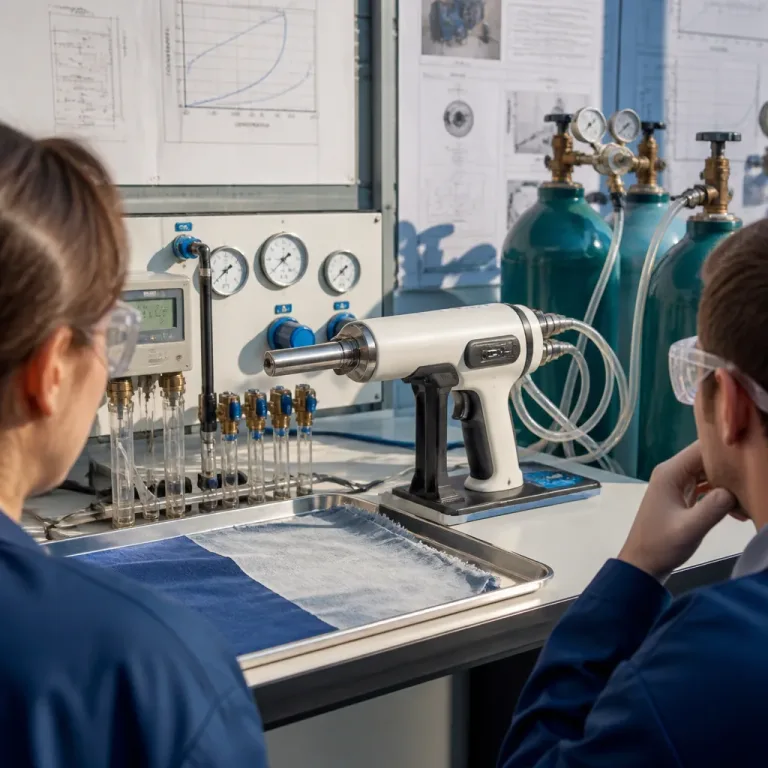
To build the library, NIST scientists use a mass spectrometer, which ionizes and fragments a compound, then separates the charged pieces by their mass-to-charge ratio. The output is a bar-chart-like pattern—its mass spectrum—that is highly characteristic of that molecule. When a lab encounters an unknown, it can generate its own spectrum and query the NIST database for a close match.
“Just as a person may be identified by comparing their DNA to a database, a chemical compound may be identified by comparing its mass spectrum to the NIST database,” said Bill Wallace, group leader of NIST’s Mass Spectrometry Data Center.
Why this matters now
The library’s expansion lands at a time when rapid, reliable identification is central to quality control, safety enforcement and scientific discovery. A larger, more rigorously vetted reference improves the odds that labs can quickly pinpoint unknowns—whether that’s an adulterant in a cosmetic, a contaminant in a food product, an unexpected compound in a pharmaceutical workflow, or a trace pollutant in an environmental sample. The same matching process supports analysis of extraterrestrial materials, where every new spectrum can unlock clues about planetary chemistry.
NIST emphasizes that the updated library went through a comprehensive, software-based evaluation grounded in decades of curation experience. That vetting matters because false positives waste time and can misdirect investigations; tighter criteria and broader coverage reduce those risks by sharpening match confidence.
Where the database is used
While mass spectrometry is a staple across research and industry, the NIST library is particularly influential in workflows that must identify unknowns at speed and scale:
| Sector | Typical identification task |
|---|---|
| Food | Screening for unknown contaminants or adulterants |
| Drugs | Spotting unexpected compounds in pharmaceutical analysis |
| Cosmetics | Checking formulations for unlisted or restricted substances |
| Environment | Tracing pollutants and byproducts in air, water and soil samples |
| Space rocks | Characterizing compounds in meteorites and returned samples |
Access and integration
According to NIST, NIST26 comes bundled with many commercial instruments, minimizing setup friction for labs. For others, the library can be purchased through instrument manufacturers or independent distributors. Because the format and search tools are standard across many platforms, analysts can slot the updated reference into existing pipelines without major revalidation.
For teams facing a steady stream of unknowns—whether routine analysis or incident response—the combination of a larger EI collection and NIST’s long-running quality checks should translate into faster matches and fewer dead ends. In practical terms, that means more confident decisions about product safety, regulatory compliance and research findings, driven by a reference that continues to scale with the chemical universe labs encounter every day.