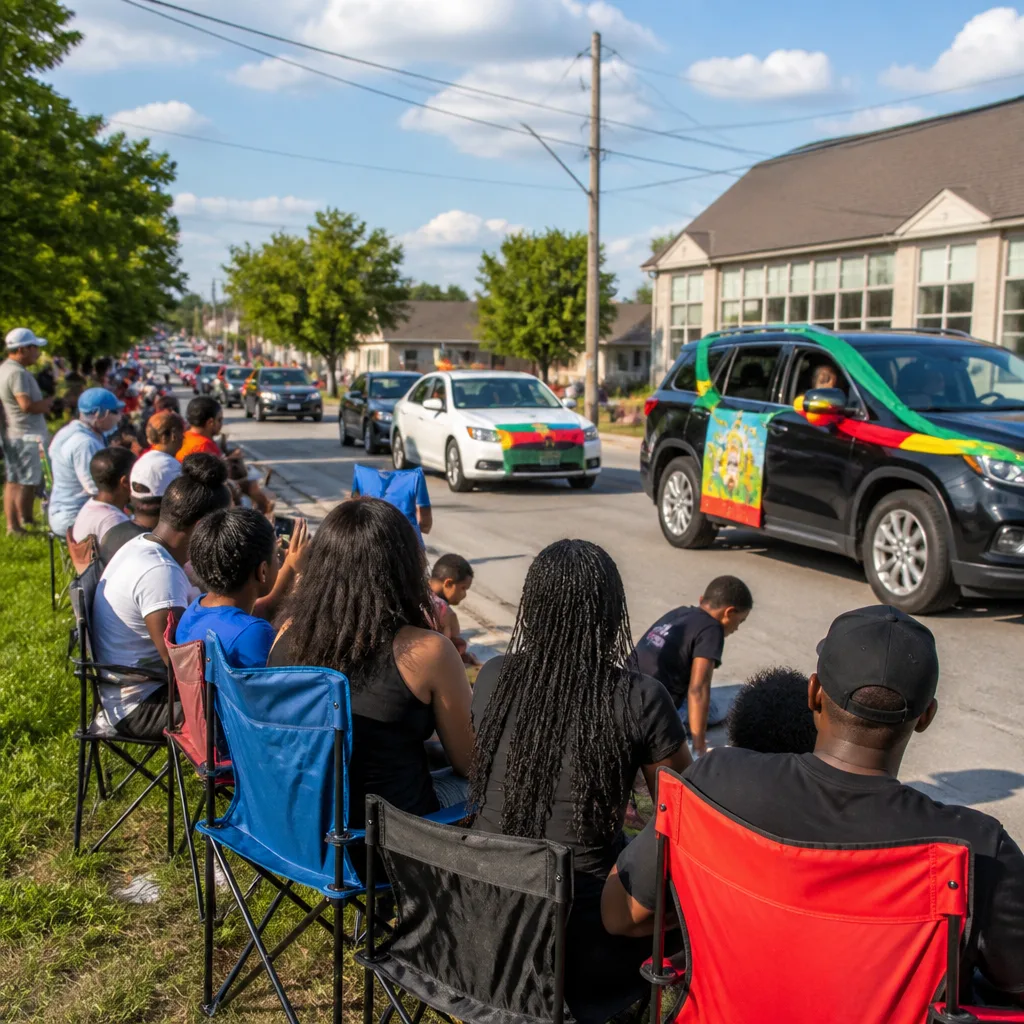
On a warm Saturday in North Preston, neighbours unfolded lawn chairs and children pressed up to the curb as a line of dozens of brightly decorated vehicles rolled past. The annual parade — now in its 19th year — has become the beating heart of this historic Nova Scotian community, Canada’s largest Black settlement, and a reminder of how shared traditions can knit people together.
From a handful of cars to a community mainstay
When organizer Vivian Cain launched the event back in 2007, it began modestly, with just 10 cars circling local streets. It was never about scale, she said; it was about giving kids something to anticipate and a place for families to come together. As the procession moved off Simmons Road and wound past the community centre this weekend, Cain’s original goal felt very much alive.
“They look forward to [the parade] and a chance to get all together as one big community that lives in pride and unity.”
Cain’s point carries added weight in a place where activities and amenities can be scarce. She noted the absence of nearby facilities for children — no local rink, no pool — which makes a day of collective celebration matter that much more. What began as a small loop of vehicles has expanded into a full-scale street festival, complete with music and movement that pulled in people from porches, yards and sidewalks.
Floats, food and a familiar route
The parade stepped off along a familiar route, starting on Simmons Road and passing the local community centre before continuing through the neighbourhood. Residents watched from front lawns or joined in behind the trailing floats, turning the route into a mobile block party. The scene had a distinctly local flavour — families chatting across driveways, grandparents waving from stoops, and kids darting between clusters of friends.
- Colourful floats and ATVs draped in streamers
- Vibrant costumes and live music
- Bouncy castles and local food vendors
That mix of tradition and spontaneity is part of the appeal. What started as a parade has become a gathering that reconnects current residents with old friends and those who have moved away, drawing them back home for a day that feels both festive and restorative.
Bridging generations, sustaining roots
From her living room window, Donna Johnson watched the procession alongside her 96-year-old mother, Ethel Fraser. Both women were born and raised in North Preston, and Johnson reflected on how childhood looked different before smartphones and social media. In her view, the parade closes that distance, blending eras in a shared public moment that keeps community ties intact.
That impulse to return is familiar to volunteer Dwane Provo. Even after living in Toronto, Provo made a point of coming back each year for North Preston Day. He has since moved home to Nova Scotia, drawn by the chance to help protect the community’s rich heritage — a living history built through everyday rituals like this one.
A local celebration with national resonance
North Preston’s parade is not a marquee event on Canada’s summer calendar, but it speaks to something larger: how communities sustain themselves through storytelling, visibility and shared joy. In a country that often narrates itself through big-city stages and national institutions, the textures of belonging — the chairs lined up along a residential street, the cheers that follow a slow-moving float — are built at the neighbourhood level.
For Canada’s largest historic Black community in Nova Scotia, that visibility is its own form of infrastructure. With no arena or pool just down the road, this annual gathering becomes the venue — a place to see and be seen, to pass along memories, and to remind younger generations why coming home matters. As the last notes of music faded and floats eased out of view, what lingered was the point of the day itself: pride, unity and a promise to meet again next year.