Province seeks supply-chain resilience amid tariff shocks
Quebec is signalling a sharper pivot toward Europe as it looks to reduce exposure to turbulent trade dynamics with the United States and China. International affairs minister Christopher Skeete says the province will intensify its economic engagement across the Atlantic to bolster supply chains and steady a manufacturing-heavy economy that has been squeezed by recent tariff and export-control decisions.
In an interview published by Euractiv, Skeete framed the strategy as an effort to align with partners that share Quebec’s social and cultural heritage, while also diversifying markets beyond its dominant southern client. With more than 70% of Quebec’s exports headed to the U.S., tariff measures have taken a toll—particularly on aluminium smelters and other export-reliant industries. At the same time, Chinese restrictions on strategically vital minerals have exposed vulnerabilities in technologies and sectors reliant on those inputs.
“We’re doubling down on that right now, hoping to go further and do more. We believe in a deeper relationship with Europe as a way of mitigating some of the risks of having a single client, which historically has been the US.”
Critical minerals at the centre of the pitch
Quebec has leaned into its role as a mineral-rich jurisdiction, with growing output of lithium, graphite and other elements deemed strategically important by European authorities. The government’s case to European partners is twofold: shoring up Europe’s industrial sovereignty while reducing dependence on Asian supply chains, and anchoring value-added processing at home through expanded mining and refining capacity.
“We can help Europe be more sovereign, but also reduce its dependency on Asian supply chains,”
said Skeete, adding that building capacity will require sustained effort. He called loosening Beijing’s grip on global mineral supplies a moral necessity rather than a question of difficulty.
Shared jurisdiction, shared risk
Quebec’s move lands in a complex policy space where the province shares responsibility for economic affairs with the federal government. While Ottawa oversees trade treaties and border measures, Quebec’s industrial policy, infrastructure planning and workforce training are central to whether companies can navigate supply shocks. That division of powers has practical consequences for local communities as they confront tariff volatility and supply-chain delays.
- Export exposure: A heavy reliance on the U.S. market leaves manufacturers sensitive to sudden duties.
- Inputs at risk: Chinese export controls on critical minerals ripple through technology-rich sectors.
- European option: Closer transatlantic links could diversify markets and secure raw materials.
Manufacturing strain and the case for diversification
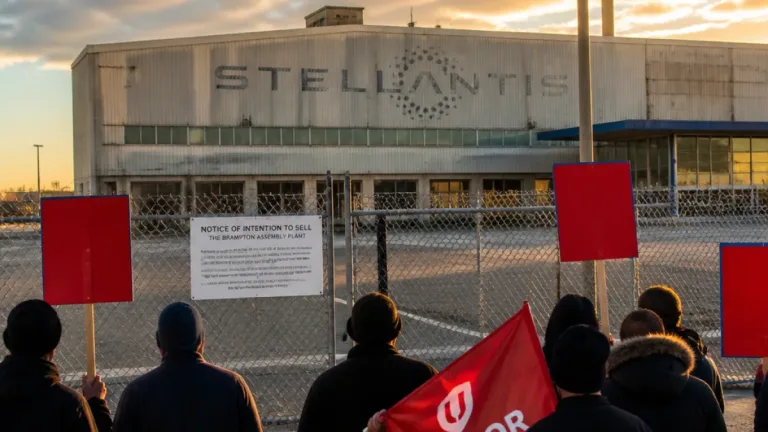
Trump-era levies, along with uncertainty around defence commitments and rhetoric affecting North American partners, have unsettled firms that depend on predictable access to the U.S. Skeete’s remarks reflect a broader recalibration in Canada-Europe relations over the past year, as policymakers seek to deepen economic and security cooperation in response to shifting U.S. policy and geopolitical tension.
For Quebec’s employers and workers, exposure to tariff cycles has meant higher costs, planning delays and reduced competitiveness—particularly in energy-intensive operations like smelting. The province’s approach outlines a path that blends market diversification with upstream resource development, aiming to lessen pressure on factories, regional suppliers and municipal infrastructure that services industrial hubs.
What a Europe pivot could mean on the ground
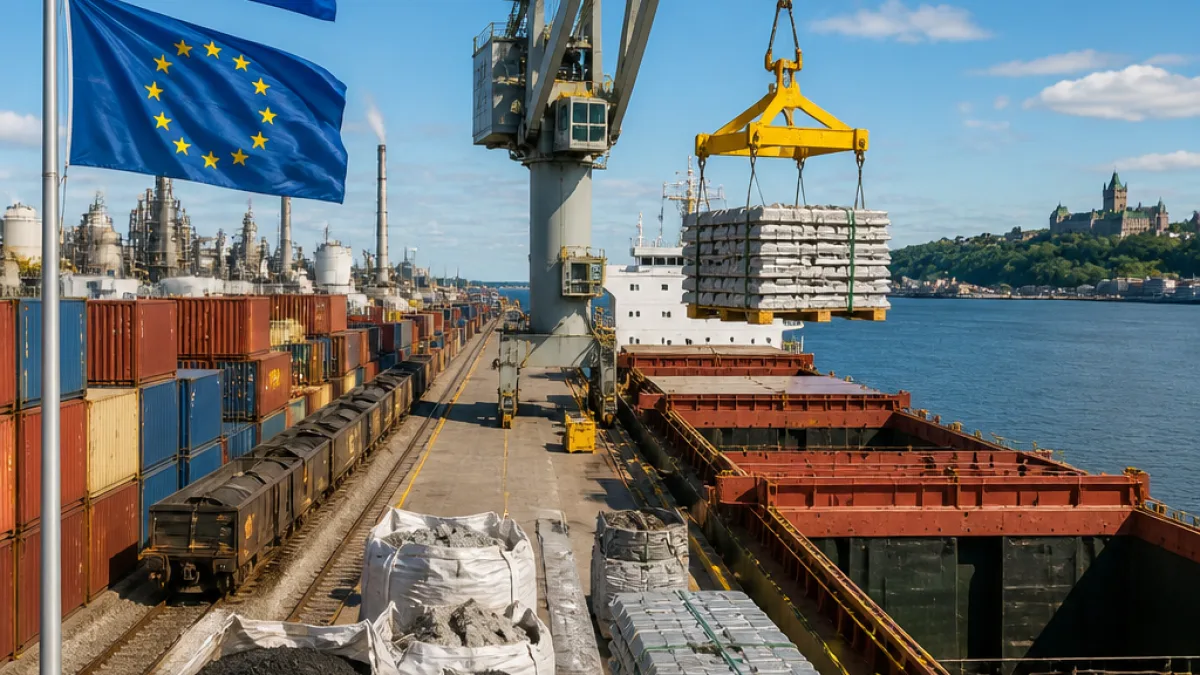
If the province succeeds in expanding European trade and investment, the immediate local impact would likely be felt in procurement stability and longer-term contracts for raw materials and processed inputs. Communities near mining sites could see increased activity tied to exploration and refining, while export logistics—ports, rail links and warehousing—would factor into how quickly firms can reorient sales.
Officials are positioning the shift not as a break with the U.S. market, but as a pragmatic hedge. The aim is to protect public services and community economies exposed to single-market risk by broadening commercial relationships where values and regulatory approaches are more closely aligned with Quebec’s own institutions.
At a glance: exposure and assets
| Indicator | Details |
|---|---|
| Share of exports to U.S. | Over 70% |
| Industries hit by tariffs | Aluminium smelters and export-reliant manufacturers |
| Strategic minerals in Quebec | Lithium, graphite, others identified as critical in Europe |
Next steps
Quebec’s message to European partners emphasizes cultural affinity and a common outlook as a basis for doing more together on trade and industrial policy. The government’s focus on both extraction and refining indicates it wants more of the supply chain anchored locally, with Europe as a stable demand centre. Whether those ambitions translate into durable gains will depend on companies’ appetite to invest, the pace of regulatory approvals and how global trade measures evolve.
As the province advances this agenda, manufacturers, municipalities and workers will be watching for concrete signals—new agreements, procurement frameworks and project timelines—that show diversification can buffer the next round of shocks without sacrificing competitiveness at home.