Sonam Wangchuk, the Ladakh-based engineer and educator known for classroom innovation and climate solutions, has shifted firmly into national advocacy, using prolonged fasts to press for education reforms in India following the NEET entrance exam controversy. His actions have amplified concerns about exam integrity, student trust and governance of admissions in one of the world’s largest education systems.
From classroom innovator to national activist
Wangchuk first gained recognition for high-altitude sustainability projects and hands-on learning models. A central effort is the Ice Stupa initiative—artificial glaciers designed to store winter meltwater for spring, a lifeline technology for communities in cold deserts. His philosophy of practical, innovation-led learning reached a broader audience when elements of his life and work helped inspire a character in the Bollywood film 3 Idiots, which popularized a critique of rote learning and celebrated curiosity-driven education.
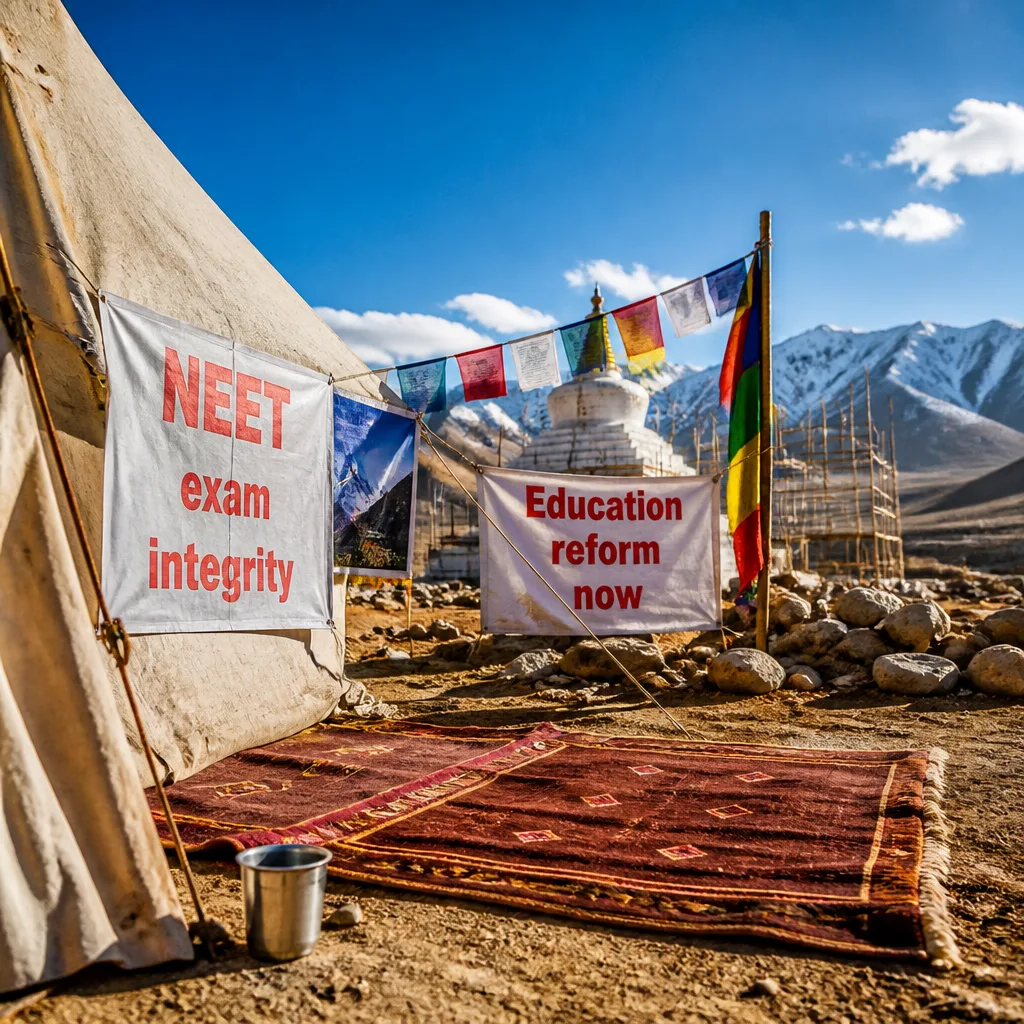
In 2024, Wangchuk undertook a 21-day fast at roughly 11,500 feet in Ladakh, subsisting on water and salt to call attention to legal protections for his region’s resources and fragile ecology. Two years later, in 2026, he fasted again for 21 days, this time under a tarpaulin at Delhi’s Jantar Mantar in mid-summer heat, directly linking his action to demands for education reforms amid widespread outrage over the NEET paper leak controversy.
Why his 2026 fast resonated with students and families
India’s highly competitive entrance exams are gateways to professional courses and public institutions. When questions arise about fairness or security, consequences reverberate through families and communities: months or years of preparation can be upended, and confidence in admission outcomes can erode quickly. Wangchuk’s focus on the NEET controversy aligns with this public anxiety, placing governance, transparency and exam administration in the national conversation.
- NEET stakes: High-impact exam outcomes that determine medical education futures.
- Fairness concerns: Allegations of leaks undermine student morale and public trust.
- Reform demand: Calls for stronger safeguards, accountability and oversight.
Linking ecology, governance and education
Wangchuk’s activism did not begin with education policy. After the revocation of Article 370 in 2019 and Ladakh’s establishment as a Union Territory, he initially welcomed the administrative change for its potential to accelerate development. But he also warned that Ladakh’s fragile environment and tribal identity required constitutional protection. Over time, he became a leading voice for measures to balance governance, ecology and local agency.
His platform has expanded into a set of demands that connect regional rights with broader public-interest reforms, including education. According to his long-standing advocacy, these priorities include:
- Sixth Schedule inclusion to protect tribal land, culture and resources.
- Statehood or enhanced democratic representation for Ladakh.
- Constitutional safeguards against uncontrolled industrialization and ecological harm.
- Local control over natural resources and development decisions.
Timeline of a fast-evolving public role
| Year | Action | Focus |
|---|---|---|
| 2019 | Supports UT status for Ladakh with cautions | Governance potential vs. ecological and cultural safeguards |
| 2024 | 21-day climate fast at high altitude | Legal protections for Ladakh’s resources |
| 2026 | 21-day fast in Delhi | Education reforms following NEET controversy |
What this means for students and policy-makers
For students and families, Wangchuk’s 2026 fast elevates the practical questions that matter most: certainty about exam schedules, clear and timely communication when problems arise, and confidence that any compromised tests are addressed with transparent remedies. For governments and exam bodies, it underscores the need for stronger prevention, rapid response protocols and credible oversight to preserve the integrity of high-stakes assessments.
While Wangchuk’s ecological campaigns and his education-focused protest seem distinct, they share a throughline: systems that are accountable to communities. Whether the issue is admissions fairness or safeguarding a fragile mountain ecosystem, his approach centres on long-term resilience and public trust—principles that students and parents rely on when planning education and careers.
As India debates reforms following the NEET controversy, Wangchuk’s evolution from classroom innovator to national campaigner highlights a broader shift: education policy is no longer just about curricula and classrooms, but about governance frameworks that earn confidence. The coming months will test whether calls for reform translate into stronger protections for learners and fairer, more resilient systems.