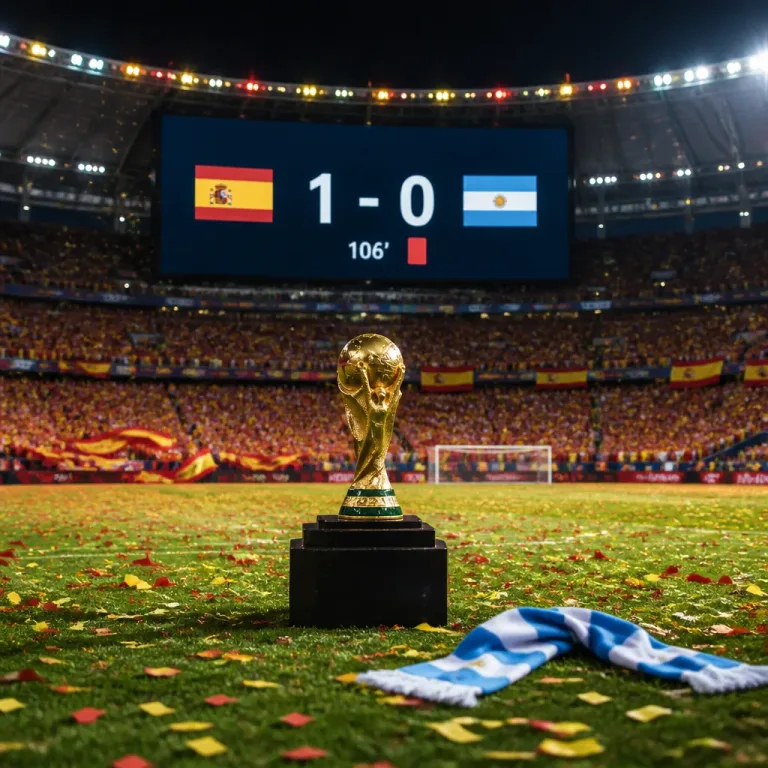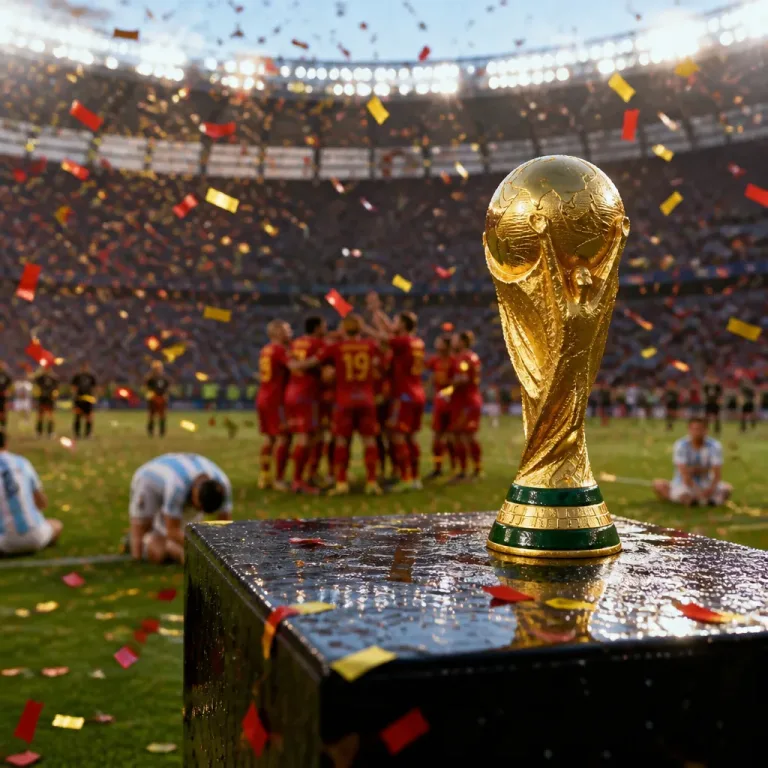
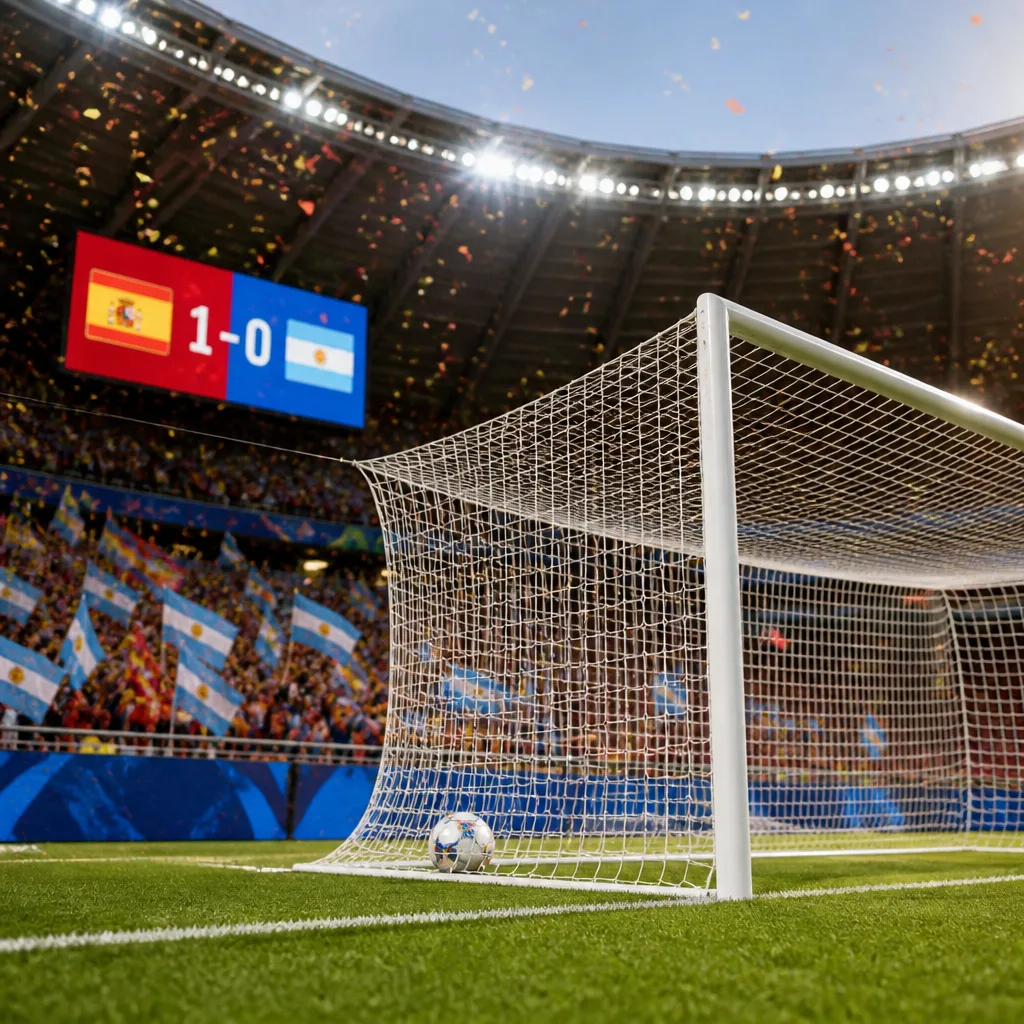
Spain captured the 2026 FIFA World Cup with a 1-0 victory over Argentina after extra time on Sunday, prevailing in a taut final at the New York New Jersey Stadium that swung on patience, pressure and a late breakthrough.
Spain control the tempo, Argentina hang on
Spain opened with intent, nearly striking in the fifth minute when Lamine Yamal combined with Dani Olmo, only to see the chance smothered. Argentina answered immediately with a ball slipped by Julián Álvarez to Lionel Messi — described as the oldest outfield player to feature at the tournament — but goalkeeper Unai Simón was alert and off his line to intervene.
As the first half wore on, Spain’s poised possession suffocated the defending champions. Mikel Oyarzabal drew a strong save from Emiliano Martínez in the 39th minute, and Argentina were forced into an early defensive reshuffle with Nicolás Otamendi replacing Lisandro Martínez before the interval. Notably, the titleholders reached halftime without recording a single shot — a stark signal of Spain’s control.
Martínez stands tall, but pressure mounts
Spain continued to turn the screw after the break. Álex Baena tested Martínez from range, Ferran Torres headed at the keeper from a Yamal cross, and close-range efforts from Pedri and Pau Cubarsí were also repelled. Aymeric Laporte’s header was dealt with as well, as Argentina’s goalkeeper kept them level through a flurry of attempts.
With four minutes of regular time left, Mikel Merino clipped a teasing ball to Torres, who missed the target. Tension spiked in stoppage time when Enzo Fernández was sent off for a second yellow card, leaving Argentina a player short for the decisive phase. Even then, Martínez denied a late Yamal free kick to force extra time.
Extra time finally breaks the deadlock
Spain’s numerical advantage told in added time. Nico Williams was thwarted again by Martínez in the opening stages, and when Williams later put the ball in the net after a favourable bounce, it was ruled out. The pressure persisted, and Spain finally found the extra-time winner to settle a final that had been defined by narrow margins and defensive resilience.
Why it matters
For a global audience — including Canadian fans who have followed a month of high-stakes football — this was a showcase of method over mayhem. Spain’s triumph capped a tournament-long argument for control and collective structure. Argentina’s resistance, propped up repeatedly by Martínez, underscored how thin the line can be between back-to-back titles and a silver medal. Messi featured prominently but, facing an organized opponent and dwindling space, could not bend the final to his will. The result closes one era’s chapter while underscoring the rise of a younger Spanish core that handled the pressure of a championship match.
Key moments at a glance
| Minute | Event |
|---|---|
| 5' | Yamal and Olmo combine; Spain chance blocked |
| First half | Simón races out to deny Messi after Álvarez pass |
| 39' | Oyarzabal forces save from Emiliano Martínez |
| HT | Argentina finish half without a shot |
| Second half | Martínez stops efforts from Baena, Torres, Pedri, Cubarsí, Laporte |
| 90+’ | Enzo Fernández sent off (second yellow) |
| ET | Williams denied; later strike ruled out; Spain score winner |
The balance of the final
- Spain controlled possession phases and generated the clearer looks.
- Argentina leaned on Martínez’s shot-stopping to stay alive.
- A late red card shifted the endgame, with extra time tilting toward Spain.
In the end, Spain’s composure under pressure and deeper bench legs in extra time separated the sides. The 1-0 scoreline reflects a match where the margins were slim, the duels relentless and one decisive moment crowned a new champion.