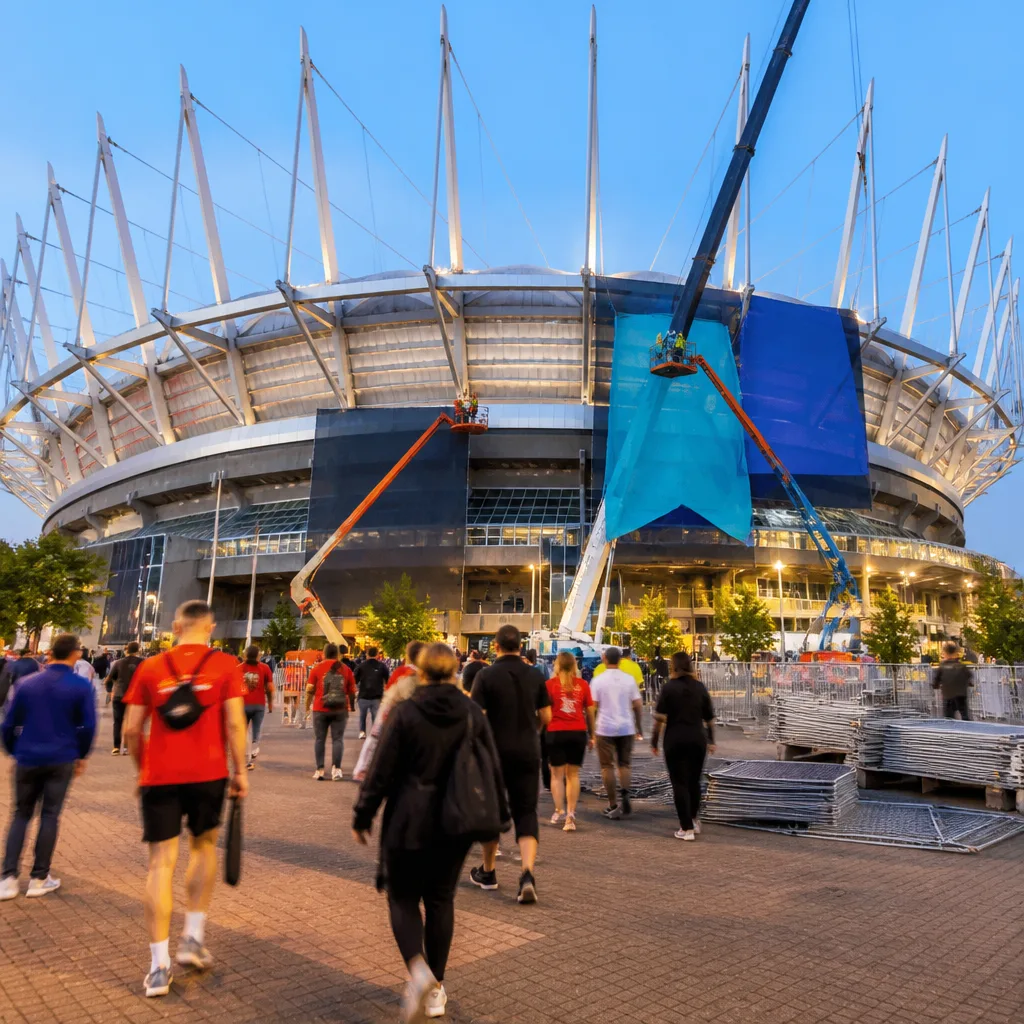
As FIFA banners are taken down across the city and security barriers come off BC Place, Vancouver officials face the delicate task of turning the recent influx of visitors and attention from the World Cup into a sustained local benefit rather than a short-lived afterglow.
Closing down the tournament, opening up opportunities
Destination Vancouver chief executive Royce Chwin says the city is working to avoid what he describes as “the great sigh,” an outcome where the immediate excitement of hosting fades quickly and leaves limited long-term returns. The comment comes as the city begins the logistical process of dismantling temporary infrastructure installed for the event.
A photograph from the tournament captured fans leaving BC Place after Switzerland’s defeat of Canada on June 24, highlighting both the local passion for the matches and the large crowds that the city accommodated during the competition.
Why this matters to Canadian readers
Major international events can deliver short-term boosts — hotel stays, restaurant traffic and global exposure — but the challenge for host cities is translating that surge into ongoing economic activity, improved venues and stronger civic planning. Vancouver’s leaders are signalling they want to lock in gains while avoiding the common pitfall of a fading spotlight.
- Economic leverage: capturing tourism and business opportunities that outlast the tournament.
- Urban legacy: repurposing temporary infrastructure and public spaces for community use.
- Perception management: sustaining global visibility to attract future events and investment.
What officials are facing
Removing banners and barriers is the visible start of post-event work, but the longer-term questions involve strategy and coordination among civic agencies, tourism bodies and local businesses. Destination Vancouver’s public remarks signal an intent to focus on that coordination.
“The great sigh.”
The phrase encapsulates a common municipal concern: that the energy and attention generated by hosting a global sporting event can dissipate unless concrete steps are taken to embed benefits in city life.
| Stage | Focus |
|---|---|
| Immediate | Remove temporary infrastructure; restore public spaces |
| Short-term | Support businesses and tourism partners to convert visitors into repeat customers |
| Medium-term | Plan legacy uses for upgraded venues and maintain international profile |
As Vancouver moves from hosting mode to legacy planning, the city’s ability to coordinate public and private actors will determine whether the World Cup becomes a lasting asset or a fond, short-lived memory for neighbourhoods and businesses across the region.