
BlackSky Technology’s latest U.S. government research and development awards for its next-generation, AI-enabled satellite network have pushed the company back into the spotlight, underscoring a rapidly evolving market for real-time orbital intelligence—even as the stock has slumped in recent weeks.
The company’s Gen‑3 constellation aims to fuse on‑orbit analytics with rapid imaging to deliver near‑instant insights from space, including post‑strike damage checks that are critical for military planners. That technical pitch is now backed by fresh U.S. government R&D contracts, a signal of demand for systems that can detect, classify and alert on changes on the ground without waiting for data to be shipped to Earth for processing.
Stock under pressure, long‑term case intensifies
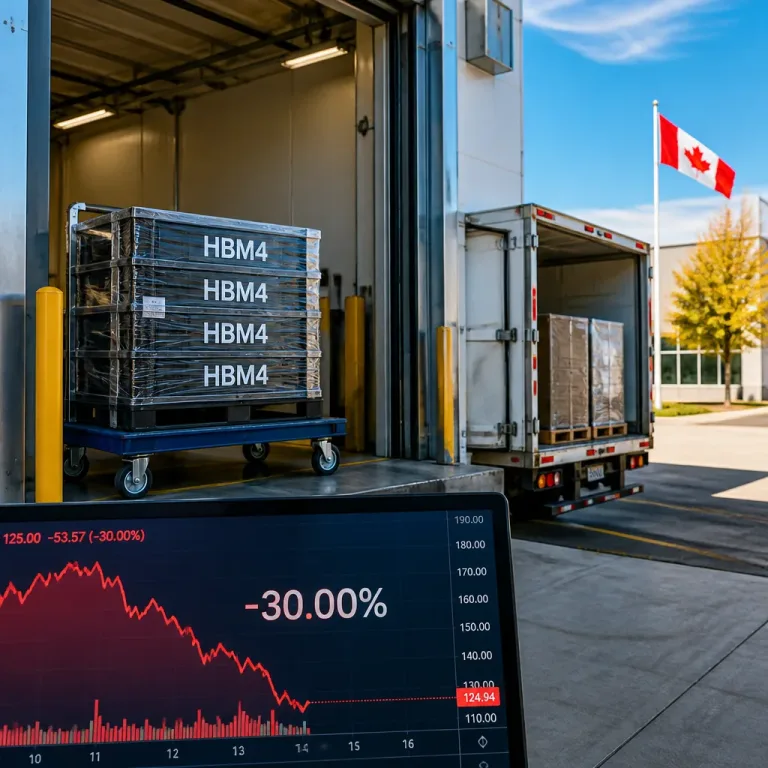
Despite the contract momentum, investors have punished the shares in the short term. BlackSky’s 30‑day return is −23.46% and its 90‑day return is −40.70%, according to analysis reviewed for this story. Over a longer horizon, however, the three‑year total shareholder return sits at +44.47%, highlighting a split between recent sentiment and earlier gains.
A widely followed valuation narrative pegs a fair value of US$40.50 against a most recent close of US$22.19, implying the shares are roughly 45.2% undervalued. Proponents of that view argue the Gen‑3 rollout—paired with demonstrated performance and lower cost per image—could accelerate recurring imagery and analytics revenue once broader availability begins in the fourth quarter.
| Metric | Value |
|---|---|
| 30‑day share price return | −23.46% |
| 90‑day share price return | −40.70% |
| 3‑year total shareholder return | +44.47% |
| Last close | US$22.19 |
| Illustrative fair value | US$40.50 |
| Implied undervaluation | 45.2% |
What Gen‑3 is trying to solve
Traditional Earth‑observation models move data from the satellite to a ground station and then into cloud systems for analysis. BlackSky’s Gen‑3 architecture is designed to push more of that workload into orbit, using AI models to triage images, flag objects of interest and compress delivery times from minutes to seconds. For defence users, that can translate into near‑real‑time change detection and battle damage assessment—essentially, verifying in short order what has changed after an event and where.
Commercial customers have historically cared about revisit rates (how often a satellite images the same spot) and resolution (how sharp the picture is). Increasingly, the differentiator is speed to insight. If the satellite can perform initial classification or cue additional passes without waiting for ground processing, tasking becomes more efficient, alerts arrive faster and operators can automate follow‑up imaging. BlackSky’s bet is that this workflow will expand subscription‑style analytics revenue as customers standardize on automated monitoring rather than one‑off imagery purchases.
Demand signals and the revenue clock
The company points to growing interest—both domestically in the U.S. and internationally—as performance improves and unit costs fall. The narrative framing the stock as undervalued ties a potential revenue step‑up to the fourth‑quarter general availability of Gen‑3 services, followed by a broader expansion of recurring analytics in 2025 and beyond. Analysts watching the sector often link scale in tasking and analytics to margin improvement, since software‑driven products can layer onto the same image collection without proportionate cost increases.
- Fresh U.S. government R&D contracts validate demand for on‑orbit AI and rapid tasking.
- General availability in Q4 is a key milestone for activating contracted pipelines.
- Recurring analytics revenue is central to the long‑term margin and cash‑flow story.
Risks that could undercut the bull case
The bullish valuation lens is not without caveats. The company faces execution risk in scaling Gen‑3, financing risk tied to sustained capital needs, and potential equity dilution. Spending associated with its Arrow program is another watchpoint identified in the analysis. If adoption lags, costs overrun, or capital becomes more expensive, the path to the projected revenue inflection could lengthen, compressing the implied discount between the share price and fair value.
Another open question is breadth of uptake. The case for expansion leans on increasing usage of the company’s Spectra platform and a broader satellite portfolio. Those levers need to translate into measurable growth in imagery subscriptions and analytics seat counts to support the higher valuation scenario. In the near term, investors will look for clearer evidence that recently awarded contracts are converting into scaled, recurring workloads.
Why this matters beyond one stock
For Canada and its allies, the shift to AI‑assisted, space‑based intelligence has wider implications. Space systems that can spot, classify and alert at machine speed change how militaries plan operations and how civilian agencies monitor infrastructure, disasters and climate‑driven change. The investment community is essentially pricing the pace at which that capability moves from pilots and R&D into everyday operations. BlackSky’s latest contracts are one data point in that timeline; the fourth‑quarter rollout and 2025 revenue profile will tell investors and policymakers whether on‑orbit AI has hit its commercial stride.