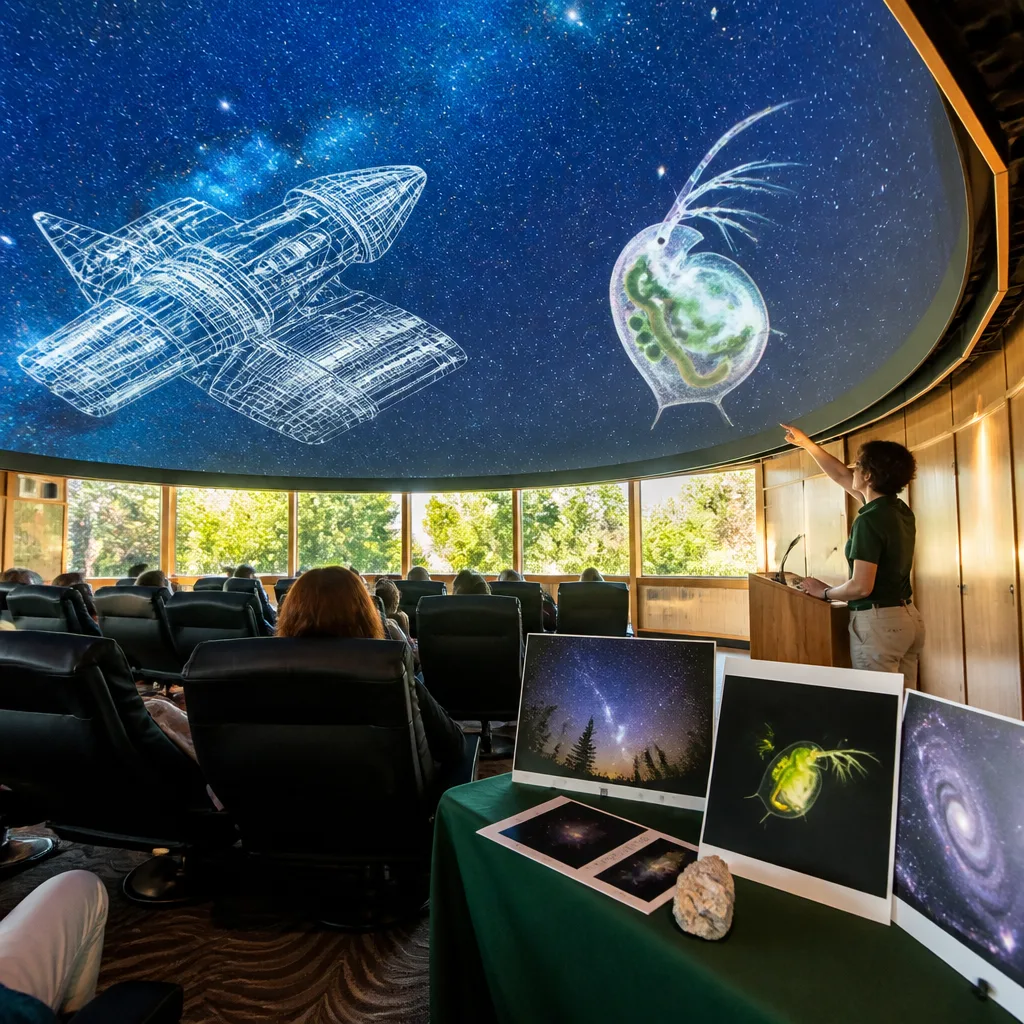
The Pajarito Environmental Education Center (PEEC) will present "The Science of Project Hail Mary" from 7 to 8 p.m. on Tuesday, July 21 in the planetarium at the Los Alamos Nature Center, offering the public a guided look at the scientific ideas that underpin Andy Weir’s bestselling novel and its recent film adaptation.
What the programme will cover
The hour‑long presentation — described by PEEC as light‑hearted and aimed at general audiences, including older children — will probe the overlap between the story’s speculative elements and actual science. Organisers say presenters, who are fans of both the book and the film, will address questions raised by readers and viewers such as whether the novel’s imagined planet is plausible, what inspired Weir’s concepts of non‑water‑based lifeforms, and which elements were altered in the transition from page to screen. The event notice includes a warning that it will contain spoilers for those who have not read or seen the story.
- Event: "The Science of Project Hail Mary"
- When: 7–8 p.m., Tuesday, July 21
- Where: Planetarium, Los Alamos Nature Center
- Presented by: Pajarito Environmental Education Center (PEEC)
Context: the book and its reach
Andy Weir’s Project Hail Mary was published in 2021. The novel follows Ryland Grace, who awakens on a spacecraft with no memory of how he got there. It received critical attention in the years following publication: the book was a finalist for the 2022 Hugo Award for Best Novel and its audiobook won the 2022 Audie Award for Audiobook of the Year. In 2026, a cinematic adaptation of the story was released, further raising public awareness of the novel’s scientific premises.
| Year | Milestone |
|---|---|
| 2021 | Publication of Project Hail Mary |
| 2022 | Finalist for Hugo Award; audiobook won Audie Award |
| 2026 | Film adaptation released |
Local connection and outreach value
The film adaptation involved Los Alamos native Drew Goddard as screenwriter, a detail organisers highlight as part of the local interest in the programme. Events such as the PEEC presentation illustrate how science fiction can be used as an entry point for public science engagement: by examining where a story aligns with current science, and where it takes creative licence, presenters can encourage curiosity while clarifying real‑world limitations.
PEEC’s description emphasises the event’s appeal to both scientists and science‑fiction fans. That mix is increasingly common in community outreach, where popular narratives help broaden audiences for scientific discussion without sacrificing accuracy. Attendees should expect a mix of explanation, comparison between text and film, and audience‑oriented questions about plausibility.
Admission details and any registration requirements were provided by PEEC through the Los Alamos Nature Center announcement.