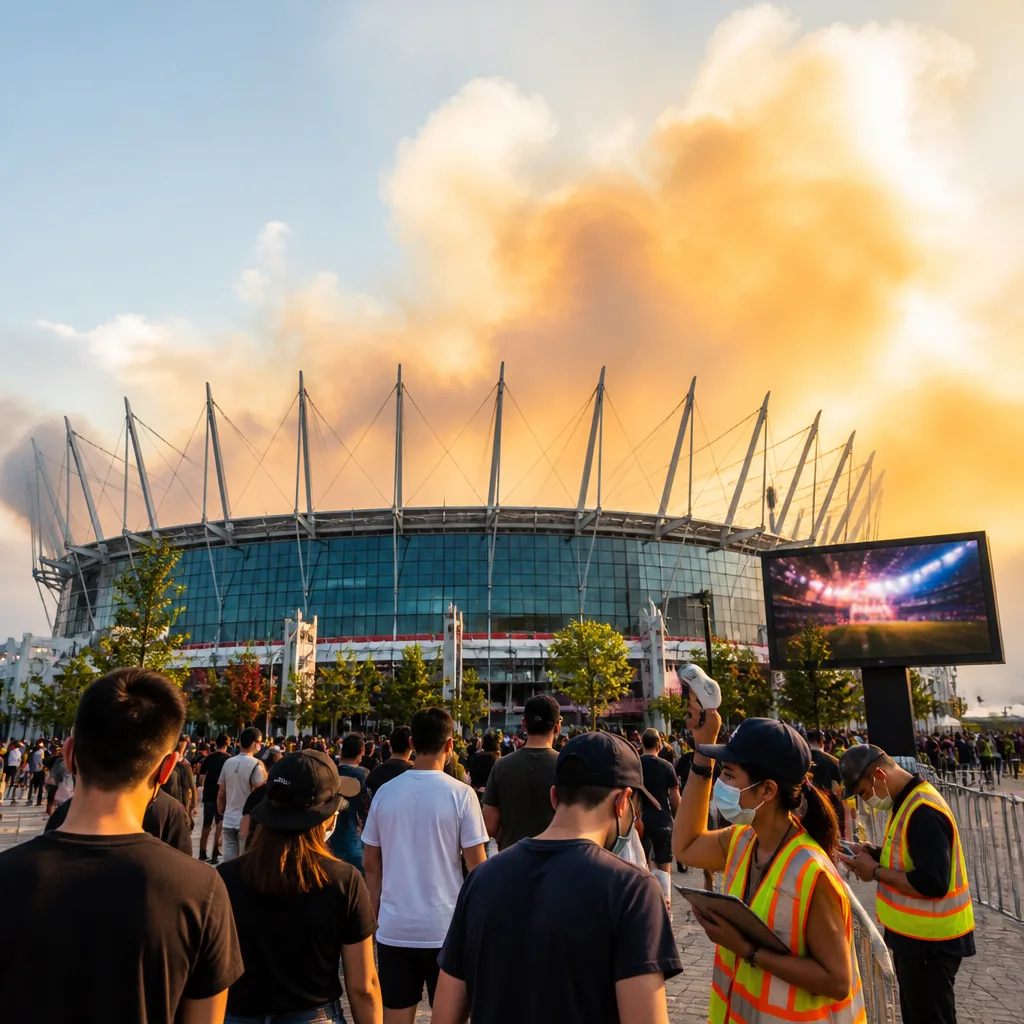
Smoke from wildfires in Canada has drifted into the New York–New Jersey region and raised fresh concerns about air quality at Sunday’s World Cup final, though medical experts say a postponement remains unlikely unless conditions deteriorate further.
Health risks and the decision to play
Dr. Myles Druckman, a Toronto-born physician now based in Santa Monica, warned organisers to monitor conditions closely because of the potential impact on tens of thousands of fans who will be shouting and breathing in smoky air. He said the crowd — not only the players — must be considered when assessing whether it is safe to proceed.
“You’re driving with your lights on,” Druckman said. “I think that if we get into that kind of situation, then we’ll probably see a delay, but we’re all hoping that that’s not going to be the case.”
The World Health Organization’s forecast indicated an improvement to moderate air quality in East Rutherford ahead of the match, and air quality measurements did show some improvement on Friday. But meteorological forecasts remain uncertain: up to 3.17 centimetres of rain was predicted for Saturday, and precipitation could change how smoke disperses overnight and into match day.
Already disrupting sport
Across Canada and the United States, wildfire smoke has forced adjustments to sporting schedules this week, underscoring how far-reaching the impacts of northern fires can be.
- The Vancouver Whitecaps’ Major League Soccer match in Chicago was postponed.
- A Canadian Premier League fixture between Forge FC and Pacific FC in Hamilton was rescheduled because of poor air quality from wildfires in northern Ontario.
- The New York Mets and Philadelphia Phillies moved the start time of their game in Philadelphia earlier, citing air-quality concerns.
| Event | Action taken | Location |
|---|---|---|
| Vancouver Whitecaps MLS game | Postponed | Chicago |
| Forge FC vs Pacific FC | Rescheduled | Hamilton |
| Mets vs Phillies | Start time moved up | Philadelphia |
Perspectives from the field
Druckman said that while very small, hazardous particles tend to disperse faster than larger particles, the mixture of particles that remains can still irritate the respiratory system. He noted that those in attendance at large outdoor events are particularly vulnerable because of the sustained exertion and vocalisation that accompany cheering.
Philadelphia’s Bryce Harper — playing in one of the games altered this week — expressed his unease to ESPN, saying it was “not the greatest idea, I guess, to come out here and play in this type of weather.”
Why this matters to Canadians
Wildfires in Canada are increasingly producing cross-border smoke episodes that affect major international events and public health beyond provincial borders. The disruptions to sporting schedules at home demonstrate both the local toll of fires and their reach into global gatherings. As climate-driven fire seasons lengthen, officials in Canada and the United States will face more frequent pressure to weigh public-health guidance against the logistical and commercial consequences of postponing high-profile events.
Organisers monitoring the World Cup site will need to weigh the forecast, real-time air-quality readings and the potential health impacts on spectators and players. For now, experts suggest that a delay is not the most likely outcome, but they emphasise that the situation could change quickly and warrants careful, ongoing assessment.
What to watch next: changes in official air-quality indices for East Rutherford, overnight weather that could clear or trap smoke, and any last-minute decisions from organisers about scheduling or spectator safety measures.