At least 930 people have died during the latest Ebola outbreak in the Democratic Republic of Congo, the Ministry of Health said Monday, as the number of confirmed cases reached 2,344 and safety concerns hamper the response in the country’s east.
The ministry reported 37 deaths in a single 24-hour period from Friday into Saturday, among the highest daily totals since the crisis began. The outbreak, declared on May 15, has been described by authorities as the fastest-growing Ebola event on record in the country. Health officials say five eastern provinces have reported cases, with Ituri identified as the hardest hit amid ongoing insecurity.
Virus strain without approved vaccine
Laboratory analysis attributes this outbreak to the Bundibugyo ebolavirus, a less common cause of Ebola disease. Unlike other Ebola species for which countermeasures exist, there is currently no approved vaccine or treatment specific to Bundibugyo, complicating clinical management and prevention strategies. Ebola remains a severe, often fatal illness that can pass to humans from wildlife and spread among people through contact with infected bodily fluids and contaminated materials such as bedding or clothing.
Response under strain
Health workers have faced significant risks and operational barriers. Authorities reported at least 12 attacks on health teams and facilities since mid-May, many linked to rumours and community mistrust. Front-line staff have also staged walkouts over unpaid wages. The ministry confirmed that 36 health workers infected during the outbreak have died.
The World Health Organization (WHO) raised alarm last week that approximately 80% of new infections were traced to unknown chains of transmission. That pattern suggests undetected spread outpacing contact tracing, even as authorities expand interventions. Congo’s health officials said 724 patients are currently isolated or hospitalized across affected zones and that treatment capacity is being reinforced.
“Patient care and support capacities are consolidating, with 22 new recoveries recorded in 24 hours,” the ministry said.
How Ebola spreads and why containment is challenging
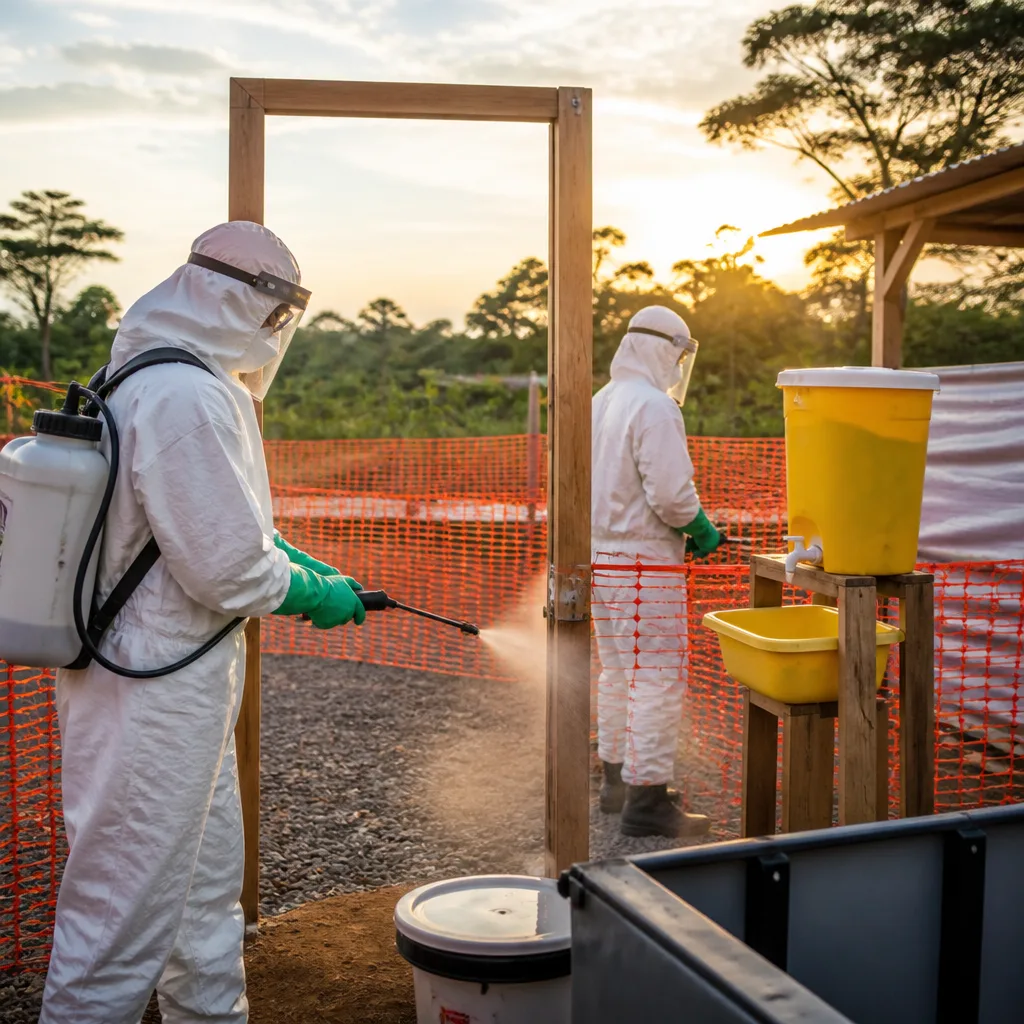
Ebola transmission occurs via direct contact with blood, vomit, semen and other bodily fluids from a person who is ill or has died from the disease, or by touching contaminated surfaces and materials. In eastern Congo, response teams have navigated both epidemiological and security challenges: violence by armed groups has restricted access to communities, and misinformation has triggered hostility toward responders. These factors complicate the essential pillars of containment—rapid case identification, safe isolation, contact monitoring, and safe and dignified burials.
- Transmission risk is highest during illness and after death without safe burial practices.
- Delays in care-seeking and hidden cases allow unnoticed spread within households and health facilities.
- Attacks on clinics and teams interrupt surveillance and vaccination strategies used for other Ebola strains.
By the numbers
| Indicator | Figure |
|---|---|
| Confirmed cases | 2,344 |
| Reported deaths | 930 |
| New deaths (24 hours) | 37 |
| Patients isolated/hospitalized | 724 |
| Health worker deaths | 36 |
| Provinces affected | 5 |
| Attacks on health response | ≥12 |
Intensifying efforts amid uncertainty
Authorities in Kinshasa say they are expanding care and support across affected health zones, highlighting new recoveries even as caseloads rise. With many new patients not linked to known transmission chains, epidemiologists warn that mapping exposure routes will be critical to regaining control. The WHO’s concern reflects a familiar pattern in complex outbreaks: when community trust is fragile and mobility is high, the virus can outpace surveillance.
Public health messaging emphasizes early reporting of symptoms and strict infection prevention measures in healthcare settings. In communities where conflict has impeded access, responders have prioritized rebuilding dialogue and safe corridors for medical teams. However, the lack of an authorized vaccine or targeted therapy for the Bundibugyo species narrows the toolkit for rapid containment compared with previous outbreaks involving different Ebola strains.
As the situation evolves, officials caution that numbers can change rapidly with improved access and reporting. The focus remains on protecting health workers, sustaining essential services despite insecurity, and restoring confidence so that people with symptoms can be identified, isolated and treated quickly. Further updates from Congo’s Ministry of Health and the WHO are expected as response operations scale up across the east.