The U.S. Food and Drug Administration has granted accelerated approval to AVLAYAH (tividenofusp alfa‑eknm), an enzyme replacement therapy from Denali Therapeutics designed for the neurological manifestations of Hunter syndrome in paediatric patients. Announced on March 25, 2026, the decision authorizes the first intravenous biologic explicitly engineered to cross the blood–brain barrier (BBB), a landmark that touches every corner of central nervous system (CNS) drug development.
The regulatory notice was brief and precise. The consequences are not. For decades, CNS trial infrastructure has assumed that large-molecule biologics do not enter the brain in clinically meaningful amounts. With this approval, that premise no longer holds. The engineering challenge of BBB transit, a problem that has resisted solutions for roughly forty years, now has a demonstrated path. The urgent question is whether clinical trial methods—and the regulatory frameworks that rely on them—are ready for what follows.
How the therapy reaches the brain
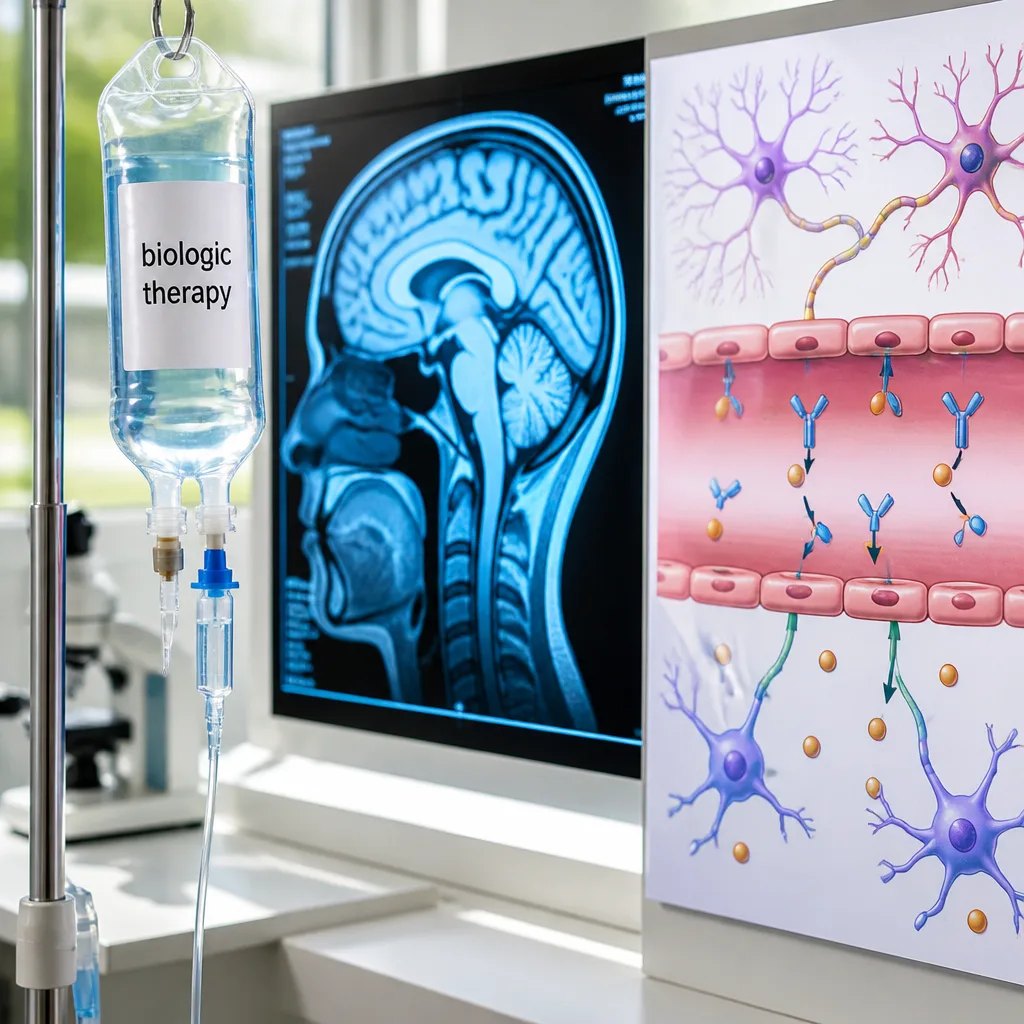
AVLAYAH rests on a cellular transport process known as receptor‑mediated transcytosis. Capillary endothelial cells in the brain carry surface receptors—including the transferrin receptor, insulin receptor and LRP1—that normally shuttle endogenous ligands across tight junctions. Engineered biologics can link a therapeutic payload to a component that binds one of these receptors, allowing the complex to be internalized within an endosome, trafficked across the endothelial cell and released into brain tissue.
Denali’s platform adapts the transferrin receptor route. The therapy couples its enzyme payload to an antibody fragment tuned to bind TfR1 with sufficient affinity to trigger uptake, yet low enough to disengage and release the payload into the CNS parenchyma. The core idea is elegant: use an existing biological gatekeeper as a ferry for treatment molecules that would otherwise be excluded.
| Receptor | Role in BBB transport |
|---|---|
| Transferrin receptor (TfR1) | Facilitates uptake of iron-bound transferrin; exploited for therapeutic shuttling |
| Insulin receptor | Mediates insulin passage across endothelium |
| LRP1 | Handles diverse ligands; investigated for transcytosis strategies |
Evidence that such pathways can deliver macromolecules rapidly is not merely theoretical. In published animal work cited by researchers, 125I‑insulin infused via the carotid artery in rabbits achieved mean brain uptake approaching 110% relative to an albumin reference within five minutes, establishing in vivo proof that receptor-guided transport can move cargo across the BBB at speed.
The trial design paradox
AVLAYAH’s mechanism brings with it a set of operational challenges that standard CNS trial designs were never built to detect or quantify. Typical assumptions—that systemic biologics stay peripheral and thus demand peripheral endpoints—no longer apply when a therapeutic routinely accesses the brain. The result is a methodological gap: sponsors and regulators must show that delivery translated into meaningful CNS exposure and effect, yet the legacy tools for measuring those effects may be inadequate or mis-specified.
- Pharmacokinetics in the brain: Traditional sampling strategies focus on blood, not brain interstitial spaces, complicating interpretation of exposure–response.
- Endpoint selection: Clinical and biomarker endpoints validated under the old permeability assumptions may not capture rapid or region‑specific CNS effects.
- Dosing and safety trade‑offs: Tuning receptor affinity to enter the brain can alter distribution elsewhere, raising questions conventional toxicity monitoring might miss.
These issues are amplified by the accelerated approval pathway itself, which hinges on surrogate measures reasonably likely to predict benefit. If a biologic reliably crosses the BBB, the surrogate must speak to CNS biology, not just peripheral readouts. That raises expectations for sensitive outcome measures, reproducible imaging or fluid biomarkers, and trial operations capable of confirming that the intended brain regions actually received the therapeutic cargo.
Why this approval is different
Many accelerated approvals are important but incremental. This one changes the substrate on which CNS trials are built. Entire infrastructures—from site capabilities and sample handling to analytical plans—assumed that large molecules largely bypass the brain. AVLAYAH demonstrates that assumption is no longer safe. It also implies that future therapies exploiting receptor‑mediated transcytosis could reach diseased neural circuits in ways that expand treatment possibilities, provided methodology keeps pace.
The field’s next steps are therefore less about proving that the BBB can be crossed and more about ensuring that trials can appropriately measure what happens when it is. That includes distinguishing central from peripheral effects, setting exposure targets aligned with receptor biology, and preparing for heterogeneity across brain regions that may experience different delivery dynamics. Sponsors and regulators now share the task of adapting protocols so that efficacy signals—if present—are neither diluted by insensitive measures nor overstated by inadequate controls.
Viewed in that light, the agency’s announcement signals more than a single therapeutic option for a rare paediatric condition. It marks a turning point for CNS drug development itself: the engineering challenge appears tractable, and the opportunity space widens. What remains unsettled is the clinical science needed to validate, quantify and responsibly generalize the outcomes that BBB‑penetrant biologics may deliver.