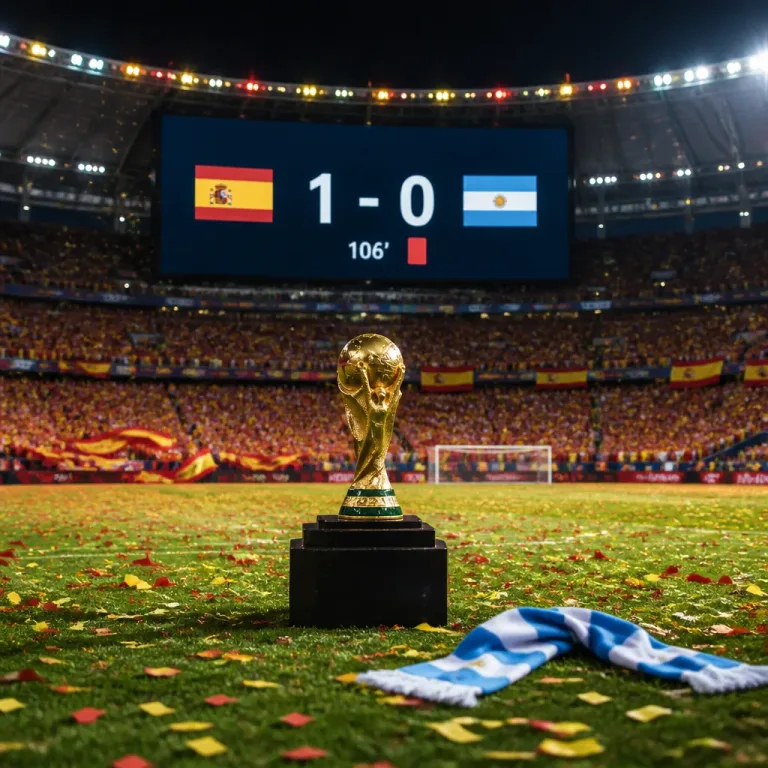
FIFA president Gianni Infantino declared the recent World Cup a success on Friday in New York, telling a United Nations session the tournament had fulfilled its aim of bringing people together and noting strong crowd and broadcast figures as evidence. His comments came the same day he stood beside former U.S. president Donald Trump at a Manhattan reception where Trump and Infantino posed next to the trophy for Sunday’s final between Argentina and Spain.
Infantino frames tournament as a unifying force
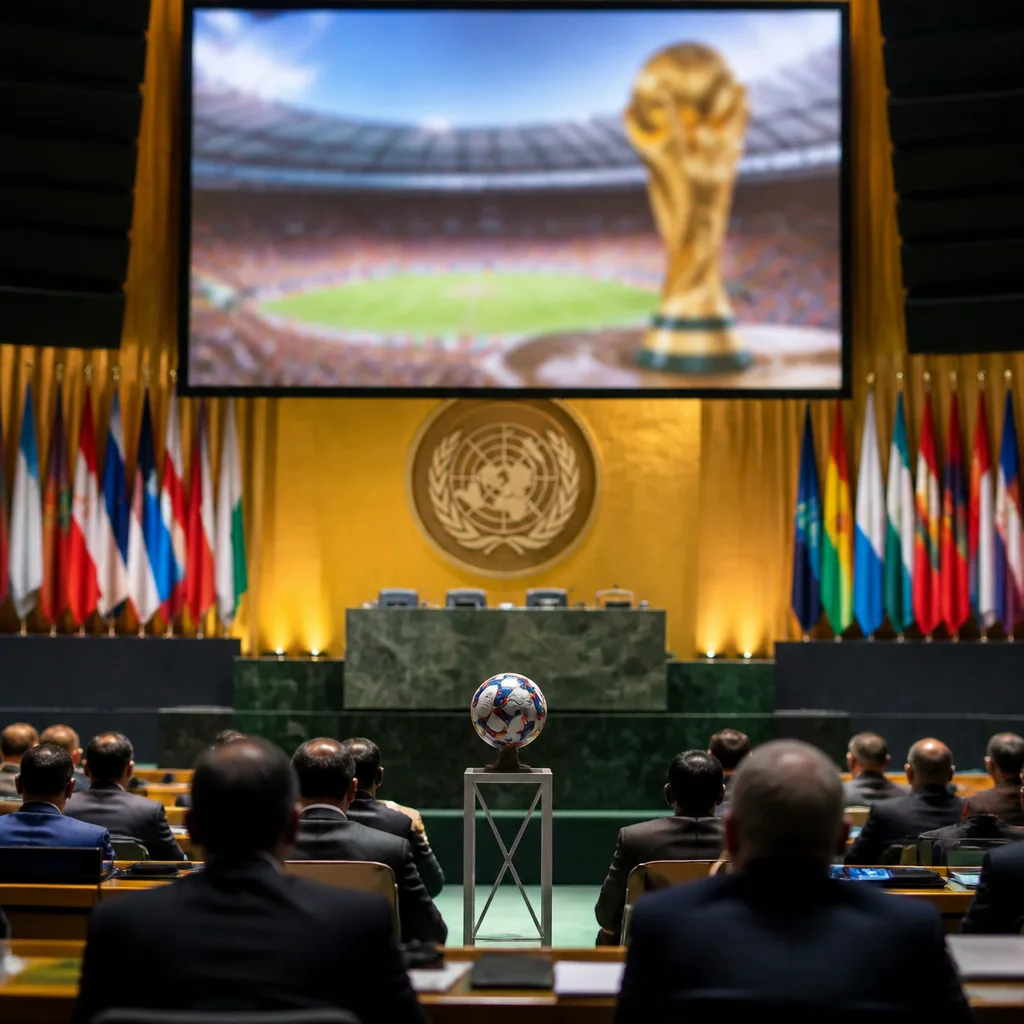
Speaking at a U.N. discussion on sport and youth mental health, Infantino brought one of the official match balls destined for the final to the stage and argued the game can bridge divides. He highlighted what he described as sold‑out stadiums and robust television audiences as markers that the event— the largest World Cup to date—met expectations.
“The American dream, Mr. President, came to reality,”
At an evening reception hosted by Mr. Trump at Trump Tower, Infantino again praised the former president, telling him the tournament would not have been “such an incredible success” without his role. Trump, for his part, called the competition “one of the all‑time greatest sporting events in history” and wished both finalist teams well.
What this means for Canada
Canada was one of three co‑hosts for the expanded 48‑team tournament. The public statements and high‑visibility diplomacy in New York underline how major sporting events can become arenas for international messaging. For Canadian officials and stakeholders involved in hosting, the tournament’s global reach and the attention paid to its organisation carry reputational significance.
- Scale: The tournament featured 48 national teams, with matches across the United States, Canada and Mexico.
- Diplomacy: FIFA used U.N. platforms to connect sport with social issues, in this case youth mental health.
- Visibility: Public praise of political figures at high‑profile events amplified the tournament’s political dimension.
Numbers and the final
| Statistic | Detail |
|---|---|
| Teams | 48 |
| Host countries | United States, Canada, Mexico |
| Final | Argentina vs. Spain |
Infantino’s appearance at the United Nations and his public commendations underscore two threads that ran through the tournament: the push to present football as a force for social good, and the way major sporting events intersect with high‑level politics. For Canadian audiences, the World Cup’s co‑host role placed the country on a global stage where logistical success, spectator engagement and political optics were all judged alongside athletic outcomes.
As the tournament closed with its final, FIFA emphasised the event’s unity narrative while leaders and organisers reflected on attendance and ratings as proof points. The interplay between sport, diplomacy and public perception — visible in New York and in the pages of global media — will shape how future large‑scale international competitions are assessed and planned.