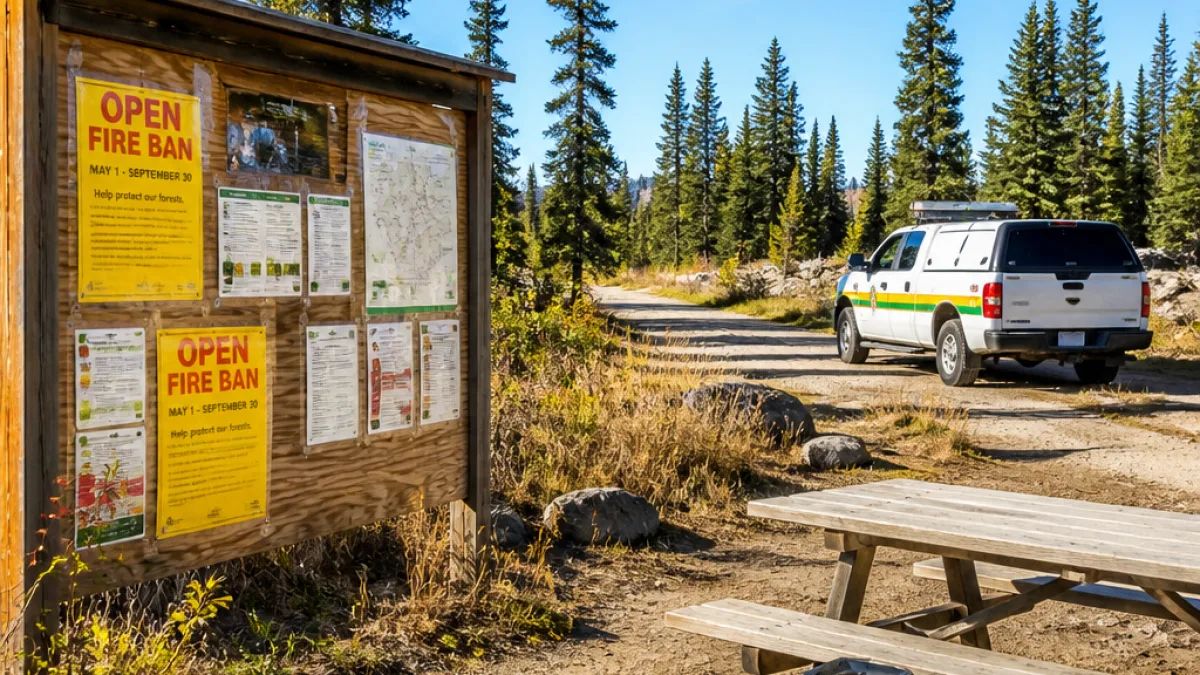
Territorial officials have imposed fire bans in six parks in the North Slave, South Slave and Dehcho regions as hot, dry conditions raise the risk of wildfires.
Where bans apply and when they end
The measures, announced in a government news release on Friday, affect parks commonly used for camping and day trips. The restrictions forbid all open fires, though some contained cooking and heating devices remain permissible under limits set by the territory.
| Park | Region | Ban scheduled to lift |
|---|---|---|
| Fred Henne | North Slave | July 20 |
| Yellowknife River | North Slave | July 20 |
| Queen Elizabeth Territorial Park | South Slave | July 30 |
| Fort Smith Mission Territorial Park | South Slave | July 30 |
| Blackstone Territorial Park | Dehcho | August 4 |
| Sambaa Deh Territorial Park | Dehcho | August 4 |
Rules and what visitors need to know
Under the ban, open campfires are not allowed. The territory says that certain devices may still be used, but must meet restrictions meant to lower the chance of escaped flames.
Camp stoves, enclosed barbecues and cooking and heating devices fuelled by propane are allowed, but must be placed inside fire pits and the flames should not exceed half a metre in height or width.
Practical takeaways for park users include:
- Do not light any open campfire in the affected parks until the bans are lifted.
- If you use a propane stove or enclosed barbecue, keep it within a fire pit and keep flames small.
- Check the territory’s website or local notices before travelling to a park; bans may change with conditions.
Why the bans were ordered
Government officials cited a combination of unusually dry ground and higher temperatures that together increase wildfire potential. Bans are a common tool used by land managers to reduce the chance that human activity will ignite a blaze during periods of heightened risk.
In the North, even small fires can spread quickly when vegetation is dry. Territorial parks attract campers from nearby communities and visitors from outside the territory, so the rules aim to lower the chance of a human-caused start and reduce pressure on firefighting resources.
Local impact and next steps
The bans will affect people planning weekend trips, family outings or cultural activities that normally include a fire. Residents who travel on the land for harvesting or informal gatherings should take note and plan for alternative ways to cook or stay warm that comply with the restrictions.
Officials will monitor conditions and lift bans when it is safe to do so. Anyone who spots a fire in or near a park is asked to report it immediately to local authorities so crews can respond while fires remain small.
This advisory applies across several regions of the Northwest Territories; residents and visitors should stay informed through official channels for updates.