Festival season arrives under a smoky question mark
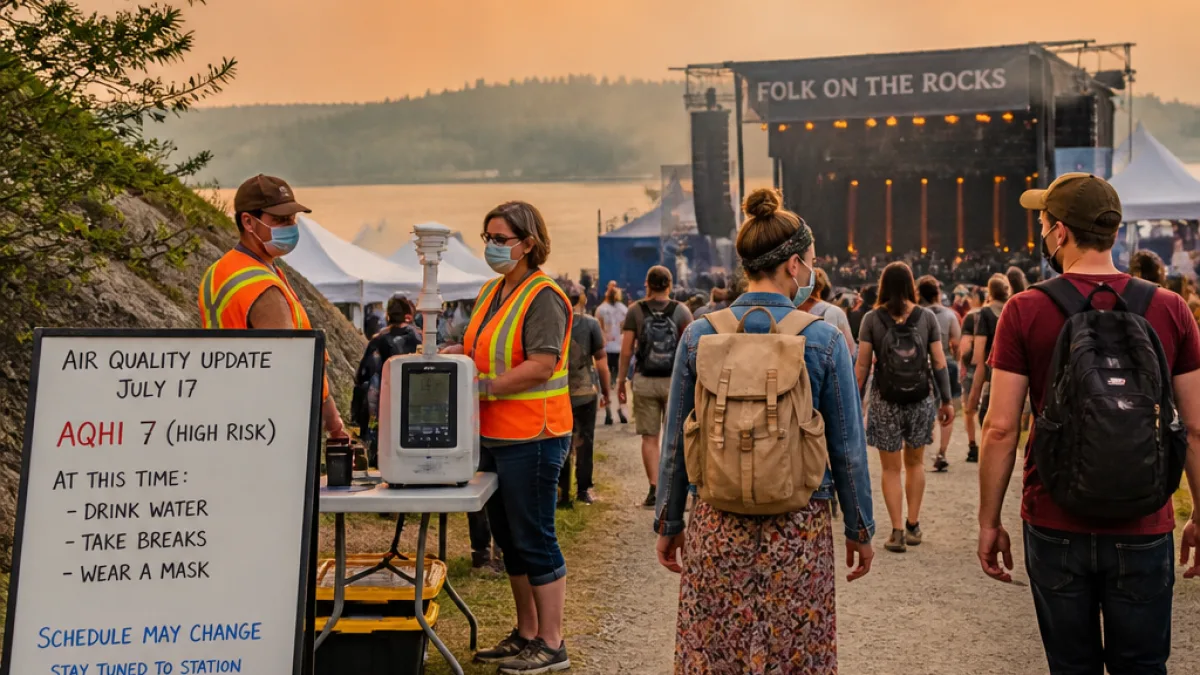
As crowds make their way to the shores of Long Lake for Folk on the Rocks this weekend, the reality of Northern summers in 2026 is never far from mind: wildfire risk and drifting smoke can upend months of planning in a day. Organizers of two of the North’s biggest music gatherings — Folk on the Rocks in the Northwest Territories and the Dawson City Music Festival in the Yukon — are navigating how to hold outdoor events when the fire season grows longer, hotter and more unpredictable.
Festival planners say they are still working out best practices for when and how to call off shows if smoke or fire conditions worsen. In Yellowknife, Folk on the Rocks has added air quality monitors and is using a new planning guide to help shape decisions around safety, programming and communications. Those measures speak to the new normal in the North: more vigilance, more contingency plans and more uncertainty.
Artists weigh the risks as travel gets harder
For touring musicians, the romance of summer festival circuits now comes with caveats. The CBC report highlights artists who are rethinking their schedules as smoke and fire impact routes in and out of remote communities. One of them, Naomi Kavka of Smithers, B.C., has pared back festival dates after past wildfire disruptions left her stranded and out of pocket. The financial calculus is shifting: festivals may offer a bigger payday, but the risk of sudden closures, detours or grounded flights looms large.
Kavka’s experience — including being stuck when a nearby wildfire closed the main road after a B.C. festival date, and relying on a partner artist to help cover a flight out — underlines how quickly logistics can unravel. Even band configurations are being reconsidered to cut exposure to unexpected costs. That ripple effect hits Northern events too, where leaner budgets and longer distances make every itinerary more fragile.
Organizers seek clearer emergency playbooks
Across the North, organizers are asking for clearer guidelines to plan around emergency scenarios. The questions are practical: when does smoke cross the line from manageable to unsafe? What thresholds should trigger a pause, a delayed start or a full shutdown? Who makes the call, and how is that communicated to artists and audiences who may already be in transit?
Folk on the Rocks’ new planning resources and on-site monitoring are a step toward more predictable decision-making, but organizers acknowledge they are still learning — and they want consistent frameworks that help events align with territorial advisories, air quality measures and community safety priorities.
What this means for festivalgoers
For people heading out to take in live music on the sand and rock of Yellowknife’s lakeshore, the changes may be subtle but important. Expect more real-time updates, a sharper eye on air quality, and requests to build extra time into travel plans. Attendees can help by checking official festival channels before setting out, organizing carpools or shuttles where available, and packing for variable conditions, including smoke.
- Watch for official notices on schedule adjustments and site access.
- Plan for slower travel and changing weather and smoke conditions.
- Consider bringing masks and eye protection if you are sensitive to smoke.
Balancing joy and safety
Outdoor festivals in the North are more than entertainment — they are an annual reunion that stitches together communities after long winters. That’s partly why organizers are investing in tools like on-site monitors and contingency guides, and why artists still circle these dates on their calendars even as they hedge against the unknown.
What’s clear this weekend is the care going into keeping the music playing without compromising safety. The Northern arts scene is resilient; it has weathered sudden weather shifts, delayed flights and, now, chronic smoke risk. With careful planning and transparent communication, events like Folk on the Rocks can adapt while preserving what makes them special: artists and audiences sharing a rare burst of summer light, together on the land.
Planning for the unpredictable
As the summer unfolds, the conversation will continue about how to design festivals that can flex with a volatile fire season. The path forward, organizers say, pairs on-the-ground tools with shared standards so everyone — from sound techs to headliners to families in the crowd — knows what to expect when conditions change.
| Challenge | Planning step |
|---|---|
| Shifting smoke levels | Use air quality monitors and publish timely updates |
| Sudden road closures | Line up alternate routes or transport options where possible |
| Artist scheduling | Communicate thresholds for delays/cancellations in advance |
| Audience safety | Share clear guidance on protective measures and site changes |
Folk on the Rocks is stepping into that space this weekend, armed with new tools and lessons learned. The hope — from stages to merch tents — is to keep the focus where it belongs: on the music, the community and a safe, shared celebration under Northern skies.