
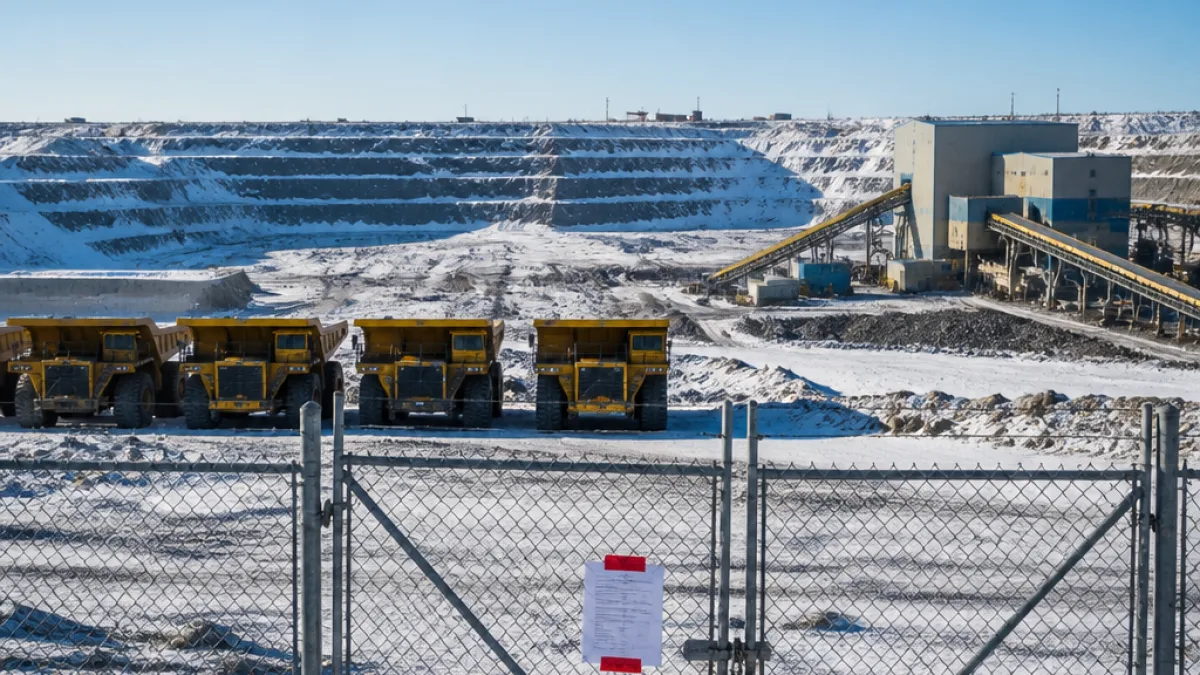
YELLOWKNIFE — A pillar of the N.W.T. economy falters
The Ekati Diamond Mine, about 300 kilometres northeast of Yellowknife, is being wound down after its owner — Australia-based Burgundy Diamond Mines Ltd. — failed to secure a buyer for its Canadian subsidiary and ran out of money to keep the site operating. The development follows a court order placing the subsidiary, Arctic Canadian Diamond Company Ltd., into receivership, and it arrives only months after the closure of Rio Tinto’s Diavik operation. It leaves Gahcho Kué as the territory’s last active diamond mine, albeit one that is also moving toward the end of its life in the coming years.
For three decades, diamond mining has been a backbone of the Northwest Territories. Industry analysts and governments have often noted that the trio of mines together contributed roughly 20 per cent of the territory’s gross domestic product at their peak and provided steady employment for communities across the North. At Ekati alone, approximately 360 people had been at work before the court-ordered process began.
Receiver takes control; safety and environment prioritized
The Supreme Court of British Columbia appointed a receiver to take control of Arctic Canadian Diamond Company after creditor protection granted in May did not deliver a way to keep the mine running. Representatives from PricewaterhouseCoopers (PwC), the court-appointed receiver, are now on site at Ekati to oversee an orderly wind-down, with a stated focus on keeping people safe and maintaining environmental protections at the remote facility.
Receivership is a court-supervised process in which an independent third party steps in to manage a financially distressed company’s affairs for the benefit of creditors and to ensure obligations are met. In practice, that often means stabilizing day-to-day operations, safeguarding assets, and communicating with workers, suppliers, and governments while planning next steps.
“While the closure of a major mine is significant for the N.W.T. economy, the territory continues to have opportunities in resource development, infrastructure, defence investments, housing construction and other sectors,” said Robert Jenkins, the territory’s deputy environment minister. He added: “Unfortunately, that process did not identify a viable solution that would allow mining operations to continue.”
What this means for workers and communities
The immediate priority for many families is clarity on employment. With operations winding down at Ekati, direct jobs and the spin-off work tied to catering, aviation, trucking, maintenance and technical services are in limbo. Remote work rotations have long shaped family routines in the N.W.T.; a sudden stop can ripple through small businesses that handle everything from freight to camp groceries.
Local leaders and industry groups have previously emphasized that mine closures change more than just payrolls. They affect community training pipelines, apprenticeship placements and revenue to service suppliers across the North. For Indigenous communities that have partnered with mining firms, the loss of steady site work can also stall capacity-building efforts tied to long-term economic participation.
Another chapter closes in the North’s diamond era
The territory’s diamond sector has already been shrinking. Diavik ceased production in March after reaching the end of its planned mine life. Gahcho Kué, co-owned by De Beers and Mountain Province, remains in operation but is preparing for wind-down in the coming years. With Ekati now being wound down under receiver oversight, residents are taking stock of what comes next for an economy that has leaned heavily on a single industry.
| Mine | Owner(s) | Current status | Notes |
|---|---|---|---|
| Ekati | Burgundy Diamond Mines (via Arctic Canadian Diamond Company) | Receivership; winding down | Receiver (PwC) on site; focus on safety and environment |
| Diavik | Rio Tinto | Closed | Production ended in March |
| Gahcho Kué | De Beers & Mountain Province | Operating | Preparing to wind down in coming years |
Government response and the path forward
Territorial officials say they are engaged with the receiver and tracking developments closely. Jenkins pointed to other areas of potential growth — including resource development, infrastructure, defence spending and housing construction — as areas that could help blunt the impact. The practical task ahead is to turn those prospects into paycheques and contracts that can absorb displaced workers and sustain northern businesses.
For now, the focus at Ekati is on a safe, compliant wind-down under PwC’s oversight. That includes environmental stewardship at a site connected by winter roads and aviation logistics, where proper shutdown procedures and monitoring are critical. The company had earlier been granted breathing space by the courts in May to search for solutions; with that effort exhausted, the court shifted to receivership to protect creditors and manage the closure.
What residents can watch for next
- Updates from the receiver on workforce impacts, site status and timelines for activities on the ground.
- Territorial initiatives aimed at supporting affected workers and businesses, including training or transition measures.
- Announcements in sectors flagged by officials — such as infrastructure and housing — that could generate replacement jobs in the short- to medium-term.
Ekati’s wind-down marks a sobering milestone for a territory that built global name recognition on northern diamonds. As one more mine shutters and another inches closer to its own sunset, the work of reshaping the economy becomes more urgent. For families in the North, the question now is how quickly new opportunities can take root — and where.