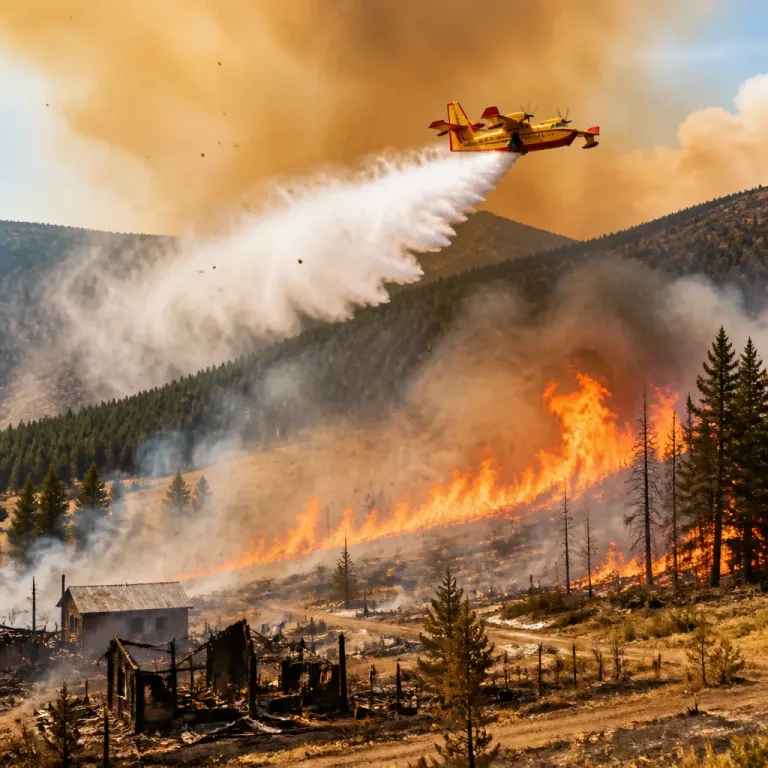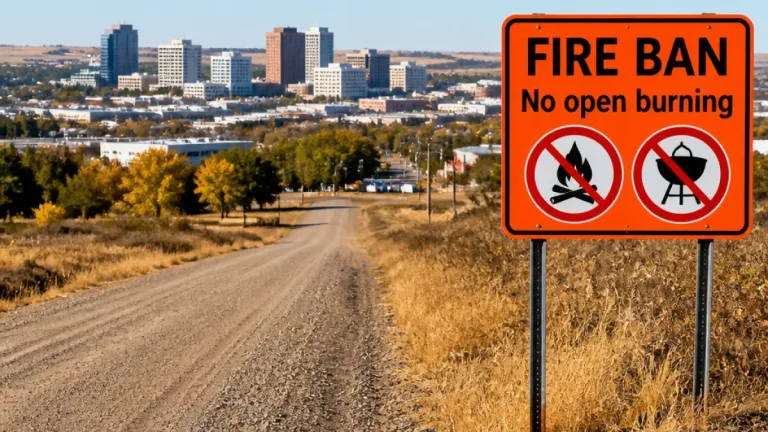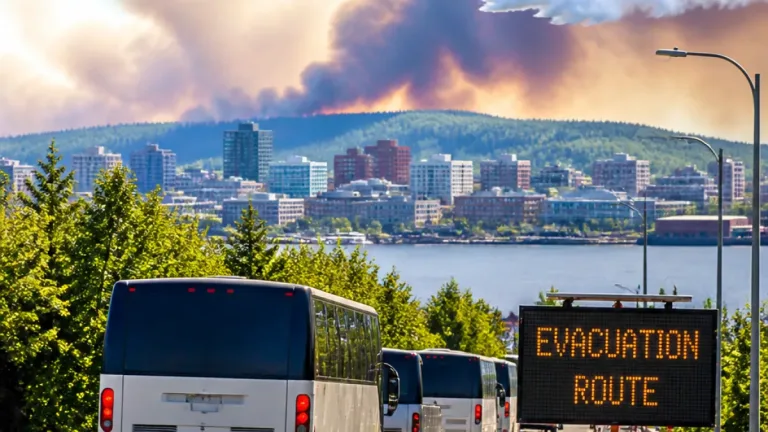
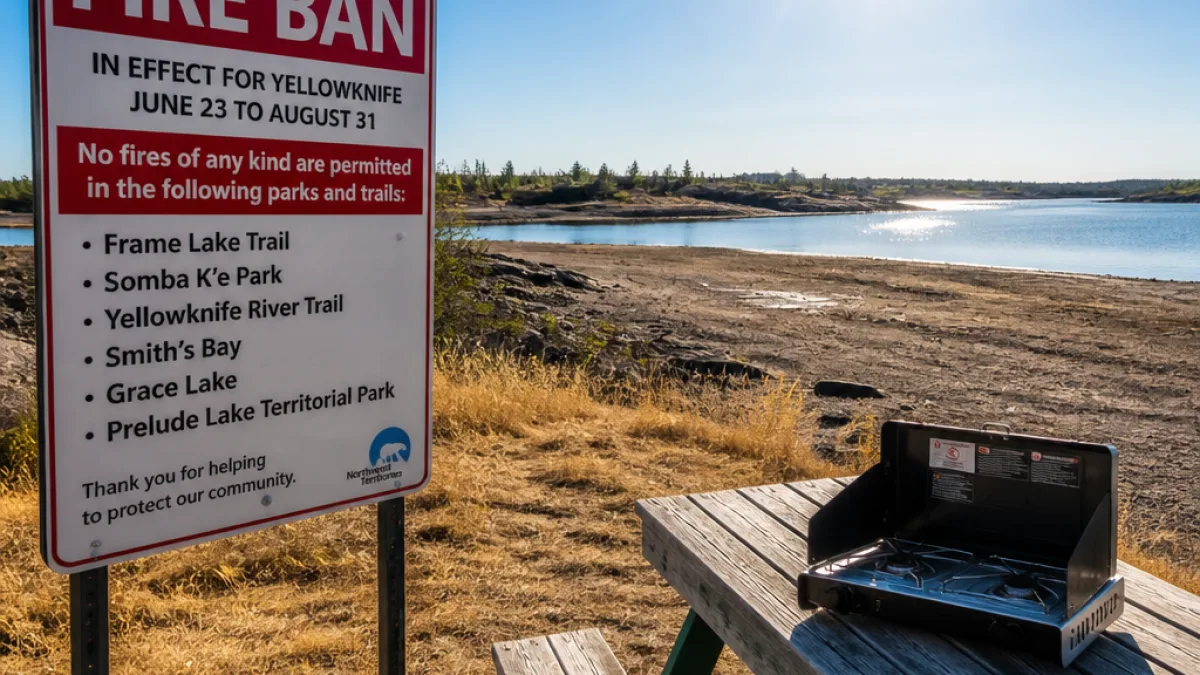
The Government of the Northwest Territories has put a total of six territorial parks under fire bans as hot, dry weather raises the risk of wildfires across the southern part of the territory.
Where the bans apply and when they end
Officials said the measures, announced in a territorial news release on Friday, affect parks in the North Slave, South Slave and Dehcho regions. The bans are time-limited and vary by site:
- Fred Henne Territorial Park — North Slave (ban through July 20)
- Yellowknife River Territorial Park — North Slave (ban through July 20)
- Queen Elizabeth Territorial Park — South Slave (ban through July 30)
- Fort Smith Mission Territorial Park — South Slave (ban through July 30)
- Blackstone Territorial Park — Dehcho (ban through August 4)
- Sambaa Deh Territorial Park — Dehcho (ban through August 4)
Under the bans, all open fires are prohibited in the affected parks. The territorial government said the decision was prompted by ongoing dry and hot conditions and an elevated wildfire danger.
What is still allowed
The territory allows certain contained devices, but with restrictions meant to reduce accidental ignitions. Permitted devices include:
- camp stoves
- enclosed barbecues
- cooking and heating devices fuelled by propane
These devices must be placed within fire pits and the government indicated flames should not exceed 0.5 metres in height or width.
| Park | Region | Ban end date |
|---|---|---|
| Fred Henne | North Slave | July 20 |
| Yellowknife River | North Slave | July 20 |
| Queen Elizabeth | South Slave | July 30 |
| Fort Smith Mission | South Slave | July 30 |
| Blackstone | Dehcho | August 4 |
| Sambaa Deh | Dehcho | August 4 |
What this means for visitors and residents
Visitors planning camping, cooking or campfire activities in the affected parks must follow the ban. For people already in the parks, the rules mean extinguishing open flames and switching to allowed devices where necessary. The restrictions aim to prevent human-caused fires at a time when vegetation is tinder-dry and crews can be stretched thin by multiple ignitions.
Officials advise checking the Government of the Northwest Territories website or local bulletins for any updates; bans can be tightened or extended if conditions worsen.
Simple precautions can help reduce wildfire risk: keep combustible materials well away from permitted stoves and barbecues, never leave a flame unattended, and ensure any equipment is cool before stowing. Fire crews and park staff remain the best source for up-to-date guidance in each location.