An international research team led by Hiroshima University has identified previously hidden, early-stage changes in human skin collagen that occur before visible deterioration of the fibre network, according to a study published in ACS Nano on July 16, 2026.
Subtle structural changes precede fibre breakdown
The investigators report that the molecular organisation and supramolecular chirality — the handedness of collagen’s larger-scale arrangement — begin to collapse long before conventional imaging shows thinning or fragmentation of collagen fibres. Collagen is a hierarchical material whose organised network underpins skin strength and structure; until now, routine imaging has largely detected only the later-stage failures in that network.
“One way to think about our findings is that conventional imaging methods can show the ‘bricks’ of a collagen structure, but they may miss subtle changes in how those bricks are arranged,”
The quotation above is from Ali Haider, a graduate student at Hiroshima University and first author of the paper, who likened the discovery to recognising changes in the arrangement of words in a book before any pages appear damaged.
How the team detected hidden changes
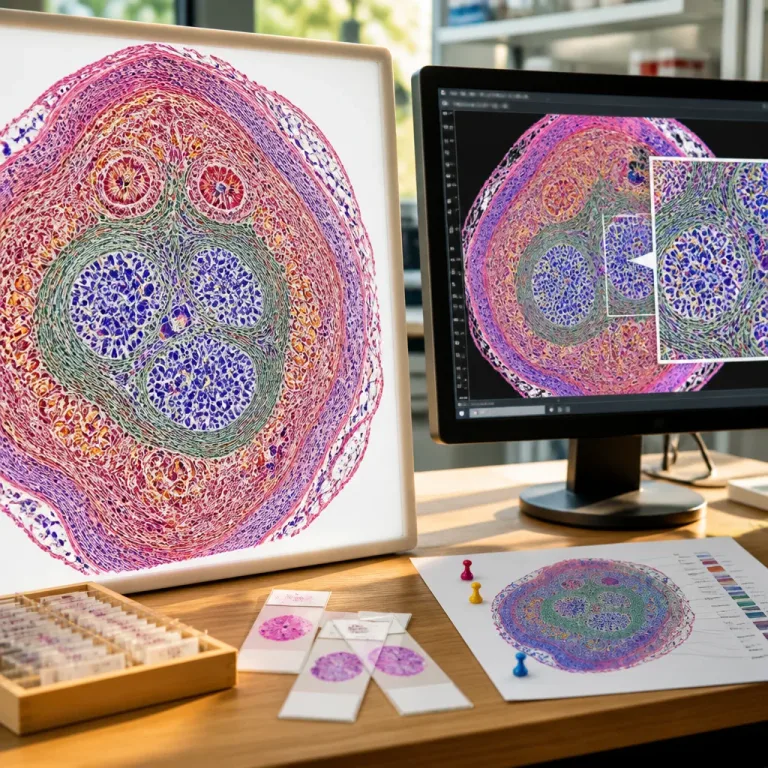
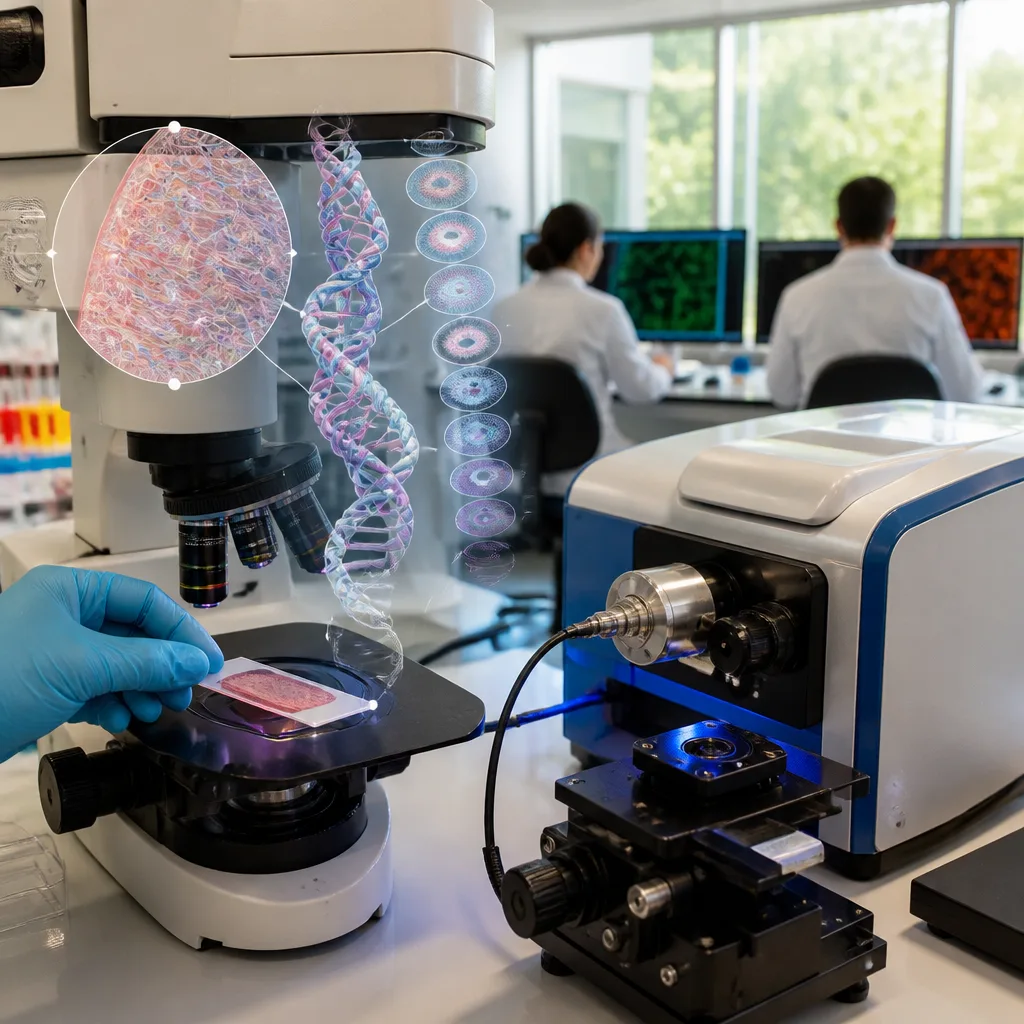
The researchers combined high-resolution optical imaging with chiroptical spectroscopy to interrogate the same physical tissue sections for both collagen presence and chiral coherence. Key techniques included synchrotron radiation vacuum-ultraviolet circular dichroism (SR‑VUVCD) and multi-dimensional quantum cascade laser vibrational circular dichroism (MultiD‑QCL‑VCD), paired with confocal microscopy to map collagen organisation and extracellular matrix remodelling.
- SR‑VUVCD and MultiD‑QCL‑VCD probe molecular and supramolecular chirality.
- Confocal microscopy provides high-resolution maps of fibre architecture and collagen distribution.
- Combining these approaches allowed direct comparison of molecular order and visible fibre integrity within identical tissue sections.
Findings and implications
The study found a clear decoupling: chiral order collapsed before the visible fibre network showed thinning or fragmentation. This suggests that diagnostics based solely on morphology may miss an earlier window of tissue remodelling when interventions could be more effective. Potential implications include:
- New biomarkers for early skin ageing that are not apparent in standard imaging;
- Opportunities to evaluate anti‑ageing therapies or preventative strategies at an earlier stage of tissue change;
- Broader relevance to other collagen‑rich tissues where early molecular disorganisation may presage functional decline.
Limitations and next steps
The report describes a technological framework and demonstrates its sensitivity to molecular-level changes in collagen structure. It does not claim immediate clinical application. Further work will be needed to:
- Validate the findings across larger, diverse human cohorts and in longitudinal studies;
- Clarify how early chiral collapse relates to specific causes of ageing or disease (intrinsic ageing, photoageing, metabolic or inflammatory drivers);
- Develop less specialised, clinically practical instruments or proxies that capture the same molecular information outside synchrotron and advanced spectroscopy facilities.
| Technique | What it measures |
|---|---|
| SR‑VUVCD | Chiroptical signals in the vacuum‑UV — molecular/supramolecular chirality |
| MultiD‑QCL‑VCD | Vibrational circular dichroism — detailed chiral vibrational signatures |
| Confocal microscopy | High‑resolution structural maps of collagen fibres |
The combination enabled the team to map chiral integrity and fibre architecture in the same tissue region — a methodological advance that underpins their conclusion about the sequence of structural failure.
While the methods used are highly specialised, the conceptual advance is clear: molecular disorganisation can be an earlier and potentially actionable indicator of tissue ageing than gross structural loss. Translation of these findings into routine diagnostics or treatments will depend on efforts to simplify measurements and to link early chiral changes to clinical outcomes.
The study was led from Hiroshima University’s International Institute for Sustainability with Knotted Chiral Meta Matter (WPI‑SKCM²), with Ali Haider credited as first author.