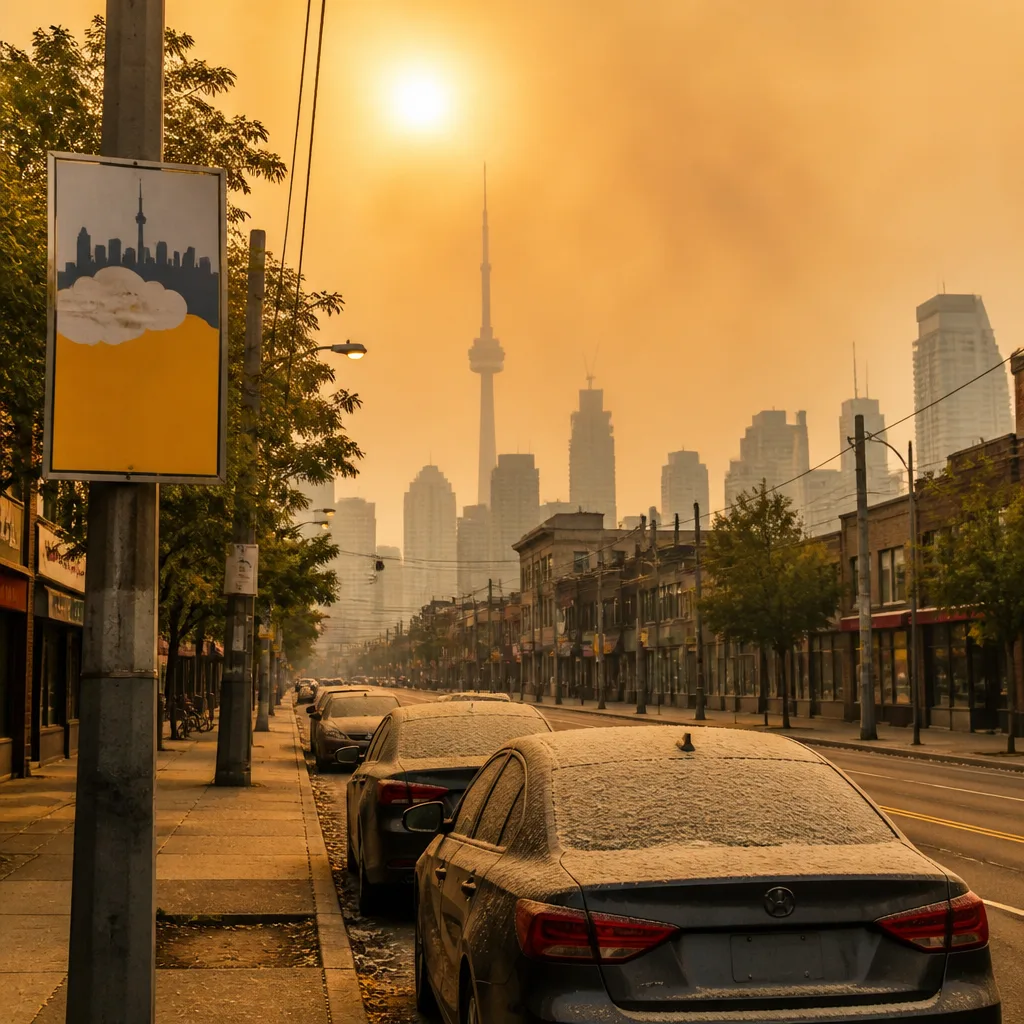
More than 100 active wildfires in northwestern Ontario have produced a pall of smoke that left Toronto’s sky a sickly yellow and, according to the air-monitoring service IQAir, gave the city the worst air quality in the world on Wednesday. Environment Canada issued health warnings as the provincial heatwave compounded the crisis.
Health warnings and evacuations
Officials advised residents to limit outdoor activity after downtown Toronto reached 37.3 C, part of a heat surge that also saw runways at the city’s principal international airport register extreme surface temperatures of 55 C. The wildfires have triggered mandatory evacuations in several First Nations communities in the region.
- Smoke source: More than 100 active fires in northwestern Ontario.
- Air quality: Toronto rated worst globally by IQAir on Wednesday.
- Temperatures: Downtown Toronto 37.3 C; airport runways measured up to 55 C.
Scenes of evacuation and damaged communities
Video from the area around Armstrong captured a train crew watching a wall of flames sweep past their cars; the railway company Canadian National later said the crew had been safely evacuated. Other footage showed residents leaving by boat amid towering plumes of smoke. People from Namaygoosisagagun First Nation reported they had only minutes' notice before fleeing by water from their community.
“This could potentially overtake us here … This has gotten a little scary,”
said a crew member in footage of the train near Armstrong. In social media posts, a photographer wrote that her family’s hometown of Collins, Ont., was “GONE,” reflecting the swift and devastating effect fires have had on some communities.
Why this matters to Canadians
The event underscores how wildfire smoke can rapidly degrade air quality in Canada’s largest metropolitan centre and beyond, creating simultaneous public-health and infrastructure challenges. Heat-driven conditions increase fire volatility and complicate evacuation and firefighting efforts. First Nations communities in the northwest of the province face immediate loss of homes and local infrastructure, while millions in southern Ontario confront hazardous air and soaring temperatures.
| Metric | Reported value |
|---|---|
| Active wildfires (northwestern Ontario) | More than 100 |
| Toronto downtown temperature | 37.3 C |
| Airport runway surface | 55 C |
| Air-quality ranking (IQAir) | Worst in the world (Toronto, Wednesday) |
Emergency officials have closed highways and cautioned residents to follow local guidance as conditions change. The combination of intense heat and widespread fires is straining response capabilities and creating pockets of acute distress in remote communities, raising questions about evacuation logistics and long-term recovery for those affected.
As smoke drifts south and east, cities across the north‑east United States also experienced degraded air quality, illustrating the regional reach of the problem. For Toronto residents, the immediate priorities are reducing exposure, monitoring public-health advisories and heeding evacuation orders where they are in place.