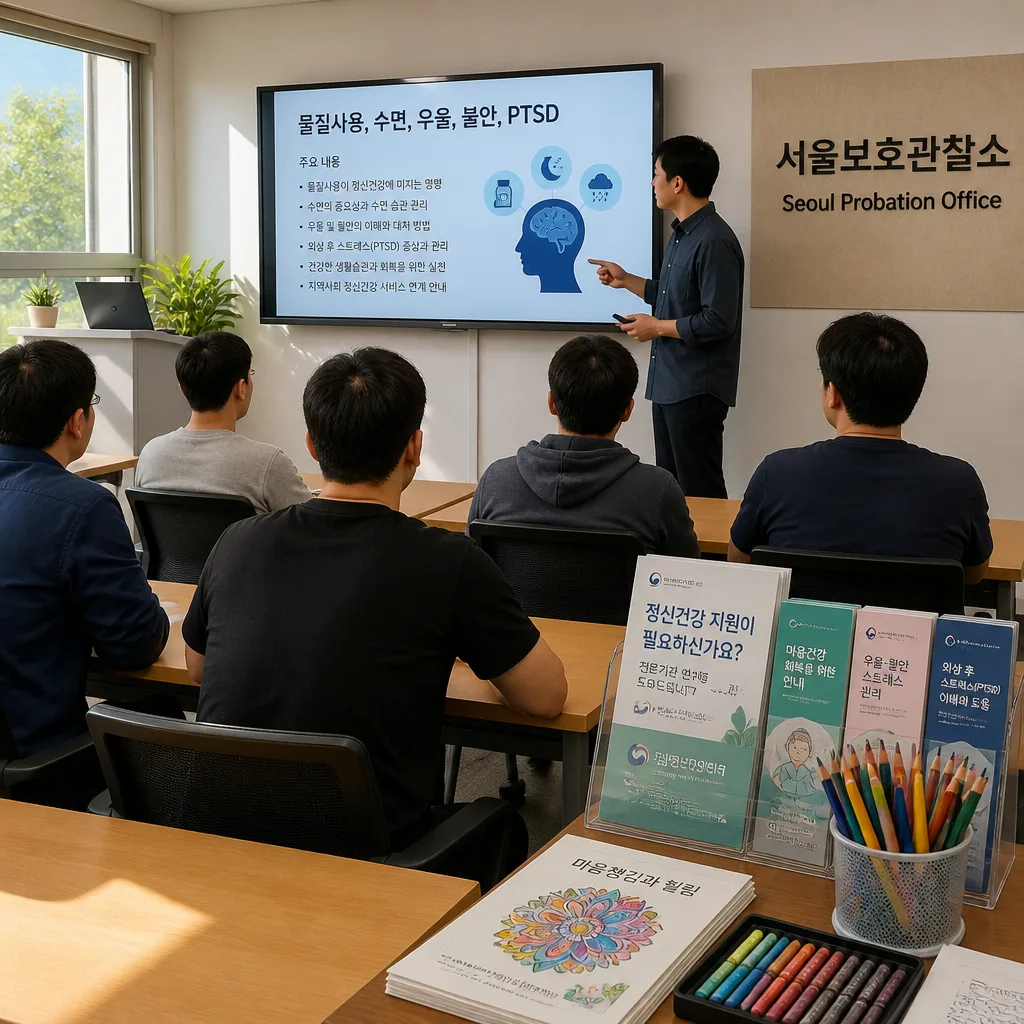
South Korea’s National Center of Mental Health (NCMH) is expanding rehabilitation education in partnership with the Seoul Probation Office, aiming to help people with drug addiction rebuild their lives and reintegrate into their communities. The initiative, announced on July 19, is designed for individuals whom a court has ordered to complete a drug education course.
What the program offers
According to the NCMH, the education covers both substance-use topics and common co-occurring conditions. Participants will receive instruction and support that address:
- Sleep disorders, depression, anxiety, and PTSD
- Mental health and physical rehabilitation approaches
- Creative supports such as art therapy
Those who indicate they want treatment will be connected directly to the NCMH’s addiction clinic for clinical care. The education is delivered by an addiction psychiatrist, a clinical psychology expert, and other specialists, ensuring participants encounter both medical and psychosocial perspectives.
Schedule and structure
The program runs from this month through November at the Seoul Probation Office and is organized into five groups, enabling staggered participation. After finishing the instructional component, participants will be followed for three months to monitor progress and support continued recovery.
| Component | Details |
|---|---|
| Eligibility | Court-ordered drug education participants |
| Location | Seoul Probation Office |
| Timeline | Now through November |
| Cohorts | Five groups |
| Instruction | Addiction psychiatry, clinical psychology, rehabilitation, art therapy |
| Follow-up | Three-month post-education monitoring |
| Treatment linkage | Referral to NCMH addiction clinic upon request |
Focus on recovery over punishment
Program leaders framed the initiative as a deliberate shift toward treatment and support within the justice system. In a statement, NCMH director Nam Yun-young underscored the limits of punitive approaches:
“Drug addiction is a condition that is hard to solve with punishment,” adding, “When we provide support for treatment and recovery, a healthy return to society is possible.”
By embedding education and follow-up into probation, the effort sets out a clear pathway: identify needs, offer evidence-informed instruction, connect willing participants to clinical care, and maintain structured contact during the transition period.
Why this matters for learners and families
For families navigating addiction in the justice context, structured education can clarify what to expect: curriculum touchpoints, clinical referrals, and defined follow-up. The combination of psychological support and practical rehabilitation aims to build skills and habits that can reduce relapse risk and improve day-to-day functioning—key outcomes for individuals seeking stability while meeting court requirements.
What to watch next
- Uptake across the five groups and completion rates through November
- How many participants request a referral to the NCMH addiction clinic
- Three-month follow-up indicators, including engagement with services and community reintegration
The NCMH says the goal is not only to fulfil court mandates, but to turn education into a bridge to treatment—aligning probation oversight with concrete steps toward recovery.