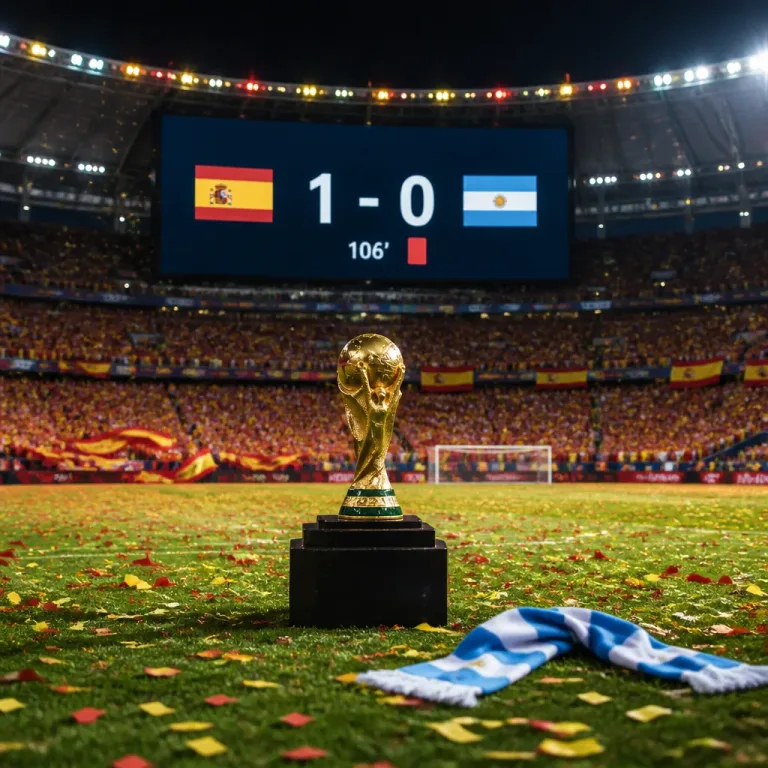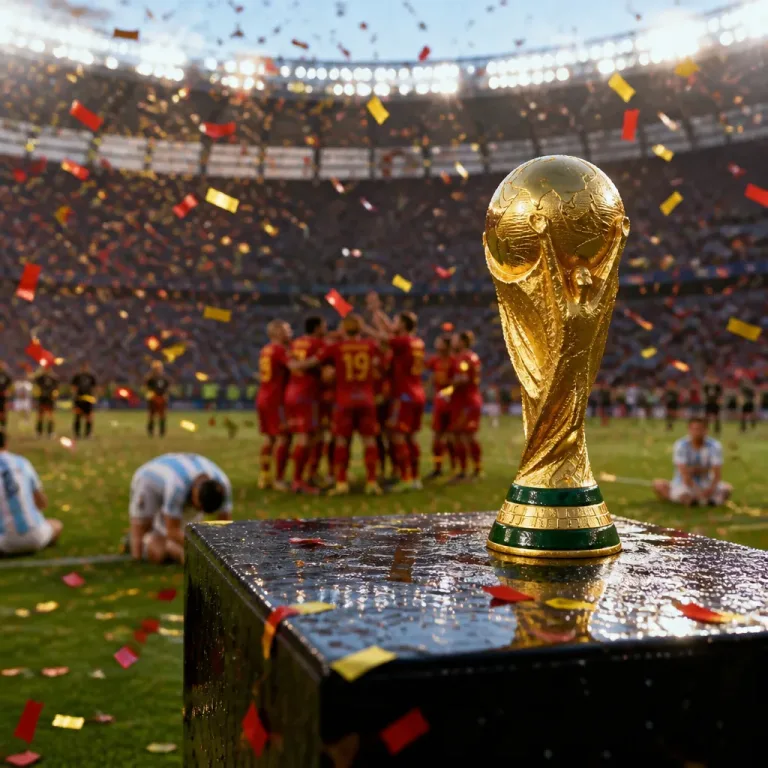
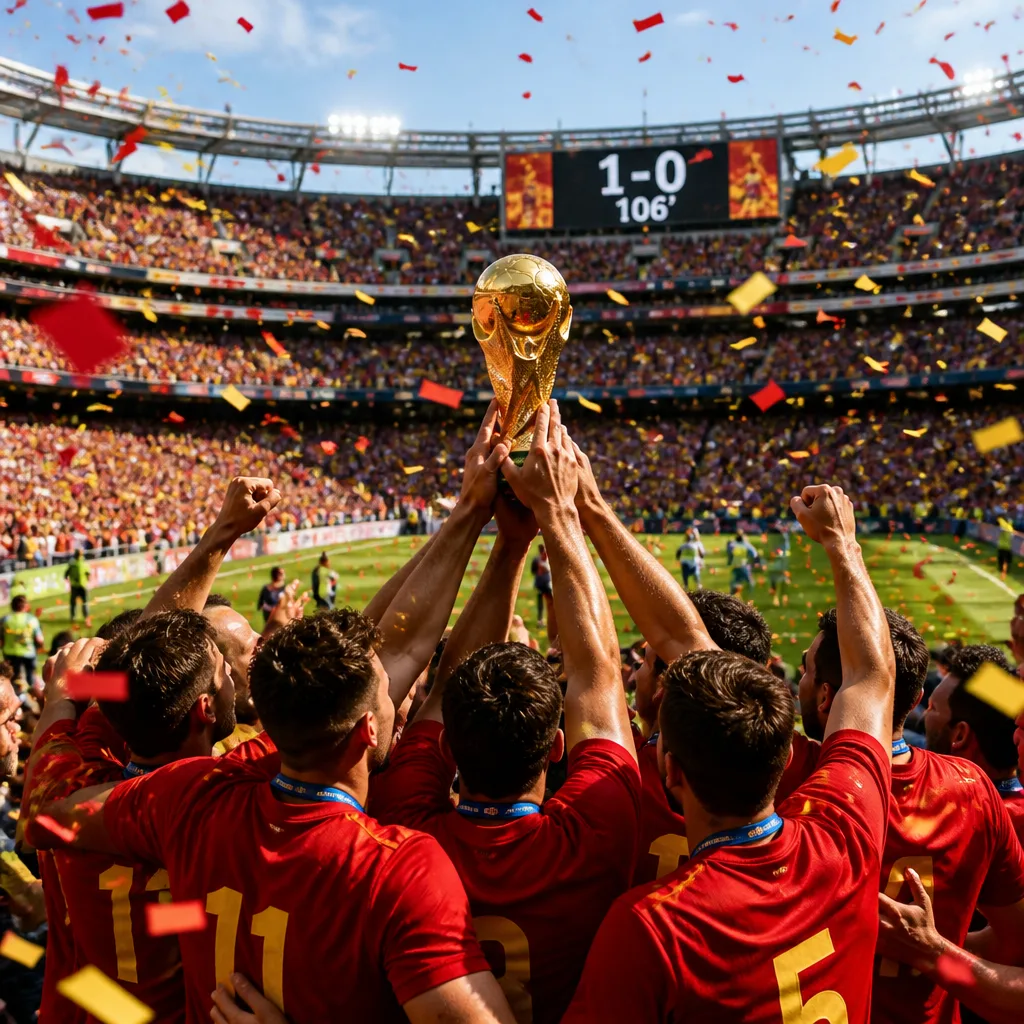
Spain lifted the men’s World Cup for the second time on Sunday, edging Argentina 1-0 in extra time after a tense final in East Rutherford, N.J., that ended Lionel Messi’s bid for back-to-back titles in what he has indicated will be his last appearance on football’s biggest stage.
Substitute Ferran Torres settled the match in the 106th minute, striking with his left foot from close range to beat the keeper and tilt a high‑wire contest that had offered few clear chances. Spain’s back line — the hallmark of its month-long campaign — then shut the door one final time, preserving a title run that conceded only one goal in eight matches, a new benchmark for a World Cup winner.
“It was a goal scored by 47 million people,”
Torres said, invoking his country’s population as he celebrated with teammates at MetLife Stadium, just outside New York City. The victory returns Spain to the summit of international football for the first time since 2010, when a generation anchored by controlled possession and ruthless defending captured the country’s first global title.
Messi denied a final flourish
For Argentina and Messi — champions in 2022 — the loss marked a bitter end to a remarkable four-year stretch. The captain, who has suggested this tournament would be his last World Cup, left the field in tears after the final whistle as Spain celebrated nearby. A second straight championship would have made Argentina the first men’s team since 1962 to repeat; instead, Spain’s grip on midfield and its metronomic calm without the ball blunted the Albiceleste’s vaunted attack.
Discipline also shaped the closing stages. Referee Slavko Vincic showed a red card to Argentina’s Enzo Fernández, a flashpoint that underlined the final’s intensity and narrowed the holders’ margin for error as the clock wound down.
Record book re-written by Spain’s defence
Spain’s title will be remembered as much for its restraint as its flair. Over eight matches they allowed only one goal — the fewest ever conceded by a men’s World Cup champion — a feat that speaks to structure, concentration and trust across the back line. Head coach Luis de la Fuente, at 65, became the oldest man to lead a team to the trophy. He framed the journey as a collective project, praising players who found a way through tense knockout nights with minimal room for mistakes.
For Canadian fans who woke to highlights and replays, the contours are familiar: tournaments of this scale routinely pivot on two elements — seizing the lone chance that appears, and limiting errors everywhere else. Spain did both.
Key moments and markers
- 106': Ferran Torres converts the winner from a bouncing ball in the box.
- Defensive milestone: Spain concedes only 1 goal across 8 matches — a new champion’s record.
- Discipline: Argentina’s Enzo Fernández sent off as tensions peak late.
- History: Spain adds a second star to its crest, after 2010.
| Team | Titles | Decisive Goal | Coach (age) |
|---|---|---|---|
| Spain | 2 (2010, 2026) | Ferran Torres, 106' | Luis de la Fuente (65) |
Why it matters
Spain’s return to the top signals a generational reset at the elite level — and underscores that major tournaments can still be decided by margins as thin as a single touch. For Argentina, the defeat brings uncertainty around the national team’s direction without a 39‑year‑old talisman who has defined an era. The image of Messi in tears will resonate well beyond sport; for many, it closes a chapter that began with his debut nearly two decades ago.
Beyond the emotion, Spain’s campaign offers a blueprint: patient, compact defence joined to timely finishing, backed by a coach who trusted his squad’s shape under pressure. In a final short on space and long on tension, that formula held. The sport’s power centres evolve, but titles often follow teams that can master the little things when everything else is equal.
As confetti fell in New Jersey, Spain’s players embraced a new status: champions again. For supporters across the Atlantic — and viewers around the world — the night was a reminder that in football, supremacy can be reclaimed not through spectacle alone, but through control, resolve and a single clean strike.