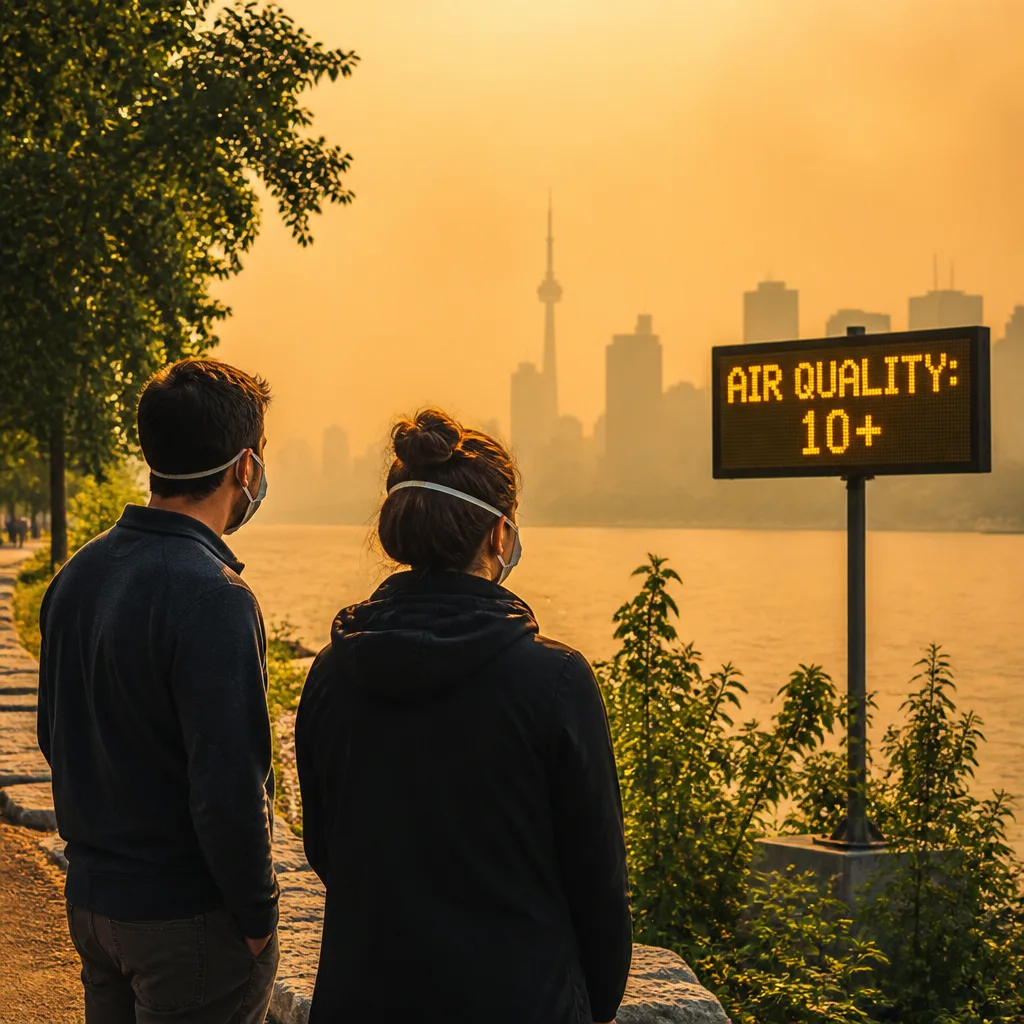
Residents across the Greater Toronto Area woke to a sky thick with haze Thursday as smoke drifting from wildfires in northwestern Ontario pushed local air-quality readings into the highest danger band.
Environment Canada maintained an orange-level air-quality warning for the region and reported that the Air Quality Health Index across the GTA — including downtown Toronto, Mississauga and Oshawa — registered at 10+, placing conditions in the "very high risk" range.
Immediate health guidance and disruptions
The national weather agency warned that the heavy smoke poses a health risk to everyone, regardless of age or pre-existing conditions, and advised people to limit time outdoors. Officials urged those with planned outdoor activities to postpone or cancel them.
"well-fitted and properly worn"
For those who must go outside, Environment Canada recommended wearing a respirator-style mask such as an N95 to reduce exposure to fine particulate matter. Local residents reported reduced visibility and concern about the persistent haze.
Where Toronto stands globally
The smoke's impact on air quality also placed Toronto high on international pollution lists Thursday morning. The city was ranked third among the world's most polluted cities in a global index published by IQAir, a Swiss air-quality monitoring firm, after having held the top spot earlier in the day.
- Region affected: Greater Toronto Area (including Mississauga, downtown Toronto, Oshawa)
- Air Quality Health Index: 10+ (Very high risk)
- Source of smoke: Wildfires in northwestern Ontario
| Metric | Reported value |
|---|---|
| Air Quality Health Index | 10+ |
| Global pollution ranking (IQAir) | 3rd |
| Advisory level | Orange |
Environment Canada indicated the advisory was first issued late Tuesday and expected to begin easing by Friday or early Saturday as winds and weather patterns change and the smoke plume shifts. In the meantime, health officials stressed precautions for vulnerable populations, including young children, older adults and people with respiratory or cardiovascular conditions.
The episode underscores how wildfire activity in one part of the province can quickly create public-health emergencies far downwind. City and health officials are monitoring the situation and updating guidance as air-quality models evolve.
For now, residents are being asked to reduce outdoor exertion, keep windows and doors closed where possible, and use high-efficiency filtration indoors if available. Those requiring medical advice were directed to consult health providers or local public-health resources.