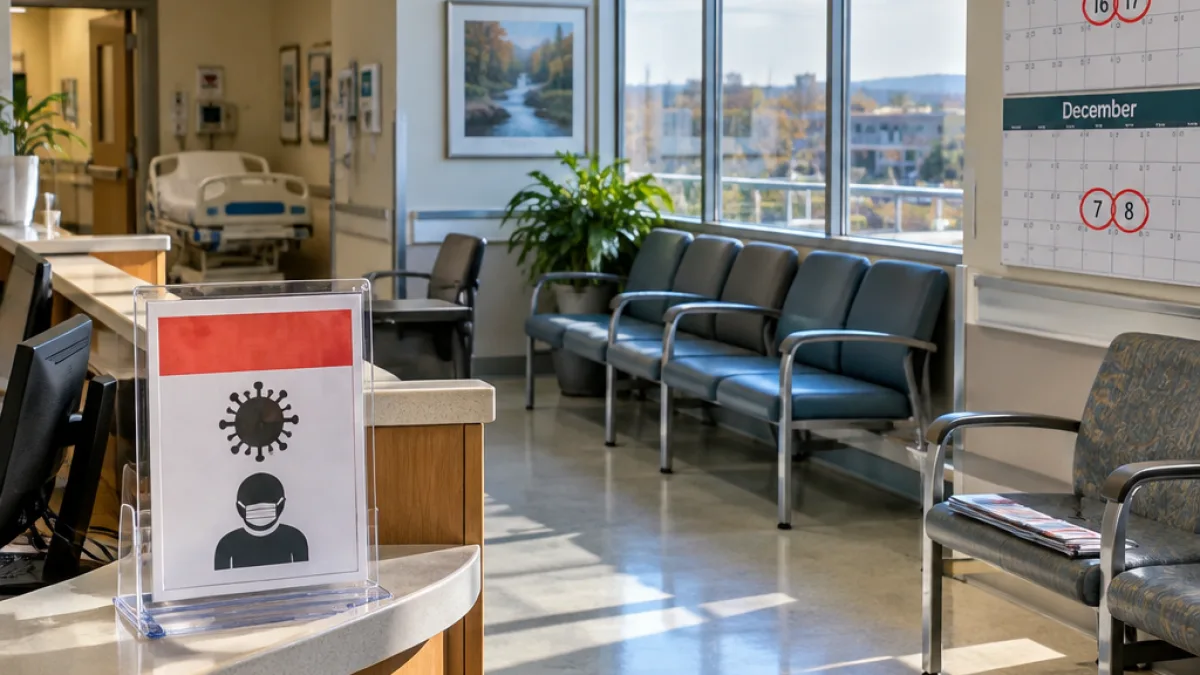
Niagara Region Public Health is notifying people who were in the emergency department waiting area at Marotta Family Hospital in St. Catharines during two periods last week that they may have been exposed to chickenpox.
The alert covers visits on Nov. 16 between 3:30 and 6 a.m. and on Nov. 17 from 2:45 to 8:45 p.m. The health unit said people who were present should remain alert for possible symptoms through the end of the relevant 21-day monitoring period.
When monitoring ends
| Possible exposure | Monitor until |
|---|---|
| Nov. 16 | Dec. 7 |
| Nov. 17 | Dec. 8 |
Chickenpox commonly begins with fever and fatigue, followed by an itchy rash. The rash can develop into blisters filled with fluid, according to the notice issued by Public Health. The agency is asking anyone who becomes ill to remain at home and avoid contact with others, particularly people more likely to develop serious complications.
Extra caution for higher-risk people
The notice specifically identifies pregnant people and those with weakened immune systems as being at greater risk of severe illness. People in those groups who may have been present during either exposure period are encouraged to contact a health-care provider or call Niagara Region Public Health at 905-688-8248, extension 7330, for guidance.
Anyone who develops a fever or rash should telephone ahead before attending a medical clinic, urgent-care centre or emergency department. Calling in advance allows health-care workers to prepare precautions before the person arrives, helping reduce the possibility of exposing other patients and staff.
What the notice means for visitors
- Check whether a visit to the emergency department occurred during one of the two listed periods.
- Watch for fever, tiredness or an itchy rash until the applicable monitoring date.
- Stay home and limit contact with others if symptoms appear.
- Call a health-care facility before going in if medical assessment is needed.
The public-health notice does not indicate that everyone who was in the waiting room will become ill. Its purpose is to identify people who may have encountered the infection and to encourage early attention to symptoms, especially where illness could pose a greater risk.