One year after a helicopter crash that claimed the life of her son, a Vancouver mother made a quiet pilgrimage this week to the site near Behchokǫ̀ where the aircraft went down.
Remembering a pilot and marking grief
Alexandra Wilson travelled to the Northwest Territories to mark the anniversary of her son Joshua Patenaude's death. Patenaude, 32, was the sole occupant of the helicopter and was working on a reforestation project operated by the Tłı̨chǫ government when the crash occurred on July 14, 2025. The site is located about 1.5 kilometres from Highway 3, near Behchokǫ̀.
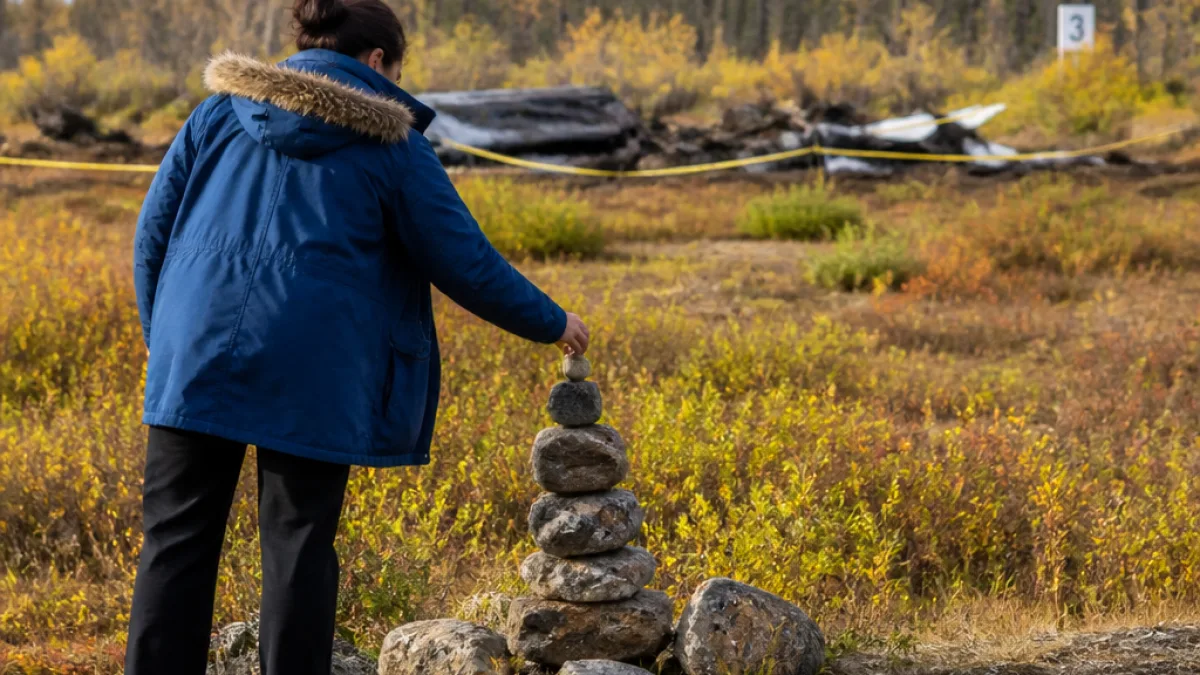
Wilson carried a few small stones with her and left one at the scene as a personal marker — a private act to mark the passage of the first year and the uncertainty of the years ahead.
"There's no coming back from the fact that he's not in our lives anymore,"
She told reporters the trip was also a way to reflect on her son’s life and the effect he had on people who knew him. She recalled a memorial held shortly after the crash in the south, where several people described Patenaude as their best friend — a detail she said spoke to the connections he had made.
Investigation remains open
The Transportation Safety Board is still probing the circumstances of the crash. No cause has yet been announced. Patenaude was flying for Great Slave Helicopters while supporting the reforestation work when the incident occurred.
Local officials and those involved in the reforestation project have not released further comment through the reporting available.
What we know
- Victim: Joshua Patenaude, 32, pilot.
- Employer: Great Slave Helicopters (as reported).
- Activity: Supporting Tłı̨chǫ government reforestation project.
- Location: About 1.5 km from Highway 3 near Behchokǫ̀, N.W.T.
- Date: Crash occurred July 14, 2025; Wilson's visit this week marks roughly one year.
| Detail | Information |
|---|---|
| Pilot | Joshua Patenaude, 32 |
| Work | Tłı̨chǫ reforestation support |
| Investigation | Under way by Transportation Safety Board |
The visit underscores the long shadow that sudden deaths cast on families and communities, particularly in northern regions where aviation is a routine part of industry and livelihoods. For Wilson, who had never visited the N.W.T. prior to this week, the trip was a first-hand way to connect with a place tied to her son’s work and final moments.
As the Transportation Safety Board continues its work, family members and community partners wait for answers. In the meantime, small acts of remembrance — stones left at a site, stories shared at memorials — have become part of a local process of grieving and recognition.