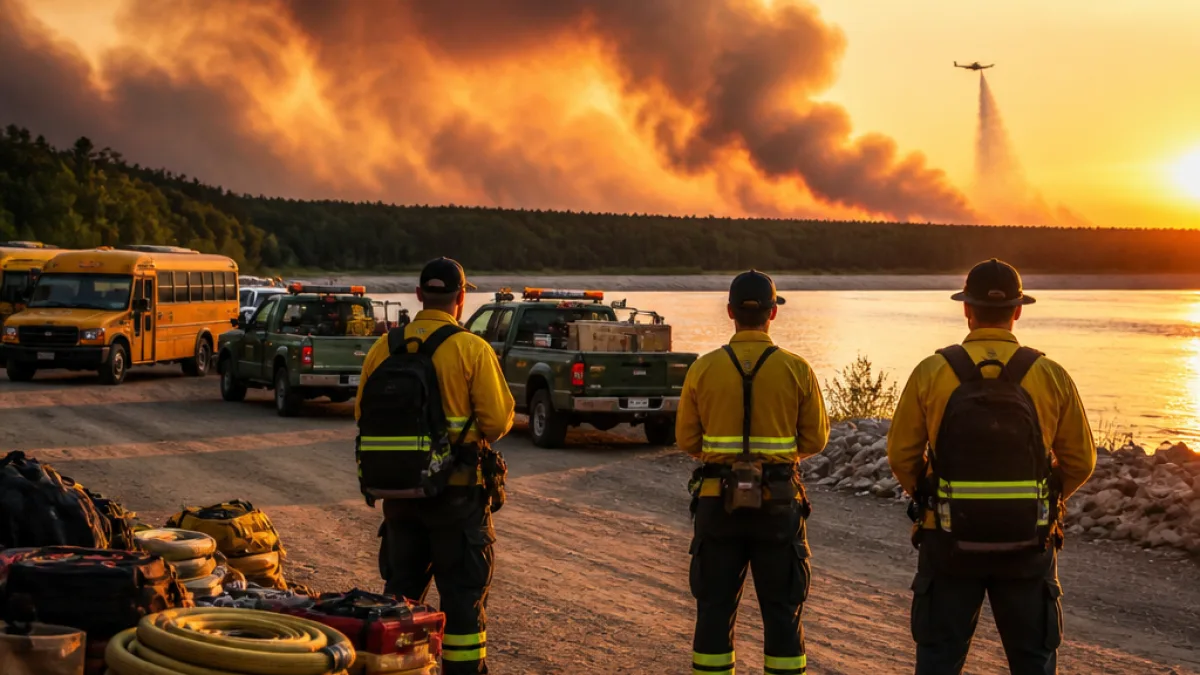
The Northwest Territories is facing one of its busiest wildfire seasons on record as provincial and national firefighting resources are stretched thin. According to the Canadian Interagency Forest Fire Centre (CIFFC) dashboard, the territory had 190 active fires on Friday evening — the second-highest total in Canada behind Ontario, which reported 191. Across the country, the dashboard listed 904 active fires, with only Nunavut and Prince Edward Island showing no reported blazes.
What the national alert level means locally
The CIFFC has raised the national preparedness level to 4, indicating that multiple jurisdictions are drawing on equipment and crews from elsewhere in Canada. There is one higher level — 5 — which would signal a need for international assistance. N.W.T. fire information officers say the territory has not needed that escalation.
“We're not there yet,” said Mike Westwick, a N.W.T. fire information officer. “We're still able to access the resources we need at this point.”
Crews from British Columbia have been sent to help in the territory, including support on the fires that led to evacuations in Wrigley and Fort Simpson about three weeks ago. The season has already taken a heavy toll: in addition to the blaze activity, crews are still coping with the deaths of colleagues who were fighting a wildfire outside Fort Simpson.
Conditions and local response
Fire information officers described a mix of relief and renewed anxiety as weather patterns shift. Earlier calmer conditions around Fort Simpson and Wrigley gave crews a window to work, but recent hot weather and shifting winds caused flareups.
“So that just showed us how quickly, you know, things can change when we have increased conditions,” said Sarah Hall, another N.W.T. fire information officer.
Front-line crews report fatigue but also determination. Westwick said officials are working to support firefighters so they can continue protecting communities.
Practical implications for residents
For residents across the N.W.T., the long and active season means staying alert to changing conditions and preparedness notices. Local impacts so far have included evacuations and disruptions to travel and daily routines in affected communities. Officials continue to monitor the situation and deploy resources where they are most needed.
- Active fires in N.W.T.: 190 (second-highest in Canada as of Friday evening)
- National active fires: 904
- National preparedness level: 4 — interprovincial assistance is in use
Below is a brief summary table of the key figures reported by the CIFFC dashboard as cited by local fire officials.
| Measure | Reported figure |
|---|---|
| Active fires in N.W.T. | 190 |
| Active fires in Ontario | 191 |
| Total active fires in Canada | 904 |
| Territories without reported fires | Nunavut, Prince Edward Island |
| CIFFC preparedness level | 4 |
Local officials continue to emphasise the unpredictable nature of wildfire behaviour and the importance of community readiness. As the season progresses, residents should keep tuned to official N.W.T. Fire and community alerts for evacuation orders or advisories, and follow guidance on air quality and travel. Support resources are being provided for crews and families affected by the recent wildfire fatalities.
The situation remains fluid. Fire managers say they are watching weather trends closely and coordinating with other provinces to ensure the territory can access necessary personnel and equipment while working to protect communities and the people who fight these fires.