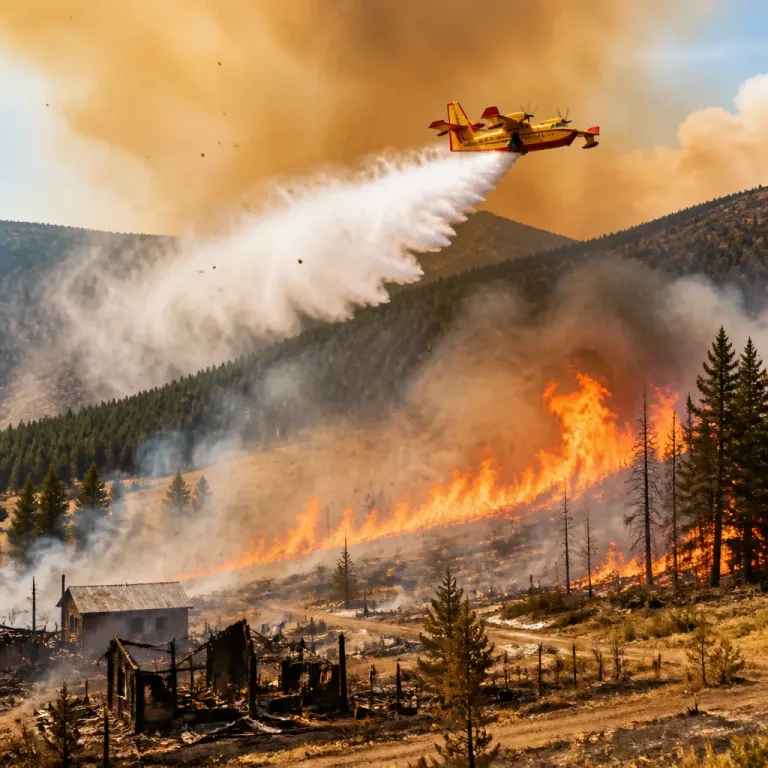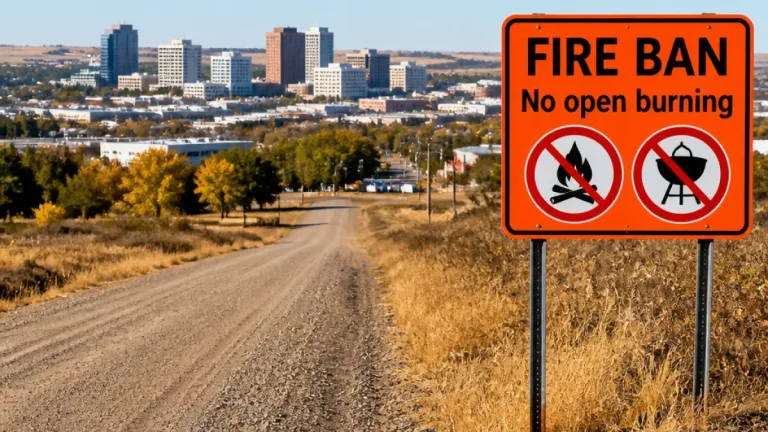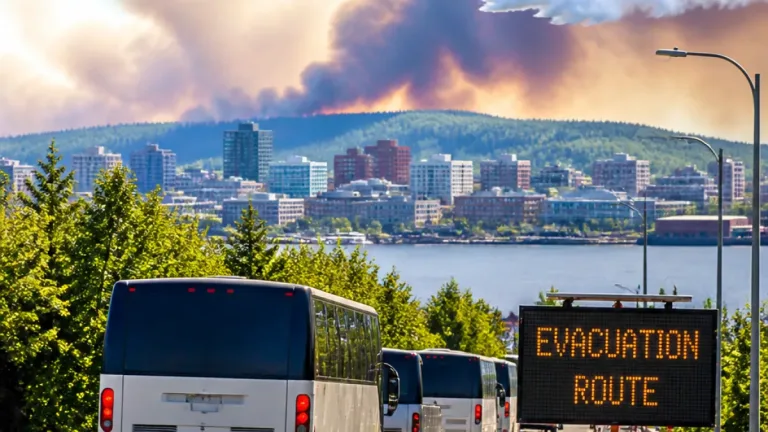
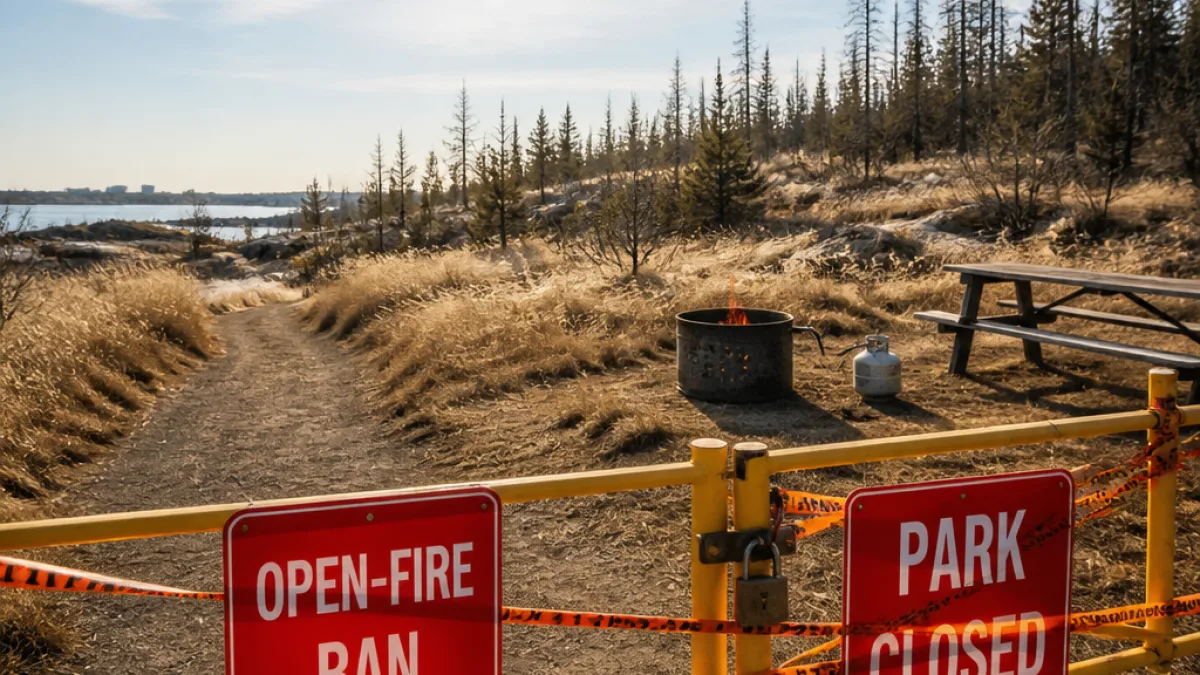
Hot, dry weather across the Northwest Territories has led territorial officials to impose immediate open-fire bans at a number of parks in three regions. The measures aim to reduce human-caused wildfire risk during a period of heightened fire danger.
Parks affected and timelines
The bans, which prohibit open flames, apply in parks across the North Slave, South Slave and Dehcho regions. Authorities have allowed certain cooking and heating devices but set limits on how they may be used.
- North Slave Region: Fred Henne Territorial Park and Yellowknife River Territorial Park — bans in effect until July 20.
- South Slave Region: Queen Elizabeth Territorial Park and Fort Smith Mission Territorial Park — bans in effect until July 30.
- Dehcho Region: Blackstone Territorial Park and Sambaa Deh Territorial Park — bans in effect until August 4.
- Fort Simpson Territorial Park remains closed until further notice because of an evacuation order issued for Fort Simpson in June.
| Park | Region | Ban lifts |
|---|---|---|
| Fred Henne Territorial Park | North Slave | July 20 |
| Yellowknife River Territorial Park | North Slave | July 20 |
| Queen Elizabeth Territorial Park | South Slave | July 30 |
| Fort Smith Mission Territorial Park | South Slave | July 30 |
| Blackstone Territorial Park | Dehcho | August 4 |
| Sambaa Deh Territorial Park | Dehcho | August 4 |
What is allowed — and what is not
The bans prohibit all open fires in the listed parks. Visitors may use camp stoves, enclosed barbecues and propane-fuelled cooking or heating devices, but only under strict conditions. These devices must be placed inside a regulation fire pit and must not produce a flame taller than 0.5 metres in height or diameter.
Officials stressed the limits to reduce the chance that a small flame could grow into an uncontrolled wildfire amid current conditions.
Practical information for residents and visitors
- Check park status before travelling — bans have specific end dates and may be extended if conditions do not improve.
- Avoid bringing fuel sources that are not explicitly permitted; unsecured fuel and open flames increase risk.
- Respect the closure of Fort Simpson Territorial Park; it is off-limits while an evacuation order for Fort Simpson remains in place.
With higher fire risk across the territory, these temporary restrictions are intended to protect visitors, communities and natural areas until humidity and temperature conditions ease. Keep an eye on official territorial park updates for any changes to the bans or closures.