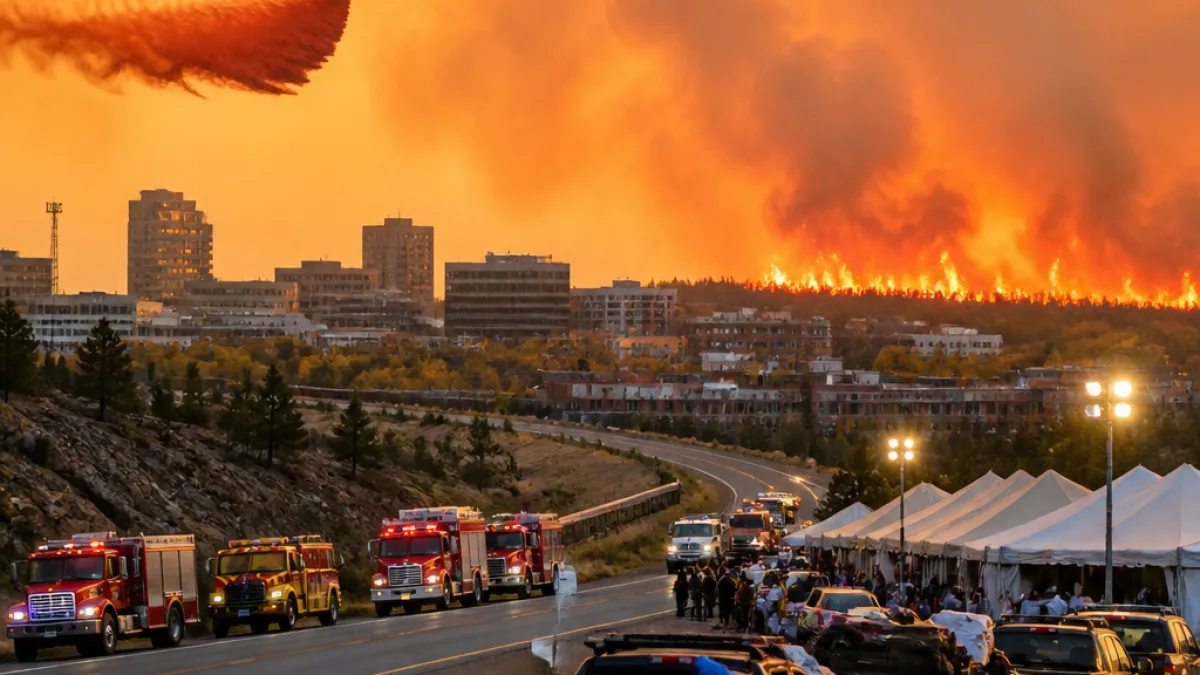
The Northwest Territories is confronting one of the busiest wildfire seasons on record as crews across the territory contend with smoke, fatigue and the loss of colleagues while national firefighting resources are stretched thin.
Scope of the fires and national response
According to national fire reporting, the N.W.T. is managing about 190 active fires, placing it among the jurisdictions with the highest number of blazes in Canada this season. Ontario reported 191 active fires at the same time, and the Canadian Interagency Forest Fire Centre listed 904 active fires nationwide.
In response to the widescale demand, the CIFFC raised the national preparedness level to 4, signalling that multiple jurisdictions require crews and equipment from elsewhere in Canada. That level sits one step below the highest status — where international assistance would be sought.
“We're not there yet,” said Mike Westwick, a N.W.T. fire information officer.
Local impacts: communities, crews and resources
Communities in the territory have already felt direct effects. Evacuations were ordered in Wrigley and Fort Simpson earlier in the season, and crews that arrived from British Columbia have been working alongside local teams to hold lines and protect those communities. The season has also taken a human toll: firefighters in the territory mourned the deaths of colleagues while battling a wildfire outside Fort Simpson earlier in the campaign.
Fire personnel report exhaustion from sustained operations, but officials say they remain committed to community protection. Mutual aid from other provinces has been a significant part of the response so far, with interprovincial crews helping maintain protection around threatened settlements.
What this means for residents
Residents in affected and nearby communities should remain alert to local advisories and prepare for possible changes in conditions. Practical steps include:
- Monitoring official N.W.T. Fire and local emergency channels for evacuation alerts and air-quality advisories;
- Preparing an emergency kit and evacuation plan, including medications and important documents;
- Reducing outdoor smoke exposure, particularly for young children, older adults and people with chronic respiratory conditions.
Fire information officers stress that the situation can change quickly with shifts in weather, and that community protection priorities guide where crews and resources are deployed.
Numbers at a glance
| Measure | Count |
|---|---|
| Active fires in N.W.T. | 190 |
| Active fires in Ontario | 191 |
| Active fires nationwide | 904 |
| National preparedness level | 4 |
Officials say the N.W.T. is currently able to access needed resources, but the raised preparedness level underscores the pressure on crews across the country. For residents, staying informed through territorial and municipal channels remains the best way to respond as the season continues.