A hunt shaped by patience and timing
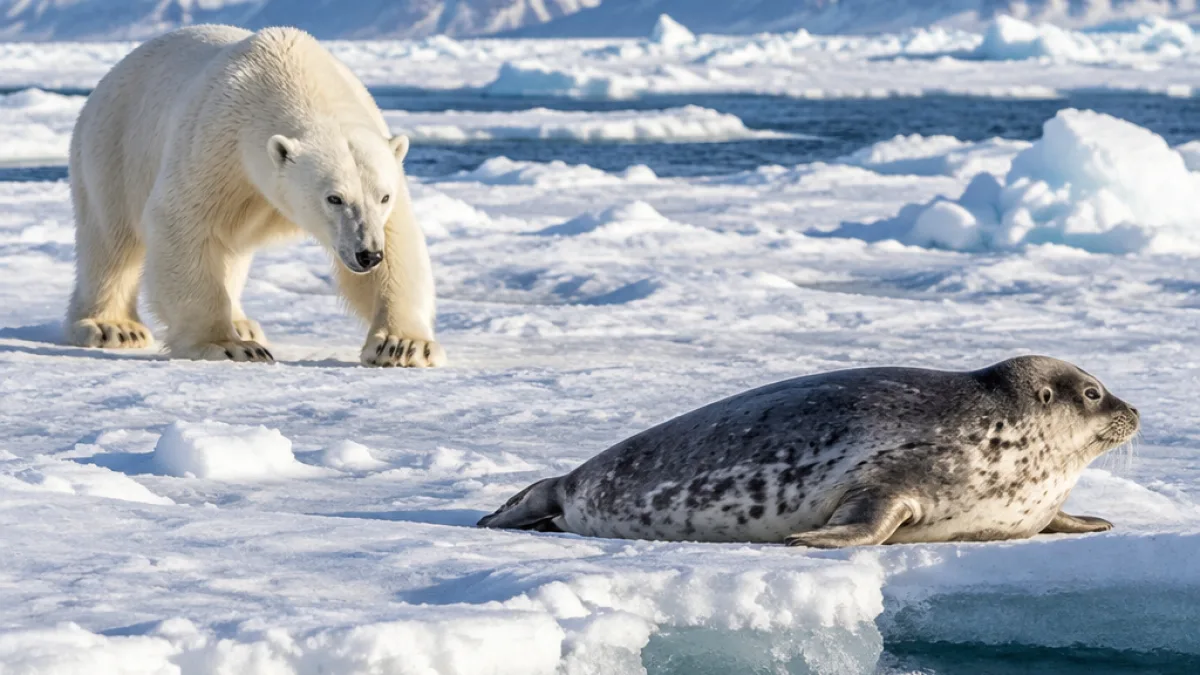
A BBC Earth wildlife sequence offers a close look at the difficult calculations behind a polar bear hunt, following a hungry female as she stalks a seal resting on sea ice. The footage, narrated by David Attenborough, shows an encounter that begins quietly and ends beneath the surface.
The hunt is costly for the bear. According to the source, polar bears succeed in only about one out of every 20 attempts. Each unsuccessful effort uses energy and reduces the animal’s remaining reserves, making a successful kill especially important for a bear that is already carrying relatively little weight.
Using the wind and the ice
The sequence shows the bear first moving in a broad arc across the ice. By positioning herself downwind, she reduces the chance that the seal will detect her scent. She then advances through the water, using the edge of the ice and the seal’s resting place to get close enough for an ambush.
Seals are difficult prey in open water because polar bears cannot simply outswim them. A seal on the ice presents a different opportunity. In the footage, the seal notices the approaching danger and slips into the water, but the bear follows almost immediately. The decisive part of the encounter takes place out of view below the surface, with only a disturbance in the water revealing the struggle.
What the successful kill provides
The bear eventually comes back up with the seal. The source estimates that the animal’s blubber contains about 100,000 calories — enough food to sustain the polar bear for roughly a week. That figure helps explain why each hunt matters: a successful strike replenishes energy that the bear may have spent during repeated searches and failed pursuits.
| Detail | Information from the source |
|---|---|
| Typical hunting success | About one successful kill in 20 hunts |
| Prey shown | A seal on Arctic sea ice |
| Estimated blubber energy | About 100,000 calories |
| Food supply described | Enough to sustain the bear for about a week |
An Arctic scene with N.W.T. relevance
The image credit identifies the setting as Nunavut and the Northwest Territories, placing the story within the broader Arctic landscape familiar to residents across the region. The source does not name a particular N.W.T. community or say that the filmed hunt took place in the territory, so the sequence should be understood as an Arctic wildlife account rather than a report from a specific local location.
For viewers in the North, the footage turns a familiar symbol of the Arctic into a study of effort, risk and timing. The bear’s size is striking, but the sequence also shows how little room there is for wasted energy at the top of the food chain. A seal’s access to the ice and a bear’s ability to approach unseen can determine whether the hunt ends in hunger or a meal that lasts for days.
- The bear relies on stealth rather than speed in the opening approach.
- Sea ice gives the bear an opportunity to target a seal resting outside the water.
- The successful catch provides a substantial energy return after a demanding pursuit.