
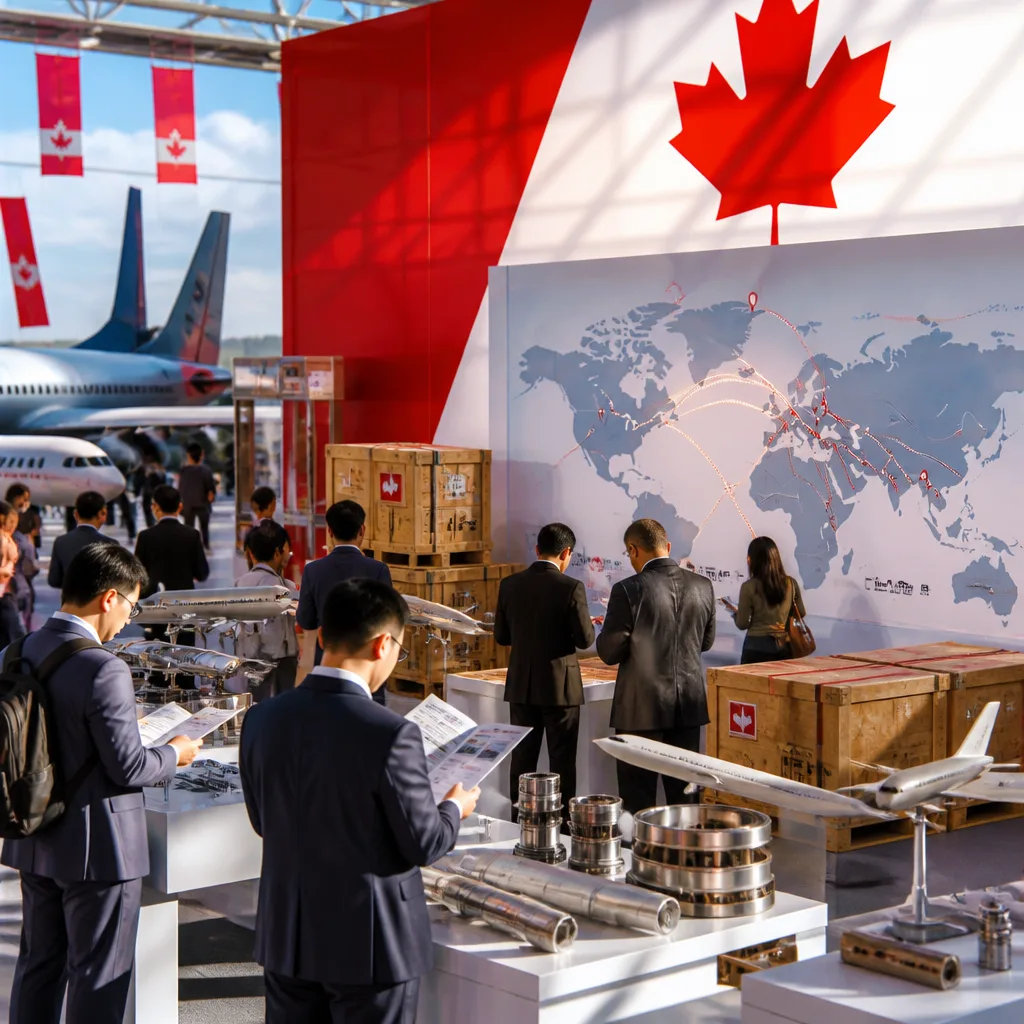
Canada’s aerospace sector is showing clear signs of growth, with companies reporting record orders and operational improvements even as executives warn about looming supply-chain constraints and trade-related risks.
Growth amid caution
Executives and industry leaders describe the current moment as one of strong activity: increased aircraft demand, improvements in operational performance and a visible presence of Canadian firms on the global stage as attention turns to international trade shows.
The sector’s momentum is reflected in several developments highlighted by business journalists and industry observers: one major international event — the Farnborough International Airshow in England — is drawing a sizeable Canadian delegation, underlining how manufacturers and suppliers are pursuing export opportunities and new contracts abroad.
“the must-attend event”
What’s worrying industry leaders
Despite the upbeat indicators, leaders emphasise two areas of concern that could constrain the upside:
- Supply-chain issues: firms report ongoing challenges sourcing parts and materials, which can delay deliveries and raise costs for manufacturers and their suppliers.
- Trade concerns: geopolitical pressures and evolving trade rules pose risks to export-dependent companies, potentially affecting market access and competitiveness.
Wider economic context
Observers note the aerospace sector’s strength stands in contrast with softer conditions in other parts of the Canadian economy. That divergence means aerospace could be a bright spot for employment and high-value manufacturing in regions with significant aerospace activity.
Other related national developments cited alongside the aerospace coverage include federal decisions on major infrastructure projects and regional economic indicators: Ottawa has referred the Port of Vancouver’s growth strategy to the Major Projects Office — including expansion of a Southern B.C. shipping container terminal — and is reviewing an Alberta proposal for an oil export terminus in the Delta area. Separately, a Business Council of Alberta survey showed CEOs in that province feeling optimistic despite geopolitical pressures and political uncertainty.
Implications for households and businesses
For households, a robust aerospace sector can mean higher-skilled job opportunities and stable local economies in regions that host manufacturing and research facilities. For businesses, especially small and medium-sized suppliers, the sector’s expansion presents opportunities for contracts and export growth but also exposes them to the impact of supply-chain bottlenecks and shifting trade rules that could increase costs or delay revenues.
| Trend | Implication |
|---|---|
| Record orders and operations | More work for manufacturers and suppliers; potential hiring |
| Supply-chain constraints | Production delays; higher input costs for firms |
| Trade uncertainties | Export risks; need for market diversification |
As the industry gathers overseas and firms highlight both gains and risks, policy makers and business leaders will need to balance support for export growth with measures that address supply-chain resilience and trade stability.