
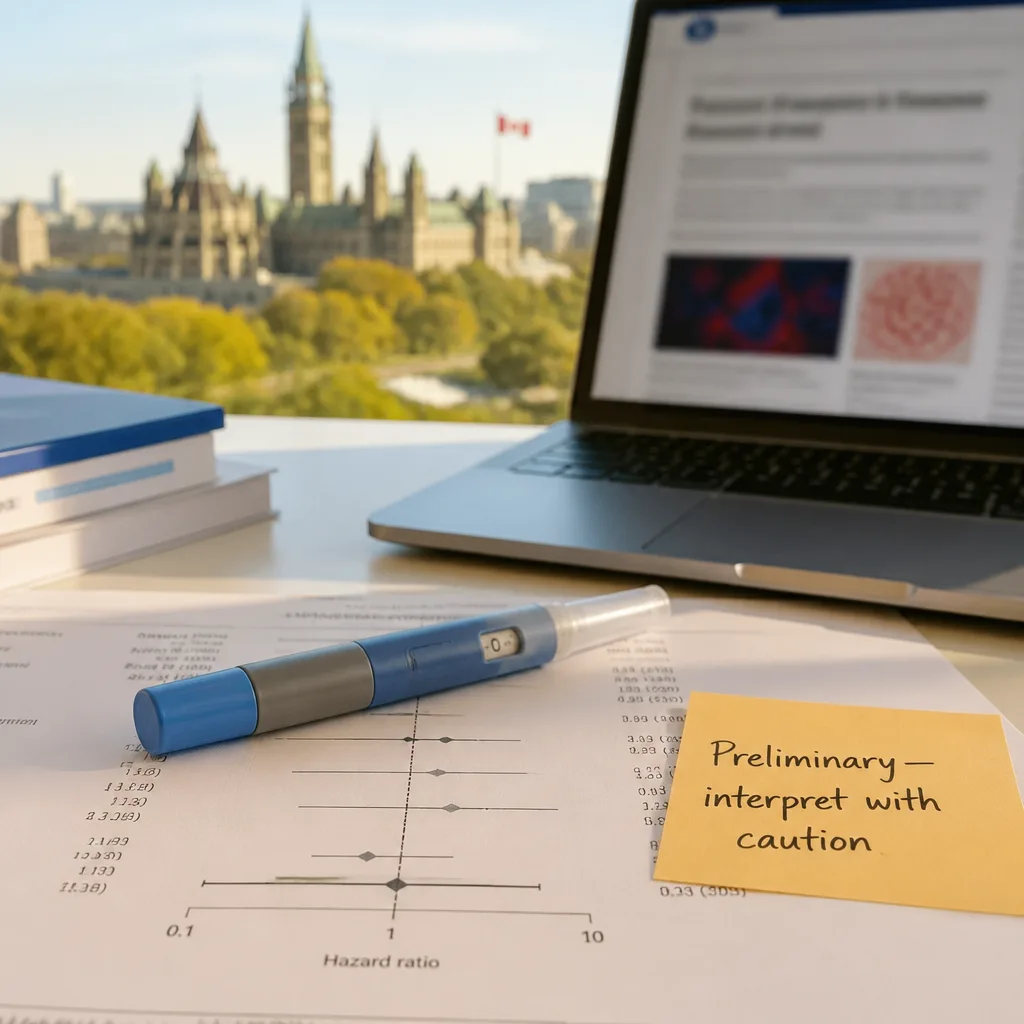
Claims that GLP-1 drugs such as Ozempic reduce the risk of cancer have surged in recent weeks, amplified by major outlets and social media. But a physician–scientist who studies drug effects at the population level says the evidence remains early and requires careful interpretation.
In the lead-up to and around the 2026 annual meeting of the American Society of Clinical Oncology, coverage from publications including NPR and the Washington Post converged on a striking message: Ozempic might be linked to fewer cancers. Those headlines trace back to a wave of studies involving millions of patients.
“Ozempic might lower the risk of cancer.”
That claim, while widely circulated, is not yet settled science. The caution comes from Dr. Ziyad Al-Aly, a physician and clinical epidemiologist who designs and interprets the kinds of real-world studies now fuelling the discussion. He leads the Clinical Epidemiology Center and serves as Chief of Research and Development Service at the VA Saint Louis Health Care System, and is a senior clinical epidemiologist at Washington University in St. Louis. He has also advised the Chief Science Advisor of Canada on Long COVID strategy.
A fast turn in the cancer conversation
According to Al-Aly’s account, concerns surrounding GLP-1 drugs and cancer risk have swung sharply in the span of a few years. Where initial questions focused on possible harm, the latest analyses suggest potential benefit. As attention intensifies after ASCO, the temptation is to read these signals as proof. Al-Aly’s view is that the data must be weighed with the same rigour that uncovered earlier risks across other conditions.
These studies, by design, look at what happens when large numbers of people use widely prescribed medicines. They can uncover important associations at scale. But they also require close scrutiny of how patients are selected, which outcomes are measured, and how confounders are addressed—details that determine whether a measured link reflects a true effect or the influence of other factors.
What the evidence can—and cannot—say right now
Available reports point to fewer cancer diagnoses among some users of GLP-1 drugs. Yet even with millions of patients in these datasets, the results are early signals. They must be tested across different populations, replicated using multiple methods, and examined over longer follow-up.
| What is being claimed | What the studies show | How to read it today |
|---|---|---|
| GLP-1 drugs lower cancer risk | Analyses reporting fewer cancers among users in large cohorts | Promising association; mechanisms and causality not established |
Al-Aly’s broader research track record underscores the stakes. His group has previously characterized long-term outcomes following major health events and interventions, including the post-acute effects of SARS-CoV-2 infection, and produced early evidence on vaccines and antivirals in that context. The thread through that work is methodological discipline: large datasets can illuminate, but they can also mislead if design and interpretation falter.
Why the nuance matters
Public interest in GLP-1 drugs is intense, and cancer outcomes evoke understandable urgency. That creates conditions where preliminary findings can outrun their evidentiary base. Keeping the focus on study design and reproducibility helps separate durable signals from headlines that fade on closer inspection.
- Association is not confirmation: Early patterns in health records can point to benefit or harm, but they do not, on their own, prove cause-and-effect.
- Scale helps—and complicates: Studies spanning millions of patients offer power to detect differences, while also magnifying the importance of how exposures and outcomes are defined.
- Policy relevance: With advisory links to both U.S. and Canadian bodies, the interpretation of these findings will inform research priorities and health guidance.
For now, the balance of evidence is that it is too soon to conclude GLP-1 drugs prevent or treat cancer. The next steps are familiar in clinical epidemiology: replication, transparency in methods, and evaluation across diverse patient groups. If the signals hold—after that work is done—they may reshape how these drugs are understood. Until then, measured reading of the data remains the safer path.