
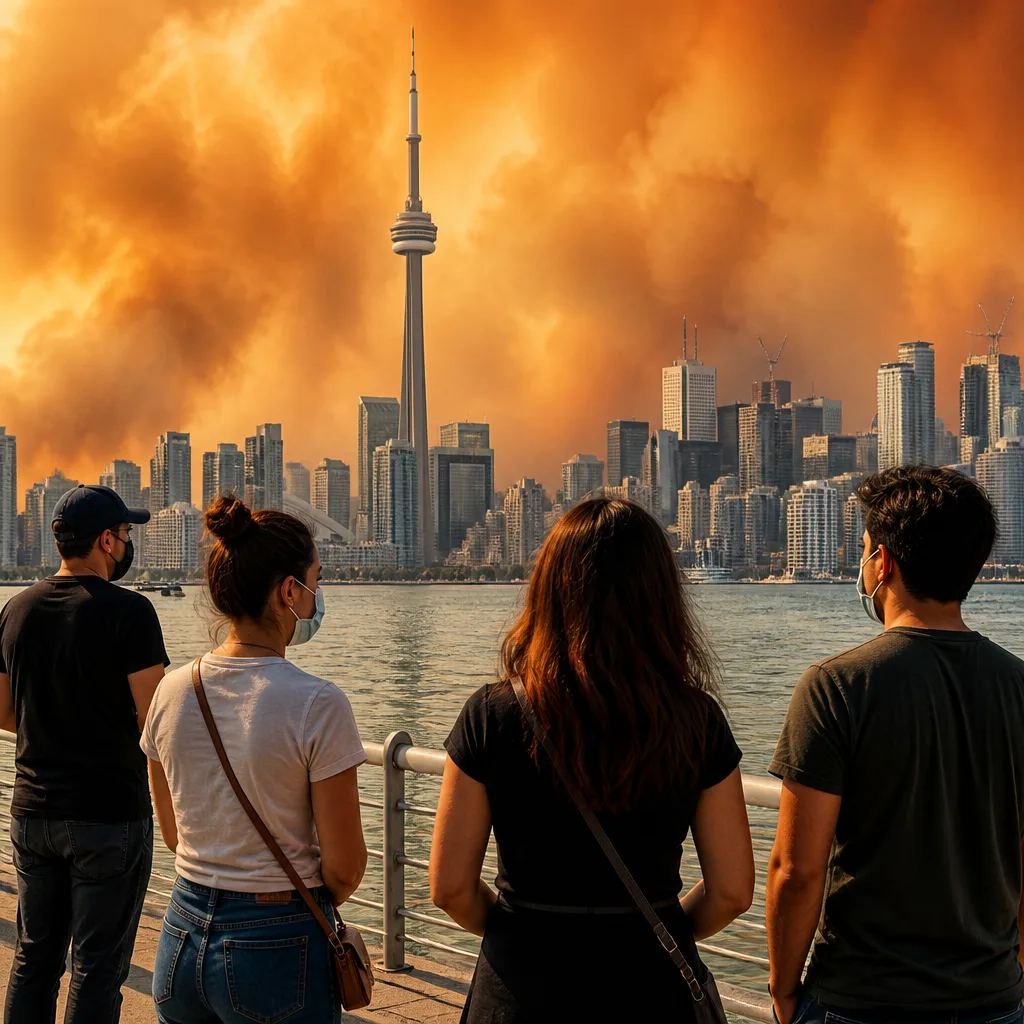
Canadians breathing smoky air over Toronto and other southern Ontario communities this summer have been reminded of an uncomfortable reality: local firefighting and forest-management measures can help protect lives and property, but they cannot address the root cause of increasingly severe smoke events. Scientists say the only realistic long-term solution is to tackle climate change.
Climate, not politics, is driving more intense fires
Public and political scrutiny of provincial wildfire budgets and requests for federal assistance have intensified as plumes from remote blazes turned urban skies orange. Some U.S. lawmakers have asked Canada to do more to limit smoke crossing the border. But researchers warn such debates can obscure what the science shows: fire is a natural component of many Canadian forest ecosystems, and a warming climate is making those fires larger, more frequent and harder to control.
"A lot of this is not entirely unexpected. [But] it's happening far sooner than a lot of people expected," said Patrick James, an associate professor in the University of Toronto's forestry department. He emphasised that even modest rises in temperature can have outsized effects on fire activity.
"What we're seeing is very modest increases in temperature can result in multiplicative effects in terms of the number of fires and the intensity of those fires."
Heat and drought dry fuels, increasing ignition probability and fire spread. Wind and large-scale weather patterns can then transport smoke long distances, delivering poor air quality to major population centres far from the flames. While suppression efforts save communities and critical infrastructure, they do not change the broad climatic conditions that are amplifying fire behaviour across Canada's vast forest landscape.
What fuels the smoky summers
- Warmer temperatures increase the length of the fire season and dry forest fuels.
- Drought reduces moisture in soils and vegetation, making forests more flammable.
- Weather systems can carry smoke hundreds or even thousands of kilometres, affecting urban air quality.
These interacting factors help explain why summers now produce smoke episodes that regularly affect Canadians in southern Ontario, Quebec and other regions.
Policy implications and limits of local action
Officials can and do invest in firefighting capacity, prescribed burns and other landscape-scale activities to reduce risk near communities. Those measures remain essential for protecting lives and property. But scientists caution that no amount of suppression can fully compensate for the large-scale shifts in climate that are increasing the frequency and severity of fire across the country.
That distinction has consequences for policymaking. Short-term responses — such as deploying crews, aircraft and evacuation plans — are necessary and can mitigate immediate harms. Long-term resilience, however, requires reducing greenhouse gas emissions and adapting land and resource management to a warmer world. Without such systemic action, experts say, Canadians should expect more frequent and severe smoke episodes.
| Factor | Effect on fires and smoke |
|---|---|
| Higher temperatures | Longer fire seasons; faster fuel drying |
| Drought | Increased ignition and spread |
| Weather patterns | Long-range transport of smoke into urban areas |
As communities and governments debate budgets and responsibilities, scientists urge framing the problem in climatic terms. That framing underscores that while tactical firefighting and forest stewardship are indispensable, they are not substitutes for national and global efforts to reduce emissions that are driving the conditions behind these smoky summers.
The current episodes serve as a reminder of the interconnectedness of local impacts and global drivers: protecting Canadian air quality in the decades ahead will depend as much on how the country and the world manage greenhouse gases as on how well local agencies suppress individual blazes.