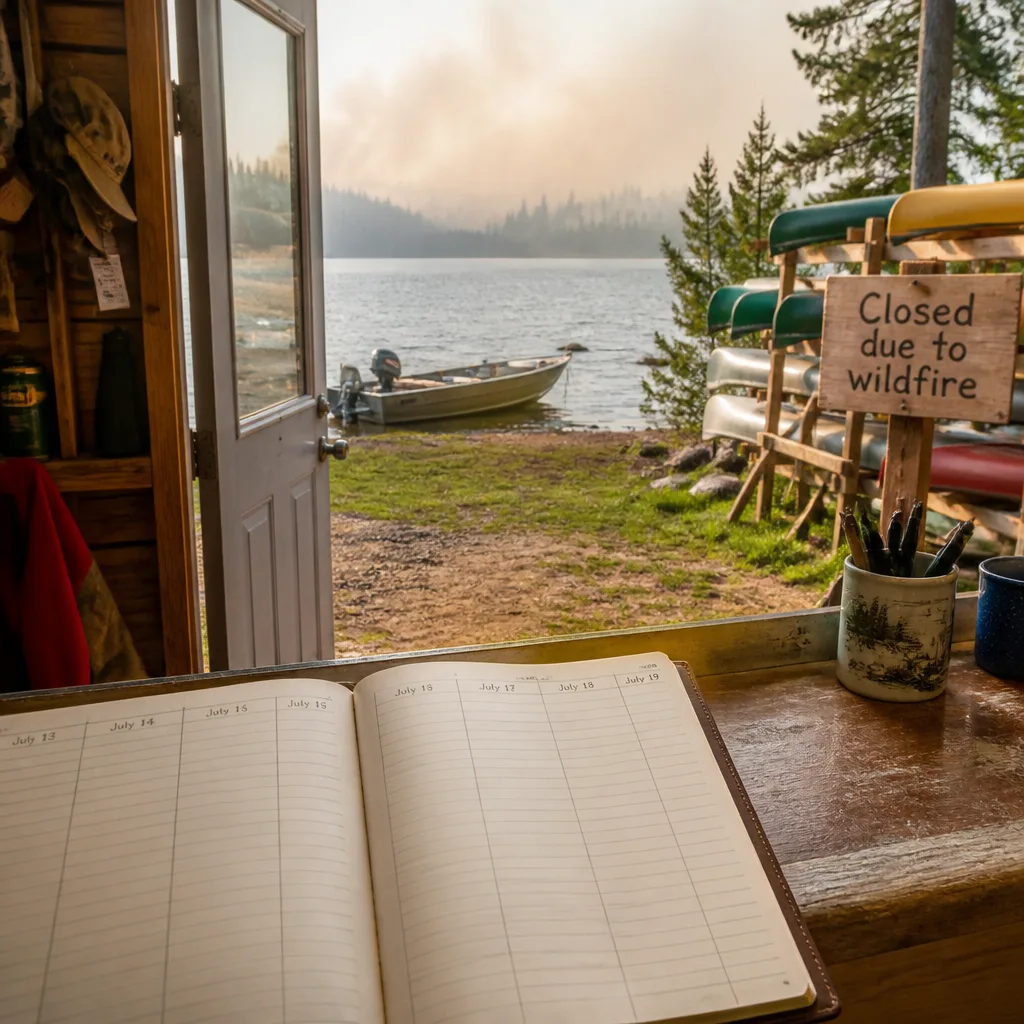
A rapid wildfire-related shutdown of the Boundary Waters Canoe Area Wilderness (BWCAW) and parts of the Superior National Forest has halted midsummer operations for Voyageur Canoe Outfitters on Minnesota’s Gunflint Trail, turning a packed calendar into an empty one within days. By July 18—four days after closures took effect—the outfitter’s reservation ledger had no remaining trips on the books, a stark reversal from what owners described as their busiest stretch of the season.
In the span of a week, the familiar hum of tow-boats and the shuffle of canoes gave way to an unusually quiet shoreline on Seagull Lake and the Seagull River. Smoke has lingered over the area as Cassidy and Matt Ritter, who run Voyageur Canoe Outfitters, work through an abrupt stop to guided travel in the BWCAW. Staff who were preparing gear for departures are now unpacking kits that had been destined for backcountry trips.
“Before all of this, our books were absolutely full,” Cassidy said. “We didn’t honestly know how we were going to keep up with it staff-wise.”
The immediate disruption began the night of Sunday, July 12, when outfitters received an email from the U.S. Forest Service signalling a full closure of the wilderness beginning July 14. With little time to spare, the Ritters began alerting guests that their entries would be cancelled and focused on locating parties already in the field to ensure safe exits as wildfire conditions worsened. The risk environment escalated over the following two days, with reported high temperatures in the upper 90s to near 100 Fahrenheit and winds in the 15–20 mph range—conditions that can rapidly intensify fire behaviour.
“That as an outfitter is a quick turn,” Matt said, describing a pivot from trip logistics to evacuation planning amid what he called “disastrous weather for fire.”
Bookings vanish at the height of the season
Just days earlier, the business was on pace for a standout year. Then the spate of wildfire closures across the BWCAW and the Superior National Forest paused paddling access altogether. The financial hit is immediate for outfitters that depend on a short summer window when backcountry travel peaks and visitors stock up on rentals, guiding, and provisions.
“We were having such an awesome year. Probably the best year we’ve had yet.”
The BWCAW borderlands add a cross-border dimension: the Ritters tracked the whereabouts of parties against the proximity of nearby Canadian wildfires, and Cassidy was on a multi-day trip in Quetico as the situation evolved. That regional footprint underscores how fire and smoke on either side of the line can quickly affect operators and visitors alike.
What changed—and how outfitters responded
- Closure notice: An email alert on July 12 informed outfitters the BWCAW would shut down on July 14 due to wildfires across the wilderness and the surrounding forest.
- Immediate actions: Trips were cancelled, guests were notified door-to-door, and resources shifted to track and extract existing parties.
- Operational pivot: Staff paused departures, unpacked expedition gear, and managed smoke conditions lingering over the Gunflint Trail corridor.
- Demand shock: By July 18, a once-full reservation book had no remaining trips scheduled.
Timeline at a glance
| Date | Development |
|---|---|
| July 12 | Email from U.S. Forest Service announces imminent BWCAW closure. |
| July 14 | Closure of the wilderness area takes effect; outfitters halt departures. |
| July 18 | Reservation book at Voyageur Canoe Outfitters is empty; smoke lingers over Seagull Lake and along the Gunflint Trail. |
Why it matters for travellers and local businesses
For households planning summer paddling trips, the shutdown means last-minute cancellations and postponed itineraries during the narrowest, most popular weeks of the season. For outfitters, the interruption lands at the revenue apex of the year, with limited ability to recoup lost high-season bookings once the calendar moves on. At the same time, safety has become the overriding concern, with operators dedicating staff time to safeguarding guests already in the field and monitoring smoke and fire conditions.
Across the Gunflint Trail, other backcountry providers face a similar squeeze as they manage staffing rosters, idle equipment, and support functions with little visibility into when conditions might ease. While officials moved quickly to restrict access in response to wildfire risk, the financial reverberations will likely extend beyond the closure window, as travellers reassess timing and destinations and as operators work to rebuild schedules that had been assembled months in advance.
The Ritters’ account captures the broader picture for the outdoor economy when extreme weather forces doors to close during peak demand: the sudden collapse in bookings, the scramble to pivot operations, and the challenge of navigating an uncertain reopening timeline while fire and smoke continue to shape plans day by day.