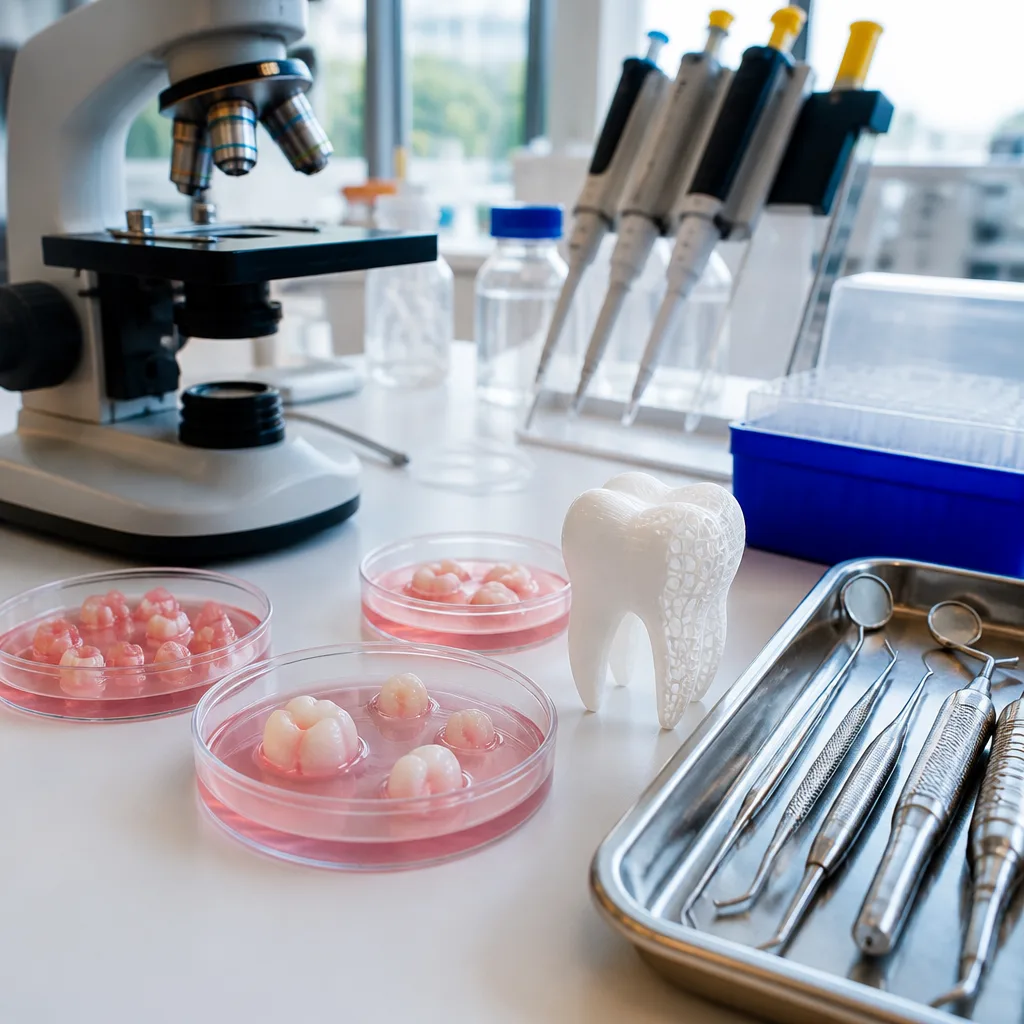
Researchers are reporting progress toward therapies that could regrow human teeth or repair them using living tissue, a shift that could reframe how dentists treat decay, disease and tooth loss. The work, highlighted by scientists in the United States, aims to replace the drill-and-fill approach with biological regeneration—an idea that has seized public attention and sparked a steady stream of pleas from people eager to participate.
From fillings to regeneration
Conventional dentistry relies on materials such as composites, metals and ceramics to patch or replace damaged structures. While effective, those solutions are ultimately mechanical stand-ins. Investigators in regenerative medicine are instead studying ways to coax cells to rebuild enamel and dentin, repair soft tissues and, in the longer term, generate an entire tooth. The associate director of the University of Washington’s Institute for Stem Cell and Regenerative Medicine, biochemist Hannele Ruohola-Baker, says public interest is intense.
“When we first began, one thing became very clear to me,” she says. “People are ready for something new in dentistry.”
Ruohola-Baker describes receiving emails almost daily from people asking to join experimental efforts to regrow teeth—evidence, she suggests, of unmet needs and anxieties about current care. Surveys have found that more than 70% of adults report fear of visiting the dentist, a barrier that can keep people from preventive cleanings and early treatment.
Why oral health matters far beyond a smile
For decades, teeth were often treated as a separate maintenance problem from the rest of the body. That view is changing. Pamela Yelick, a professor at Tufts School of Dental Medicine, underscores both the social and biological stakes.
Teeth are “your window to the world,” she says. “If you’re afraid to open your mouth or can’t eat properly, it’s a very downward spiral.”
Researchers and clinicians increasingly recognise links between the mouth and systemic illness. Bacteria associated with gum disease have been tied to elevated risks of heart disease and respiratory infections, and oral pathogens have even been connected in research to Alzheimer’s disease. Tooth loss correlates with poorer health outcomes and shorter life expectancy, in part because difficulties with chewing affect nutrition and because oral disease can aggravate other conditions. Those consequences often begin early, with dental problems in childhood cascading into adulthood.
| Oral condition | Associated systemic risk (as reported) |
|---|---|
| Gum disease (bacterial burden) | Higher risk of heart disease |
| Gum disease (bacterial burden) | Increased risk of respiratory infections |
| Oral pathogens | Links reported with Alzheimer’s disease |
What regrowing a tooth could change
If regenerative approaches fulfil their promise, a future appointment could involve rebuilding living tooth tissues where decay once spread, or even replacing a missing tooth with one grown from a patient’s own cells. The potential advantages are not just cosmetic. Living tissues may integrate with the body, respond to forces, maintain sensation and adapt over time—features that synthetic replacements cannot fully match. For patients who avoid care because they fear drills and extractions, treatments that restore rather than remove could be more acceptable and lead to earlier intervention.
- Biological repair could reduce reliance on crowns, implants and fillings.
- Patient acceptance may improve if procedures are less invasive and preserve natural structure.
- Systemic benefits could follow if better oral health lowers risks linked to oral bacteria.
Promise, pressure and careful steps
With interest running high, researchers caution that regeneration must be approached methodically. The science involves guiding complex cell behaviour and ensuring safety, durability and function in a challenging environment shaped by biting forces and microbes. Even as labs report advances in growing tissues and modelling tooth development, any clinical transitions will require rigorous testing and regulatory review to show that regrown structures behave like the real thing—resisting infection, transmitting sensation and withstanding decades of use.
Dentists today have an expanding toolkit to slow decay and manage disease, from sealing and restoring cavities to removing severely damaged teeth. Regenerative options, if validated, would add another tier—one that aligns with how clinicians now see the mouth: not an isolated set of parts, but a gateway to overall health. As Yelick puts it, the stakes are both practical and profoundly human, touching how people eat, speak and present themselves to the world.
Why it resonates with patients
The flood of emails landing in researchers’ inboxes reflects a wider sentiment: people want care that fixes the root problem, keeps their own tissue intact and feels less like repair work and more like healing. The science is still developing, but the direction is clear. In a field long dominated by drills and prosthetics, regrowth stands out for its potential to change not only procedures, but outcomes and quality of life.